Image Source: cdn-fciao.nitrocdn.com
Can a Car Pass Inspection with a Cracked Windshield?
No, generally a car cannot pass a vehicle safety inspection with a cracked windshield, especially if the damage obstructs the driver’s view or compromises the structural integrity of the glass. The specific legality of driving with a cracked windshield and whether it will lead to a windshield inspection failure varies by location, but most jurisdictions have regulations in place to ensure driver visibility and vehicle safety. These car inspection rules cracked glass often focus on the size, location, and type of windshield damage.
Driving with a damaged windshield is more than just an aesthetic issue; it directly impacts drivability with damaged windshield and can lead to dangerous situations. This article will delve into the specifics of why a cracked windshield is problematic, what windshield damage regulations you should be aware of, and how auto glass repair for inspection can get you back on the road safely and legally.
The Importance of Windshield Integrity
Your car’s windshield is a critical component of its safety system. It’s not just there to keep the wind and rain out. Modern windshields are made of laminated safety glass, designed to provide several crucial functions:
- Driver Visibility: A clear, unobstructed view is paramount for safe driving. Cracks, chips, and spiderwebbing can distort vision, making it difficult to see road signs, pedestrians, other vehicles, or hazards.
- Structural Support: The windshield contributes significantly to the structural integrity of your vehicle. In a rollover accident, it can help prevent the roof from collapsing.
- Airbag Deployment: The passenger-side airbag often uses the windshield as a backboard for deployment, pushing the airbag upward and into place to protect the front-seat passenger. A damaged windshield can interfere with this critical safety function.
- Protection from Elements: Beyond weather, it also shields occupants from debris kicked up by other vehicles.
Windshield Inspection Failure: Common Reasons
When a vehicle undergoes a safety inspection, the inspector will pay close attention to the condition of the windshield. A windshield inspection failure is highly likely if the damage meets certain criteria. Here are common reasons for a windshield inspection failure:
- Size of the Crack or Chip: Many regions have specific limits on the size of damage allowed. A crack longer than a few inches, or a chip larger than a quarter, is often enough to fail.
- Location of the Damage: Cracks or chips directly in the driver’s line of sight are almost always cause for failure. This area is typically defined by the sweep of the windshield wipers. Damage in this critical viewing zone is a significant safety hazard.
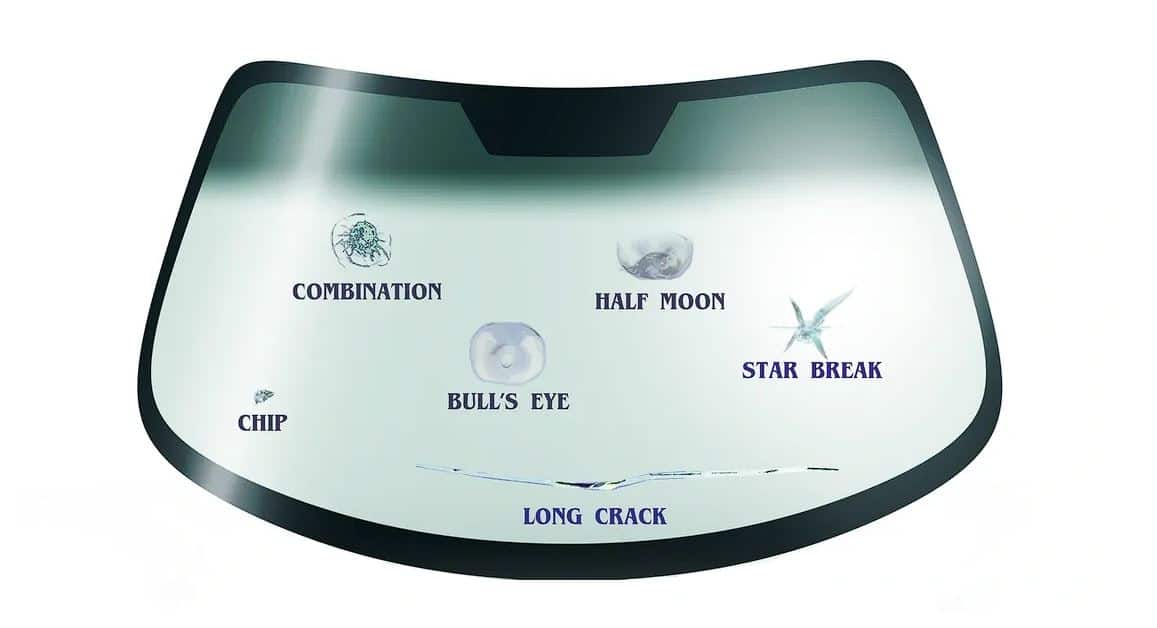
- Type of Damage: While small chips might sometimes be overlooked, deep cracks or spiderwebbing that compromises the glass’s integrity are rarely acceptable.
- Obstruction of Safety Features: If the damage interferes with the driver’s ability to see side mirrors, or if it’s so severe that it might impede airbag deployment, it will likely lead to failure.
- Loose or Damaged Seals: While not a crack, a damaged or leaking windshield seal can also cause an inspection failure, as it compromises the vehicle’s weatherproofing and can lead to other issues.
Navigating Windshield Damage Regulations
Understanding windshield damage regulations is key to knowing if your car can pass inspection. These rules are designed to ensure that all vehicles on the road are safe for operation. The specifics can vary significantly by state, province, or country. However, some common principles are widely adopted.
Factors Determining Legality
The windshield crack legality is often determined by several factors:
- The “Driver’s View” Zone: This is the most critical area. Regulations typically prohibit any cracks or chips that extend into the area swept by the windshield wipers or that directly impair the driver’s ability to see the road clearly.
- Length of the Crack: Many states specify a maximum length for cracks. For instance, a crack longer than 12 inches might automatically fail.
- Diameter of Chips: The size of a chip is also regulated. Often, a chip larger than 1 inch in diameter will cause a fail.
- Type of Damage: Some regulations distinguish between a single crack and multiple cracks. Spiderwebbing or multiple chips can be more problematic than a single, small imperfection.
- Location Relative to the Edge: Damage near the edges of the windshield can sometimes be more critical, as it can be more prone to spreading and can compromise the structural integrity of the glass where it meets the car’s frame.
State-Specific Examples (Illustrative)
It’s crucial to check the specific laws in your jurisdiction. Here are some examples of common approaches, though these are not exhaustive and can change:
| Jurisdiction | Common Crack/Chip Guidelines |
|---|---|
| California | Prohibits chips or cracks that impair the driver’s vision. Generally, damage in the driver’s direct line of sight is not allowed. |
| Texas | Prohibits cracks longer than 5 inches. Chips larger than 3/4 inch are also typically not permitted if they obstruct vision. |
| New York | Mandates that the windshield must be free from cracks or chips that obscure the driver’s view. No specific measurements are universally cited, but obstruction is key. |
| Florida | While there are no specific length restrictions, the windshield must not be “damaged so as to impair the driver’s vision.” |
| Canada (General) | Varies by province, but generally focuses on visibility. Cracks or chips impairing the driver’s clear view are not permitted. Often, a crack exceeding 2.5 cm in the driver’s direct line of sight will cause failure. |
Important Note: These are simplified examples. Always consult your local Department of Motor Vehicles (DMV) or equivalent authority for the most accurate and up-to-date windshield damage regulations.
Drivability with Damaged Windshield: Safety Concerns
Even if your local inspection station is lenient, driving with a damaged windshield poses significant risks to your drivability with damaged windshield.
- Reduced Visibility: As mentioned, cracks can distort your view, making it harder to react to changing road conditions, such as sudden stops, swerving vehicles, or unexpected obstacles. This is especially dangerous at night or in poor weather.
- Compromised Structural Integrity: A cracked windshield is weaker. Impacts from minor road debris could cause the crack to spread rapidly, potentially leading to sudden failure. In a collision, it may not perform as intended, failing to protect occupants as effectively.
- Sun Glare Amplification: Cracks can refract sunlight in unpredictable ways, creating glare that can temporarily blind or disorient the driver.
- Increased Risk of Further Damage: Temperature fluctuations, vibrations from driving, and even washing the car can cause a small crack to grow into a much larger, more problematic one.
Auto Glass Repair for Inspection: When is it Necessary?
The good news is that most minor windshield damage can be repaired, allowing your car to pass inspection and restoring its safety features. Auto glass repair for inspection is a viable and often cost-effective solution.
Repair vs. Replacement
Whether a crack or chip can be repaired depends on several factors:
- Size: Small chips, typically no larger than a quarter, can usually be repaired.
- Depth: If the chip has penetrated both layers of the laminated glass, it usually cannot be repaired.
- Location: Damage in the driver’s direct line of sight is often unrepairable from an inspection standpoint, even if the chip itself is small.
- Type of Damage: Bullseyes, star breaks, and combination breaks are generally repairable if they are within size limits and not in the critical viewing area. Long cracks, especially those over 6 inches, are usually beyond repair.
- Cleanliness: If the chip or crack is filled with dirt or debris, it can make repair more difficult or impossible.
The Repair Process
Professional auto glass repair involves injecting a special resin into the damaged area. This resin is then cured with UV light. The process aims to:
- Restore Structural Integrity: The resin bonds the glass together, preventing the crack from spreading and making the windshield much stronger.
- Improve Visibility: While the repair may still be slightly visible, it significantly improves clarity compared to the unrepaired damage.
- Prevent Further Damage: By sealing the chip or crack, it prevents moisture and debris from entering, which could otherwise worsen the damage or cause the glass to delaminate.
When Windshield Replacement is Needed
If the damage is too extensive, too deep, or located in a critical area that cannot be repaired according to windshield damage regulations, a full windshield replacement will be necessary. This is the only way to ensure your car can pass inspection and that your vehicle’s safety features are fully functional.
A windshield replacement involves removing the old windshield and installing a new one. This is a more involved process than repair and requires precise installation to ensure proper sealing and structural support. A qualified auto glass technician will ensure the new windshield is fitted correctly and that all seals are watertight.
Legal Driving with Cracked Windshield: Know Your Rights and Responsibilities
Knowing the legal driving with cracked windshield laws in your area is your responsibility. Ignoring a cracked windshield can lead to tickets, fines, and points on your driving record, in addition to the safety risks.
What to Do If You Have a Cracked Windshield
- Assess the Damage: Evaluate the size, location, and type of the crack or chip. Is it in your direct line of sight? Is it spreading?
- Consult Local Laws: Research your local vehicle safety inspection windshield requirements and cracked windshield driving laws.
- Seek Professional Advice: Visit a reputable auto glass repair shop. They can assess whether the damage can be repaired or if a replacement is needed to meet inspection standards.
- Get it Fixed Promptly: Don’t delay. The sooner you address the damage, the more likely it is to be repairable, and the safer you will be.
The Consequences of Ignoring Windshield Damage
- Fines and Tickets: Law enforcement officers can issue citations for driving with a damaged windshield that impairs vision or violates state laws.
- Failed Inspections: As discussed, a cracked windshield is a common reason for a vehicle to fail its mandatory safety inspection.
- Increased Repair Costs: Small chips can often be repaired for a fraction of the cost of a full windshield replacement. Delaying can allow the damage to worsen, making replacement the only option.
- Compromised Safety: The most significant consequence is the risk to yourself and other road users due to reduced visibility and compromised structural integrity.
Preparing Your Vehicle for Inspection
When it’s time for your vehicle’s safety inspection, having a clear, undamaged windshield is crucial. Beyond the glass, ensure your other safety features are in good working order, such as:
- Lights (headlights, taillights, brake lights, turn signals)
- Wipers and washer fluid
- Brakes
- Tires (tread depth and condition)
- Horn
- Mirrors
Addressing any windshield issues before your inspection will save you time, money, and the hassle of a failed inspection.
Frequently Asked Questions (FAQ)
-
Q1: Can I drive with a small chip on my windshield?
A1: It depends on the location and your local laws. If the chip is not in the driver’s direct line of sight and is smaller than the regulated size limit, you might be able to drive with it, but it’s best to get it repaired to prevent it from spreading and to ensure you pass inspection. -
Q2: How big can a windshield crack be to pass inspection?
A2: This varies by jurisdiction. Many states have limits like 12 inches for cracks or 1 inch for chips in certain areas. Always check your local regulations. -
Q3: Will my insurance cover windshield repair or replacement?
A3: In most cases, yes. Comprehensive insurance coverage typically covers windshield damage, often with a low or no deductible for repairs. Contact your insurance provider to confirm your coverage. -
Q4: How long does windshield repair take?
A4: Windshield repair is usually a quick process, often taking about 30 to 60 minutes. -
Q5: Can a cracked windshield cause my car to fail emissions testing?
A5: Windshield condition typically does not affect emissions testing, which focuses on engine performance and exhaust systems. However, it can definitely cause a failure during a safety inspection. -
Q6: Is it legal to drive with a spider crack on my windshield?
A6: Spider cracks, or spiderwebbing, are usually considered severe damage. If the spiderweb extends significantly or obstructs the driver’s view, it is highly unlikely to be legal or pass inspection. -
Q7: Where is the “driver’s line of sight” for windshield inspection purposes?
A7: This is generally considered the area directly in front of the driver, typically within the area swept by the windshield wipers. Damage in this zone is the most critical for inspection failure. -
Q8: What happens if I’m pulled over with a cracked windshield?
A8: You could receive a ticket and a fine. The officer may also deem the vehicle unsafe and require you to have the windshield repaired or replaced before you can continue driving.
By prioritizing your windshield’s condition, you ensure not only your ability to pass a vehicle safety inspection but, more importantly, your own safety and the safety of others on the road.