How many crankshaft sensors does a car have? Most cars have just one Crankshaft Position Sensor (CKP). This one sensor is vital. It tells the car’s computer how fast the engine is spinning and where the main rotating shaft (the crankshaft) is located at any moment. It’s sometimes called the engine speed sensor.
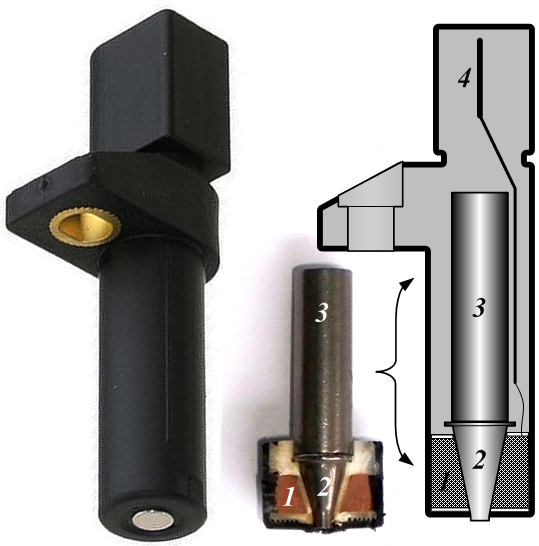
Image Source: upload.wikimedia.org
Deciphering the Crankshaft Position Sensor
What is a crankshaft position sensor? It’s a small but very important part. Think of it as a detective watching the engine’s main spinning shaft. This shaft is the crankshaft. The crankshaft turns when the pistons move up and down.
The CKP sensor’s main job is to watch this turning crankshaft. It sends information to the car’s brain. This brain is called the Engine Control Unit (ECU). The ECU is like the conductor of an orchestra. It needs perfect timing to make the engine run right.
The CKP sensor helps the ECU get this timing perfect. It tells the ECU two key things:
* How fast the crankshaft is spinning (engine speed).
* The exact spot the crankshaft is in right now (engine position).
This information is sent as an RPM signal. RPM stands for Revolutions Per Minute. It’s a way to measure how fast something is spinning. Higher RPM means the engine is working harder.
Without this signal, the ECU would be blind. It wouldn’t know when to make the spark plug fire. It wouldn’t know when to squirt fuel into the engine. This would make the engine run poorly or not at all.
Most CKP sensors work using magnets. There’s often a special wheel on the crankshaft or near it. This wheel has notches or teeth around its edge. The CKP sensor sits close to this wheel. As the crankshaft spins, the teeth on the wheel pass by the sensor. Each time a tooth passes, it changes a magnetic field. The sensor reads these changes. It counts how fast the changes happen. This tells the ECU the engine speed.
The pattern of the teeth also matters. Often, there’s a missing tooth or a different pattern somewhere on the wheel. When the sensor sees this different spot, it knows the crankshaft is at a specific position. This helps the ECU figure out which part of its turn the crankshaft is in. This position information is super important for telling the ECU where all the engine’s parts are at that moment.
So, the CKP sensor is the engine’s main speedometer and position tracker. It constantly sends updates to the ECU. This allows the ECU to control spark, fuel, and other engine actions with great precision.
Where to Find the CKP Sensor
The Crankshaft Position Sensor (CKP) needs to be where it can see the crankshaft spin. Car makers put it in different spots depending on the car’s design. But there are a few common places you’ll find it.
One very common spot is near the flywheel location. The flywheel is a heavy metal wheel. It’s attached to one end of the crankshaft. Usually, the end where the transmission bolts on. The flywheel helps keep the engine spinning smoothly. It often has teeth all around its edge. These teeth are used by the starter motor to crank the engine. Sometimes, the CKP sensor reads these flywheel teeth. Other times, there is a separate wheel with teeth just for the CKP sensor mounted near the flywheel. This location is popular because it’s right on the crankshaft itself. It gives a direct reading of its movement.
Another common place is near the crankshaft pulley. This pulley is at the front of the engine. It’s where the belts connect to power things like the alternator or power steering pump. Like the flywheel, a special wheel with teeth might be located here. The CKP sensor sits close by and reads the spinning teeth on this wheel.
Less common, but possible, is a sensor located somewhere along the middle of the crankshaft itself. This is often done inside the engine block. It reads a special part of the crankshaft designed for the sensor.
The important thing is that the sensor is always placed next to the crankshaft. Or next to a wheel directly connected to the crankshaft. This way, it can accurately count the spins and find the position. The exact location might vary. But its purpose is always the same: to read the crankshaft’s movement.
Knowing the location is helpful. Especially if the sensor ever has a problem. A mechanic will know where to look. Or you might find pictures or diagrams for your specific car model. These show the sensor’s usual hiding spot.
Finding the CKP sensor might need looking under the car. Or looking closely at the front or back of the engine. It’s typically a small electrical part with a wire harness plugged into it.
Why Only One CKP Sensor is Standard
You might wonder why a car only has one Crankshaft Position Sensor (CKP). Engines have lots of parts. But the crankshaft is one single piece. It spins as a whole.
The crankshaft is the heart of the engine’s spinning motion. All the pistons push it to turn. And it turns all the other spinning parts connected to it.
Because it’s one solid shaft turning together, one sensor is usually enough. A single sensor reading the speed and position at one point on the shaft can tell the ECU what the entire crankshaft is doing.
Imagine a merry-go-round. If you watch one person on the merry-go-round, you know how fast the whole ride is spinning. You also know where everyone else on the ride is based on where that one person is.
The crankshaft is like the merry-go-round. The CKP sensor watches one spot on it. By watching that one spot, the sensor knows:
* How fast the whole crankshaft is turning.
* Where the front, middle, and back of the crankshaft are at that exact time.
This single stream of information is usually all the Engine Control Unit (ECU) needs. It gets the RPM signal and the position signal from this one sensor. This allows the ECU to calculate timing for spark and fuel for all cylinders.
Having more than one CKP sensor is not needed for the main job of reading the crankshaft’s basic speed and position. It would add cost and complexity. It could also potentially cause problems if the signals from two sensors didn’t exactly match.
So, car engineers designed systems that rely on just one CKP sensor. This keeps the system simpler and reliable for its main task. The one sensor does its job well. It provides the key information the ECU needs about the crankshaft’s movement.
The Companion Sensor: CMP
The Crankshaft Position Sensor (CKP) is super important. But it doesn’t work alone in giving the Engine Control Unit (ECU) all the timing information it needs. It has a partner sensor. This partner is the Camshaft Position Sensor (CMP).
What does the CMP sensor do? It watches the camshafts. Camshafts are long rods with egg-shaped bumps called lobes. These lobes push on valves. Valves open and close to let air and fuel into the engine cylinders and let exhaust out.
The camshafts spin at half the speed of the crankshaft. They are linked together by a belt, chain, or gears. For every two turns of the crankshaft, the camshafts turn once.
Why does the ECU need to watch the camshafts too? The CKP tells the ECU how fast the crankshaft is spinning and its general position. But it doesn’t tell the ECU which specific cylinder is ready for the spark and fuel.
Engines have cylinders that fire in a specific order. For example, in a four-cylinder engine, the firing order might be 1-3-4-2. The CKP sensor knows the crankshaft is at the point where cylinder 1 or cylinder 4 could be ready to fire (since the crankshaft turns twice per full engine cycle). It can’t tell the difference between the two strokes of the piston (compression vs. exhaust).
This is where the CMP sensor comes in. The CMP sensor watches the camshaft. The camshaft’s position directly relates to which valves are open or closed. By seeing the camshaft’s position, the ECU knows exactly which cylinder is on its power stroke (ready for fuel and spark).
The ECU uses the signals from both the CKP and the CMP together. This is called sensor synchronization.
Think of it like this:
* The CKP tells you the merry-go-round is turning and where the starting point is (overall speed and main position).
* The CMP tells you which specific person on the merry-go-round is currently passing the ticket booth (which cylinder is at a specific point in its cycle).
By combining the two signals, the ECU knows the engine speed from the CKP. It also knows the exact position of each cylinder in its cycle from the CMP. This allows for very precise engine timing. The ECU can time the spark and fuel injection exactly when needed for each cylinder. This makes the engine run smoothly and efficiently.
Some older or simpler engines (like those with throttle body injection or carburetor) might only use a CKP sensor for ignition timing. But modern engines with sequential fuel injection (where fuel is squirted into each cylinder right before it needs it) almost always need both CKP and CMP signals. They work as a team.
Grasping Sensor Synchronization
Sensor synchronization is how the car’s computer, the Engine Control Unit (ECU), makes sense of the signals from the Crankshaft Position Sensor (CKP) and the Camshaft Position Sensor (CMP). It’s like matching up two clocks to know exactly what time it is and what should be happening.
The CKP sensor sends a fast pulse signal as the crankshaft spins. Each pulse or gap between pulses tells the ECU about speed and where the crankshaft is in its 360-degree rotation.
The CMP sensor sends a slower signal. It usually has fewer pulses per revolution than the CKP sensor wheel. The pattern of pulses from the CMP sensor is designed to tell the ECU which specific phase of the engine cycle (like intake, compression, power, exhaust) a particular cylinder is in.
Here’s a simple way to think about how the ECU uses them together:
- ECU starts getting signals: Both sensors start sending signals as soon as the engine turns.
- Finding the “zero” point: The CKP signal usually has a special spot (like a missing tooth) that marks a specific point in the crankshaft’s rotation. The ECU sees this and knows the crankshaft is at, say, 0 degrees.
- Identifying the cylinder: The CMP signal pattern tells the ECU where the camshaft is. Since the camshaft position is linked to which valves are open or closed, the ECU can figure out if cylinder 1 is starting its intake stroke, compression stroke, etc.
- Lining them up: The ECU matches the crankshaft position from the CKP with the cylinder position from the CMP. For example, the CKP signal says the crankshaft is at 10 degrees after the “zero” point. The CMP signal says the camshaft is in a position that indicates cylinder 1 is about to finish its compression stroke.
- Precise Timing: With this synchronized information, the ECU knows exactly when to fire the spark plug for cylinder 1 (right at the end of the compression stroke). It also knows when to inject fuel for cylinder 1 (usually just before or during the intake stroke).
This sensor synchronization is absolutely necessary for modern engines to run correctly. If the ECU doesn’t get good signals from both sensors, or if the signals don’t line up as they should, the ECU can’t time the spark and fuel properly.
Problems with synchronization can happen if one sensor fails. Or if the timing belt or chain that links the crankshaft and camshaft slips or breaks. The ECU constantly checks if the signals are synchronized correctly. If they are not, it can cause big problems. The engine might run very rough, stall, or not start at all. The ECU will often turn on the check engine light and store a code telling you there is a sensor or timing problem.
So, while the CKP tells speed and overall position, the CMP adds the crucial “which cylinder is where” information. The ECU needs both signals to be perfectly synchronized for the engine to run smoothly and powerfully.
Interpreting What Happens When the CKP Fails
A failing Crankshaft Position Sensor (CKP) can cause many problems. Because this sensor is so important for the Engine Control Unit (ECU) to know engine speed (RPM signal) and position, losing its signal is like losing a key sense.
One of the most common and frustrating problems is a no start condition. The engine might crank (the starter motor turns it over), but it won’t actually start running. Why? The ECU isn’t getting the signal that the crankshaft is spinning. If the ECU doesn’t see the crankshaft turning, it won’t know when to fire the spark plugs or inject fuel. It thinks the engine isn’t running, so it doesn’t try to make it run. No signal from the CKP often means no spark and no fuel pulse. Thus, the engine just cranks and cranks.
Other sensor failure symptoms can happen before a complete failure:
* Engine stalling: The engine might suddenly shut off while you are driving or sitting still. This often happens when the sensor gets hot and stops working right, then might work again after cooling down. This can be scary and dangerous.
* Rough running: The engine might shake or run unevenly. This can happen if the sensor signal is weak or cuts in and out. The ECU gets confused by the poor signal. It struggles to time the spark and fuel correctly.
* Hesitation or poor acceleration: When you step on the gas pedal, the car might not respond quickly. Or it might feel weak. This is because the ECU isn’t getting a steady, accurate RPM signal. It can’t adjust the timing and fuel delivery fast enough to match what you are asking the engine to do.
* Check Engine Light: The ECU monitors the CKP sensor signal. If the signal is missing, wrong, or looks strange, the ECU knows there’s a problem. It will turn on the check engine light on your dashboard. It will also store a specific trouble code. This code helps a mechanic figure out what part is causing the issue. Common codes related to CKP problems are P0335, P0336, P0337, P0338, and P0339.
* Tachometer not working: The tachometer shows the engine’s RPMs. It gets this information from the ECU, which gets it from the CKP sensor (and sometimes other sources, but the CKP is primary for engine speed). If the CKP fails, the tachometer might drop to zero or act strangely, even if the engine is still running briefly.
These symptoms can vary. Sometimes they start small and get worse. Sometimes the sensor fails suddenly. A no start condition is one of the most classic signs of a completely dead CKP sensor.
Because these symptoms can also be caused by other issues (like fuel pump problems, spark plug issues, etc.), it’s important to diagnose the problem correctly. But if your car cranks but won’t start, or stalls often, the CKP sensor is definitely one of the first parts to check.
What Causes a CKP Sensor to Fail?
Like any electronic or mechanical part in a car, the Crankshaft Position Sensor (CKP) can fail over time. They don’t last forever. Several things can cause them to stop working correctly.
- Heat: Engines get very hot. The CKP sensor sits near the engine block and spinning parts. Constant exposure to high temperatures can damage the electronic parts inside the sensor. Over many years and miles, this heat stress adds up.
- Vibration: The engine vibrates when it runs. These constant shakes can loosen connections or damage the sensor’s internal parts. Sensors located very close to the crankshaft or flywheel experience significant vibration.
- Contamination: The sensor is often near engine oil or dirt. If the sensor isn’t sealed well, oil or dirt can get inside and mess up the electronics. Metal shavings, even tiny ones, from engine wear can also collect on magnetic sensors. This can interfere with their ability to read the reluctor wheel accurately.
- Wiring Problems: The sensor is connected to the Engine Control Unit (ECU) by wires. These wires can get damaged. They can rub against other parts, get corroded, or break. Problems with the wire harness are a common reason for a CKP signal issue, even if the sensor itself is okay. The connector plug can also become loose or corroded.
- Age and Wear: Simply put, parts wear out. After many years and thousands of miles, the components inside the sensor can degrade. The magnetic properties might weaken, or the electronic circuit might fail.
- Physical Damage: The sensor is often exposed to the environment under the car or in the engine bay. Road debris, impacts, or mistakes during other repairs can physically damage the sensor or its wiring.
- Problems with the Reluctor Wheel: The CKP sensor reads a special wheel on the crankshaft. If this wheel is damaged, bent, or has debris stuck to it, the sensor might not be able to get a clear signal. While not a sensor failure itself, it looks like one to the ECU.
When a CKP sensor starts to fail, the signal it sends to the ECU becomes weak, jumpy, or stops completely. This leads to the symptoms we talked about earlier, like engine stalling, rough running, or a no start condition.
Because of where they are located and the job they do, CKP sensors are under stress from heat, vibration, and potential contamination. This is why they are a common part to fail on older cars or cars with high mileage. Luckily, they are often not too expensive to replace compared to other engine parts. But they are essential for the car to run.
Testing and Replacing the CKP Sensor
When a car shows sensor failure symptoms, like a no start condition or stalling, a mechanic will often suspect the Crankshaft Position Sensor (CKP). Testing the CKP sensor requires specific tools and knowledge.
Here’s how a mechanic might test a CKP sensor:
- Check for Trouble Codes: The first step is usually to plug a diagnostic scan tool into the car’s computer port. The Engine Control Unit (ECU) stores trouble codes when it finds a problem. Codes like P0335 or P0336 point directly to the CKP circuit or performance. This is a strong clue.
- Inspect Wiring and Connector: A visual check of the sensor’s wiring harness and connector is done. Look for signs of damage, corrosion, or if the connector is loose. A bad wire can cause the same symptoms as a bad sensor.
- Check for Power and Ground: Some sensors need power and ground wires. The mechanic checks if these wires are providing the correct voltage to the sensor.
- Measure Sensor Resistance: For magnetic type sensors, a mechanic can measure the electrical resistance inside the sensor using a multi-meter. They compare the reading to what the car’s repair manual says it should be. A reading that is too high, too low, or shows an open circuit means the sensor is likely bad.
- Check the Signal (Most Accurate): This is the best way to see if the sensor is working. While the engine is cranking or running, the mechanic uses an oscilloscope or a special scan tool function to look at the actual signal the sensor is sending to the ECU. They watch for a clean, steady pattern of pulses that changes correctly with engine speed. If the signal is weak, erratic, or missing, the sensor is faulty.
- Inspect the Reluctor Wheel: The mechanic might need to check the toothed wheel that the sensor reads. They look for bent teeth, missing teeth, or debris stuck to the wheel. A problem with the wheel means the sensor can’t read correctly, even if the sensor itself is fine.
If testing confirms the CKP sensor is bad, it needs to be replaced. The process varies depending on where the sensor is located.
- Easy Locations (like some on the front of the engine): The replacement might be simple. Unplug the old sensor, unbolt it, put the new one in, bolt it down, and plug it in.
- Harder Locations (like near the flywheel): Replacing the sensor might require more work. It might be hard to reach. Sometimes, parts like intake manifolds or other components need to be moved to get to the sensor. Sensors located near the flywheel on the back of the engine can be particularly difficult to access. They are often between the engine and the transmission.
After replacing the sensor, the mechanic will clear any trouble codes stored in the ECU. Then they will start the car and check if the problem is fixed. They might also check the live data on the scan tool to make sure the ECU is now receiving a correct and steady RPM signal.
Replacing a CKP sensor is a common repair. While the part itself is usually not expensive, the labor cost can vary a lot. This depends on how hard it is to reach the sensor on your specific car model. But getting a new, working sensor back in place is key to getting the engine running right again.
Understanding Sensor Differences: CKP vs. CMP
We’ve talked a lot about the Crankshaft Position Sensor (CKP) and its partner, the Camshaft Position Sensor (CMP). It’s helpful to see their main differences clearly. They work together for engine timing but do slightly different jobs.
Here’s a simple comparison:
| Feature | Crankshaft Position Sensor (CKP) | Camshaft Position Sensor (CMP) |
|---|---|---|
| Primary Role | Measures crankshaft speed and main position. | Determines position of camshaft(s) and identifies cylinders. |
| Information Sent | Engine speed (RPM signal), crankshaft angle. | Cylinder identification, engine cycle phase. |
| Signal Type | Usually faster pulses (many teeth on reluctor wheel). | Usually slower pulses (fewer points on target wheel). |
| Location | Near crankshaft (flywheel, pulley, mid-crank). | Near camshaft (on cylinder head). |
| Why it’s Needed | To know how fast the engine spins and crankshaft’s angle for basic timing. | To know which cylinder is ready for spark/fuel for precise, sequential timing. |
| Effect of Failure | Often leads to no start condition or stalling. Engine may not run at all. | Engine might run poorly, rough idle, misfires, hard starting, but often can still run (in a basic mode). |
| Number in Car | Typically one. | One or more (depends on engine design, number of camshafts). |
Both sensors are vital for the Engine Control Unit (ECU) to control the engine correctly, especially for engine timing and sensor synchronization. The CKP provides the core speed and rotational reference. The CMP provides the necessary information to know where each cylinder is in its four-stroke cycle.
Think of a runner on a track.
* The CKP tells you the runner is moving and how fast they are going around the track.
* The CMP tells you if the runner is currently in the first 100 meters, the second 100 meters, etc., of their lap, and specifically which lap they are on relative to a full race cycle.
The ECU needs both pieces of information to make sure the engine works efficiently. If either sensor has a problem, the ECU can’t perform its job correctly, leading to engine problems. A bad signal from either sensor can cause sensor failure symptoms.
While they are partners, the Crankshaft Position Sensor (CKP) is often seen as the more critical sensor for simply starting and running the engine in a basic way. A car might limp home with a failed CMP sensor in some cases, but it’s very unlikely to start or run at all with a completely failed CKP sensor because the ECU has no RPM signal.
Why Researching Your Specific Car Matters
While the main answer to “How many crankshaft sensors does a car have?” is usually one, it’s always best to check the details for your specific car model. Car designs can change from year to year and between different makes.
Factors that can influence the exact setup include:
* Engine Type: Different engine sizes (4-cylinder, 6-cylinder, 8-cylinder, etc.) and designs might have slight variations in sensor placement.
* Year of Manufacture: Older cars had simpler systems. Newer cars have more complex electronics and might use different types of sensors or place them differently.
* Make and Model: Ford, Toyota, Honda, BMW, and all other car makers design their engines differently. They put sensors in different places.
* Specific Technology: Some very advanced or unique engine systems might have different sensor setups. However, even in these cases, the primary sensor reading the crankshaft speed for basic engine function is usually just one Crankshaft Position Sensor (CKP).
For example, while a car has one CKP, it might have multiple Camshaft Position Sensors (CMP) if it has multiple camshafts (like a V6 or V8 engine, or engines with dual overhead cams). But this doesn’t change the number of crankshaft sensors.
If you are trying to locate a sensor, diagnose a problem, or replace a part, you should always refer to the repair manual or trusted resources for your exact year, make, and model.
- Look at diagrams specific to your engine.
- Read descriptions of sensor locations for your car.
- Check online forums or videos related to your specific model.
This research will show you exactly where the flywheel location sensor or crankshaft pulley sensor is on your car. It will confirm if your car indeed has just one CKP as is most common. It will also help you understand the specific sensor failure symptoms often seen in your model.
Relying on general information is okay for learning how things work. But for fixing your car, get information specific to your car. This saves time and prevents mistakes. It helps ensure you correctly identify the sensor related to issues like a no start condition or problems with the RPM signal.
So, while the rule of thumb is one CKP sensor, a quick check of your car’s specifics is always a good idea.
Summarizing the CKP’s Vital Role
Let’s recap the key points about the Crankshaft Position Sensor (CKP) and its role in a car’s engine.
- Most cars have one Crankshaft Position Sensor (CKP).
- It’s often called the engine speed sensor.
- Its main job is to tell the Engine Control Unit (ECU) how fast the crankshaft is spinning (RPM signal) and its exact rotational position.
- It usually reads a toothed wheel (reluctor wheel) located near the crankshaft, commonly at the flywheel location or crankshaft pulley.
- It works together with the Camshaft Position Sensor (CMP) to achieve precise engine timing through sensor synchronization.
- If the CKP sensor fails, it causes significant problems. These include common sensor failure symptoms like engine stalling, rough running, the check engine light turning on, and most notably, a no start condition where the engine cranks but won’t run.
- Failure can be caused by heat, vibration, dirt, wiring issues, age, or damage.
- Diagnosing a bad CKP involves checking trouble codes, inspecting wiring, and often looking at the sensor signal with special tools.
- Replacing the sensor’s difficulty depends on its location.
The single Crankshaft Position Sensor (CKP) is a critical component. Its accurate signal is the foundation for the ECU to control the engine’s operation. Without it, the complex dance of pistons, valves, spark, and fuel cannot be timed correctly. This highlights just how important this one sensor is for your car to start and run smoothly.
FAQ
Here are some common questions about crankshaft position sensors.
Q: Can a car run without a Crankshaft Position Sensor?
A: No, not a modern car designed to use one. The Crankshaft Position Sensor (CKP) provides the Engine Control Unit (ECU) with the crucial RPM signal and position data. Without this, the ECU doesn’t know when to fire the spark plugs or inject fuel. The engine will typically just crank over but won’t start or run. Some older cars with simpler ignition systems might have worked differently, but almost all cars from the last few decades need a working CKP sensor to run.
Q: Is a Crankshaft Position Sensor the same as a Camshaft Position Sensor?
A: No, they are different sensors with different jobs, though they work together. The Crankshaft Position Sensor (CKP) reads the crankshaft’s speed and overall position. The Camshaft Position Sensor (CMP) reads the camshaft’s position to tell the ECU which cylinder is in its cycle. They both send signals to the ECU for engine timing, but they get their information from different parts of the engine. The ECU uses both signals for sensor synchronization.
Q: How long do Crankshaft Position Sensors last?
A: There is no set lifespan. They can last for the life of the car (200,000+ miles) or they can fail earlier. Their lifespan is affected by factors like heat, vibration, and where they are located in the engine. Sensors located in hotter or more vibrating spots might fail sooner.
Q: What does a bad Crankshaft Position Sensor sound like?
A: You usually don’t hear the sensor itself. The symptoms are what you notice. A bad CKP can cause the engine to stall suddenly and quietly. When trying to restart, you might hear the engine cranking over normally, but it just won’t catch and start. If it’s failing slowly, you might hear rough running or stumbling before it stalls or won’t start.
Q: Is it expensive to replace a Crankshaft Position Sensor?
A: The cost varies. The sensor part itself is often not very expensive, maybe $50 to $200 depending on the car. The main cost is often the labor to replace it. If the sensor is easy to reach (like on the front of the engine), the labor might be one hour or less. If it’s in a hard-to-reach spot, like near the flywheel location between the engine and transmission, it could take several hours of labor, making the total cost higher. Always get a quote for your specific car.
Q: Can I replace the CKP sensor myself?
A: Maybe, if you have some mechanical skill, the right tools, and the sensor is in an easy-to-reach spot. You need to be able to locate it, safely disconnect the electrical connector, remove any bolts holding it, install the new one correctly, and reconnect everything. If the sensor is hard to reach, requires removing other parts, or you are not comfortable working on your car, it’s best to have a professional mechanic do it. Incorrect installation can cause more problems.