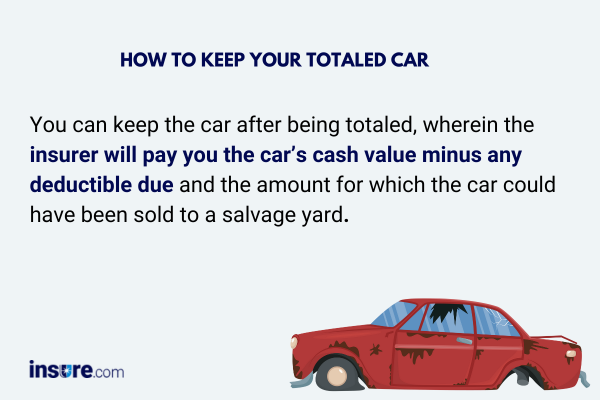
Image Source: www.insure.com
Florida Law: Can You Keep A Totaled Car In Florida Legally?
Yes, in Florida, you can legally keep a car that your insurance company declares a total loss. However, keeping a totaled car involves specific legal steps and requirements, especially concerning its title and future use. The process usually means you will get a settlement check from the insurance company, but the amount will be less because they subtract the car’s salvage value, which is what they could sell the wrecked car for. You will also need to get a special title for the car.
The Car is Totaled: What That Means
When a car is in a crash or has bad damage, an insurance company might say it is “totaled” or a “total loss.” This does not always mean the car is smashed flat. It means the cost to fix the car is very high. In Florida, a car is often called a total loss if the cost to fix it is 80% or more of its actual cash value. This is a key part of Florida totaled vehicle laws.
Figuring Out the Car’s Worth
Finding the car’s actual cash value total loss Florida is the first step. The insurance company looks at what similar cars sell for in your area just before the crash happened. They look at the car’s age, miles, condition, and options. They use this to decide its fair price, not what you paid for it or what it would cost to buy a brand-new one. This is the car’s actual cash value.
Sometimes the insurance company uses a special service or gets quotes from repair shops. If the repair costs plus the salvage value (what the wreck is worth) add up to more than the actual cash value, they might call it a total loss.
Let’s say your car’s actual cash value is $10,000.
The repair shop says fixing it will cost $9,000.
In Florida, if the repair cost is 80% or more of the actual cash value, it is often totaled.
80% of $10,000 is $8,000.
Since $9,000 is more than $8,000, the car is totaled based on the 80% rule.
This rule about 80% is important in Florida. It helps decide when a car is too damaged to fix easily.
What Happens Next: The Settlement
If the car is a total loss, the insurance company will offer you a settlement. This is called the total loss settlement Florida. This offer is usually based on the actual cash value they figured out.
You have a few choices when they offer a settlement:
- Let the insurance company take the car. They pay you the full actual cash value (minus your deductible). They then sell the wrecked car, maybe to a salvage yard.
- Keep the totaled car. They pay you the actual cash value (minus your deductible) AND subtract the car’s salvage value. The car is now yours, but it has a major problem with its title.
Most people let the insurance company take the car. It is simpler. But some people want to keep the car. Maybe it has sentimental value, or they think they can fix it cheaply.
Keeping Your Wrecked Car
Choosing to keep your totaled car in Florida is allowed, but it starts a process with specific steps and costs. This is the process of buying back totaled car from insurance.
The Idea of Keeping It
Why would someone want to keep a totaled car?
* They might believe the damage is not as bad as the insurance company says.
* They might plan to fix it themselves for less money.
* They might want to use parts from the car.
* It might be a classic car or have special meaning.
No matter the reason, deciding to keep the car changes the insurance payout. You will keep totaled car insurance payout, but it will be lower than if you gave the car to the insurer.
What Keeping It Costs
When you keep a totaled car, the insurance company does not just give you the full actual cash value. They subtract what the wrecked car is still worth in its damaged state. This is the salvage value determination Florida.
Imagine the car’s actual cash value was $10,000.
Your deductible is $500.
The insurance company figures the salvage value of the wreck is $1,500.
If you let them take the car: You get $10,000 (actual cash value) – $500 (deductible) = $9,500.
If you keep the car: You get $10,000 (actual cash value) – $500 (deductible) – $1,500 (salvage value) = $8,000.
So, you get $8,000 and you keep the damaged car. The insurance company keeps the $1,500 they would have made selling the wreck. You used your insurance payout to buy back the wreck from them.
Why People Might Keep It
People keep totaled cars often because they think they can fix them for less than the insurance company’s repair estimate. If the actual cash value was $10,000 and the repair estimate was $9,000 (making it totaled), but you think you can fix it for $5,000, keeping it might seem like a good idea.
- You get $8,000 from insurance.
- You spend $5,000 to fix it.
- You end up with a fixed car and $3,000 left over.
This sounds good on paper, but the process of fixing a totaled car legally in Florida is complex and costs more than just the repair parts and labor.
The Road Ahead: Titles and Rules
Keeping a totaled car in Florida is not as simple as fixing it up. The state wants to know that a car has been seriously damaged. This is why the title changes. Florida totaled vehicle laws are strict about this.
Getting a Salvage Title
When you keep a totaled car after the insurance company pays out the total loss settlement Florida, the car must get a new title. It gets a salvage title. This is one of the most important Florida salvage title requirements.
Why You Need One
A salvage title shows everyone that this car was once declared a total loss by an insurance company. It is a red flag. It warns future buyers or mechanics that the car had major damage. You cannot legally drive a car with a salvage title on public roads in Florida, except for very limited trips for inspections or repairs. You cannot sell a car with a salvage title easily, and if you do, its value is very low.
The state needs to track these cars. It helps stop people from hiding damage or selling unsafe cars.
How to Get One (Steps)
The steps to get a Florida salvage title requirements after keeping the car from your insurance company usually involve:
- Get the insurance payout details. The insurance company will give you paperwork showing the car was a total loss and you are keeping it. This paperwork will often state the car’s salvage value determination Florida.
- Fill out state forms. You will need forms from the Florida Department of Highway Safety and Motor Vehicles (FLHSMV). These forms ask for details about the car and the damage.
- Surrender the old title. You must give your regular car title to the state.
- Pay fees. There is a fee to change the title to salvage.
- Submit paperwork. Take all the forms, the old title, and the fee to a Florida tax collector’s office or tag agency.
After they process it, you will get a new title in the mail. This new title will clearly say “SALVAGE” on it. The car is now legally known as a salvage vehicle.
Making Repairs Legally
If you plan on driving the car again, you must fix it. Repairing a totaled car legally Florida means more than just fixing the dents and broken parts. The state wants to make sure the car is safe after being repaired.
You can do the repairs yourself, or hire a shop. Keep good records of all repairs, including receipts for parts. You will need these later.
The Inspection Step
Before a car with a salvage title can get a regular title back and be driven again, it must pass a state inspection. This inspection is strict. The state checks to make sure the car was fixed correctly and uses legal parts. They check for stolen parts, too.
You have to take the car for this inspection. Remember, you can only drive it there for the inspection, not for regular trips.
Getting a Rebuilt Title
After the car with the salvage title is fully repaired and passes the state inspection, you can apply for a rebuilt title. This is the rebuilt title process Florida.
What a Rebuilt Title Means
A rebuilt title replaces the salvage title. It means the car was once totaled and then fixed and inspected. The title will say “REBUILT.” This tells everyone the car had major damage but has been repaired and checked.
A car with a rebuilt title can be legally driven on public roads, registered, and insured. However, its value is still much lower than a car with a clean title. The rebuilt status stays with the car forever.
How to Get It (Steps)
The rebuilt title process Florida after repairing the car includes:
- Complete repairs. Fix the car completely. Keep all repair records and receipts for parts.
- Get an inspection. Schedule and pass the state motor vehicle inspection for rebuilt vehicles. You will need your repair records and the salvage title for this. The inspection confirms the car is safe and not made of stolen parts.
- Fill out forms. Get the right forms from the FLHSMV.
- Submit paperwork. Provide the passed inspection form, the salvage title, the repair records, and the completed forms to a tax collector’s office.
- Pay fees. There are fees for the inspection and for getting the rebuilt title.
Once everything is approved, the state will issue you a rebuilt title for the car. You can then register it and get insurance for driving.
What About Selling It?
You might decide later that you want to sell the car, even after keeping it and possibly fixing it. Selling a totaled car in Florida depends heavily on what type of title it has.
Selling with a Salvage Title
Can you sell a car with just a salvage title? Yes, you can selling a totaled car in Florida with a salvage title. However, the buyer must know it has a salvage title.
- You cannot sell it as a regular used car.
- Its value is very low, mainly good for parts.
- Most buyers will be salvage yards, mechanics looking for parts, or people who plan to go through the rebuilding process themselves.
- You must tell the buyer the title is salvage.
It is much harder to sell a car with only a salvage title compared to one with a rebuilt title or a clean title.
Selling with a Rebuilt Title
Selling a car with a rebuilt title is more common than selling one with a salvage title. Selling a totaled car in Florida that has been rebuilt means:
- You must clearly tell the buyer the car has a rebuilt title. This is the law.
- The value of the car will be much lower than a similar car with a clean title. Buyers expect a big discount because of the past damage history.
- Buyers might be worried about the quality of the repairs or hidden problems. Getting a pre-purchase inspection by a trusted mechanic is common for buyers of rebuilt cars.
- You should provide all documentation you have about the repairs and the inspection process.
Even with a rebuilt title, selling can take longer, and you will get less money than if the car had never been totaled.
Other Important Things
Dealing with a totaled car involves a few other points that are good to know.
How Salvage Value is Found
The salvage value determination Florida is usually done by the insurance company. They might:
* Look at market prices for similar damaged vehicles.
* Get bids from salvage yards or parts buyers.
* Use databases that track values of wrecked cars.
The salvage value is basically what someone would pay for the car in its damaged state, mostly for its parts or scrap metal. This value is subtracted from your payout if you keep the car.
Your Insurance Paycheck Revisited
When you keep totaled car insurance payout, remember that the amount you get is less because the insurance company is giving you the car wreck instead of selling it themselves.
The payout calculation is typically:
Actual Cash Value – Deductible – Salvage Value = Your Payout
This is the money you receive from the insurance company. You then have the damaged car. The costs to fix it and get a rebuilt title are paid by you out of this money or your own savings. If the repair costs are higher than expected, or you have trouble with the inspection, the money you got from insurance might not be enough.
Weighing Your Options
Keeping a totaled car in Florida involves more than just a lower insurance check. It means taking on the responsibility for the vehicle’s condition, its required title changes, and the costs and effort of repair and inspection.
| Option | What Happens | Insurance Payout | Car’s Title | Can You Drive It Legally? | Effort Involved |
|---|---|---|---|---|---|
| Let Insurer Take Car | Insurer pays you, takes the car, sells it for salvage. | Full ACV minus deductible. | Insurer deals with salvage title. | No. | Low (Sign paper, get check). |
| Keep the Totaled Car | Insurer pays you less, you keep the damaged car. | Full ACV minus deductible MINUS salvage value. | Must get a Salvage Title. | No (except for specific steps). | High (Paperwork, fees, managing disposal). |
| Keep & Repair the Car | Insurer pays you less, you keep, fix it, get inspected. | Full ACV minus deductible MINUS salvage value. | Must get Salvage Title, THEN Rebuilt Title. | Yes, AFTER getting Rebuilt Title. | Very High (Repairs, records, inspection, titles, fees, time). |
Deciding whether to keep the car should include thinking about:
* How bad is the damage? Can it be fixed safely?
* How much will repairs really cost? Get estimates.
* How much will the title steps and inspections cost? (Fees, time off work).
* Are you prepared for the car to always have a salvage or rebuilt history, making it worth less?
For many people, the simplest path is to let the insurance company handle the totaled car. However, knowing you can keep it, and knowing the Florida totaled vehicle laws and steps involved, lets you make the best choice for your situation.
FAQ
Can I drive a car with a salvage title in Florida?
No, you cannot legally drive a car with a salvage title on Florida roads for everyday travel. You can only drive it for specific reasons like taking it for repairs or inspection needed to get a rebuilt title.
What is the difference between a salvage title and a rebuilt title in Florida?
A salvage title means the car was declared a total loss and has not been repaired and inspected by the state. A rebuilt title means the car was a total loss, has been fixed, and passed a state inspection showing it is safe.
How do I find the salvage value of my car in Florida?
The insurance company determines the salvage value during the total loss settlement process. They will tell you this value if you choose to keep the car.
What are the Florida salvage title requirements?
Key requirements include the car being declared a total loss by an insurer, surrendering the old title, filling out state forms, and paying fees to get the salvage title from the FLHSMV.
How long does the rebuilt title process Florida take?
The time can vary. It depends on how long repairs take, how quickly you can get an inspection appointment, and how fast the state processes the paperwork. It could take weeks or even months.
Can I sell a car with a rebuilt title in Florida?
Yes, you can sell a car with a rebuilt title in Florida. However, you must tell the buyer it has a rebuilt title, and its value will be less than a car with a clean title.
What paperwork do I need to keep when repairing a totaled car in Florida?
Keep detailed records of all repairs, including receipts for parts bought and labor costs. You will need these when you apply for the rebuilt title and during the state inspection.
Will my insurance be higher on a car with a rebuilt title in Florida?
Some insurance companies may charge higher rates or offer limited coverage on vehicles with rebuilt titles because of their prior damage history. Some might even refuse to insure them fully. Always check with your insurance provider.