A car that sounds like a lawn mower or a tractor is usually making too much noise from its exhaust system. This system is built to quiet down the loud sounds your engine makes. When parts of the exhaust system break or leak, the noise escapes before it can be muffled.
The most common reason for a car sounding like a lawn mower is a problem with the muffler or other parts of the exhaust system like pipes or connections. Let’s look at why this happens and how to fix it.
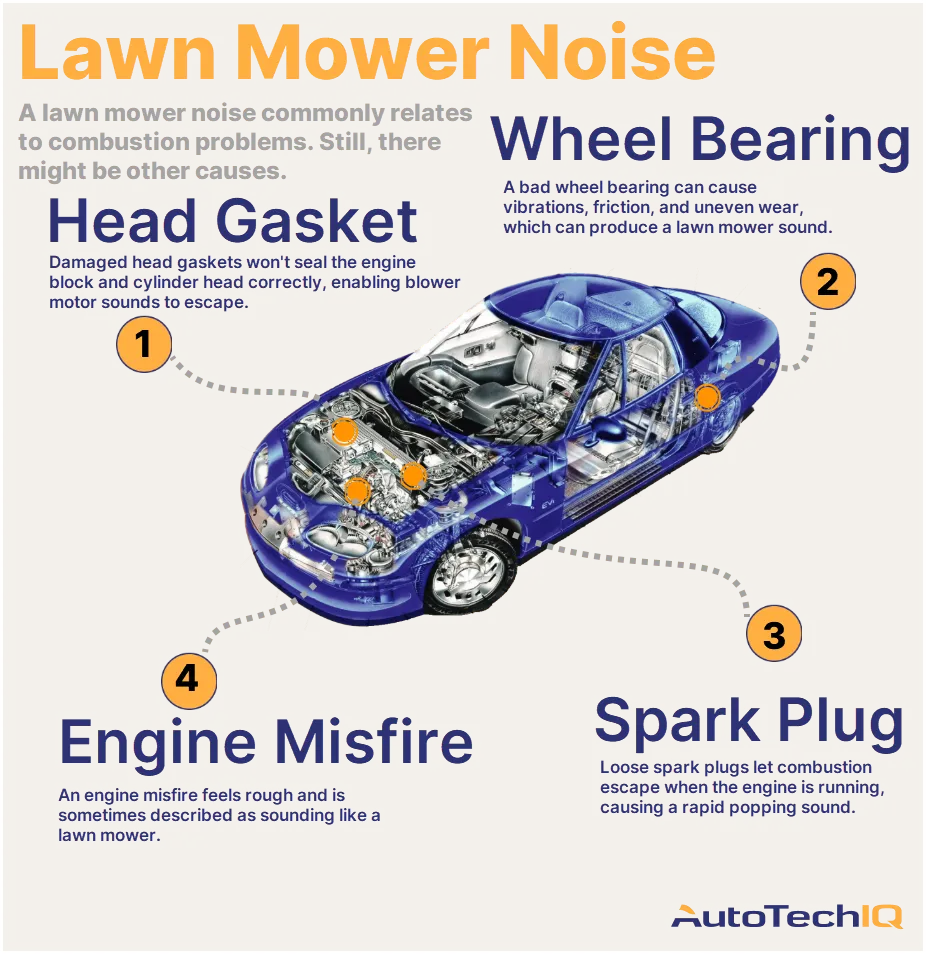
Image Source: www.autotechiq.com
Why Your Car’s Exhaust Gets Loud
Your car’s exhaust system is a set of pipes. It takes hot gases from the engine out of the back of the car. Along the way, it has parts that clean the gases and make the noise quieter.
Think of your exhaust like a special sound filter. If the filter is broken, the loud sound gets out.
There are several places in the exhaust system where things can go wrong and cause a loud noise.
The Muffler Problem
Your muffler is like a sound dampener. It’s a metal box, usually at the back of the car. Hot gases go in, bounce around inside, and the sound waves cancel each other out. Quiet gas comes out.
- What it does: The muffler is the main part that reduces engine noise.
- Why it fails: Mufflers can rust from the inside and outside. Holes can form. The inside parts can break apart. Salt on roads makes them rust faster.
- How it sounds: A broken muffler lets the full engine sound out. This makes a very loud roaring or rumbling noise. It’s a classic
muffler broken noise. It’s a definitecar exhaust sounds loud. It can make yourcar sounds like tractorpulling a heavy load. - Fixes: If the muffler has holes, a mechanic might be able to patch it for a short time. The best fix is to replace the whole muffler. This is a common
loud exhaust repair. A new muffler can make your car quiet again.
Leaks in the Exhaust Pipe
The exhaust pipes run from the engine to the muffler and out the back. They get hot and cold. They can rust. They can hit things like speed bumps or road debris.
- Where leaks happen: Leaks can happen anywhere along the pipe. They happen at joints where pipes connect. They happen where pipes bend. They happen near the engine at the manifold.
- Why they happen: Rust is a big reason. The metal gets weak and breaks. Hitting something can put a hole or crack in the pipe.
- How it sounds: A small leak might make a ticking or hissing sound, especially when the engine is cold. A bigger leak makes a puffing sound. A large hole in the pipe makes a loud roar, much like a broken muffler. This is a clear
exhaust leak sound. It means you have adamaged exhaust pipe. It makes yourcar exhaust sounds loud. - Fixes: A small hole might be patched with special tape or paste. A larger hole or crack often needs the pipe section replaced. Sometimes a mechanic can weld a new piece of pipe in. Fixing a
damaged exhaust pipestops theexhaust leak sound.
Issues with the Catalytic Converter
The catalytic converter is further up the exhaust pipe, closer to the engine. Its job is important. It cleans harmful gases before they leave the car.
- What it does: It uses special materials to change bad gases into less harmful ones.
- Why it fails: The inside of the converter can break apart. This often happens if the engine isn’t running right (like misfiring). The broken pieces can clog the converter. Or the heat can melt the inside parts.
- How it sounds: If the inside material breaks, it can rattle around inside the metal case. This makes a
catalytic converter rattle. You might hear thisrattling noise under vehicle, especially when you start the car or rev the engine slightly. If the converter is clogged, the engine can’t push gases out well. This makes the engine work harder and can cause a loud, rushing sound or just a loud engine struggling. - Fixes: A faulty catalytic converter cannot be repaired. It must be replaced. This is often an expensive fix because the converter is made of precious metals. Ignoring a clogged converter can hurt your engine.
Problems at the Exhaust Manifold
The exhaust manifold is right where the exhaust system starts, bolted to the engine. It collects exhaust gases from all the engine’s cylinders into one pipe.
- Where it is: It’s bolted directly to the side of the engine.
- Why it leaks: The gasket between the manifold and the engine can fail. This allows gases to escape. The manifold itself can crack from heat.
- How it sounds: A manifold leak often sounds like a ticking or puffing noise. It is usually loudest when the engine is cold. As the engine heats up and the metal expands, the leak might get smaller and quieter. This is another form of
exhaust leak sound. - Fixes: The gasket needs to be replaced. If the manifold is cracked, it might need to be replaced or sometimes repaired by welding (though replacement is more common).
Here is a quick look at the common exhaust problems:
| Part Failing | Common Sound | What to Look For | Fix |
|---|---|---|---|
| Muffler | Loud roar, rumble | Holes, rust, damage on the metal box | Replace muffler, patch hole (temporary) |
| Exhaust Pipe | Hiss, puff, loud roar | Holes, cracks, rust spots on pipes | Patch, replace pipe section, weld |
| Catalytic Converter | Rattle | Shaking sound from the converter body | Replace converter |
| Exhaust Manifold | Ticking, puffing | Black soot marks near where it bolts to engine | Replace gasket, replace manifold |
Other Noises Making Your Car Loud
Sometimes the loud rattling noise under vehicle isn’t a main part of the exhaust system failing itself. It could be something attached to it or near it that has come loose.
Loose Heat Shields
Cars have metal shields around the exhaust pipes and muffler. These shields stop the hot exhaust from heating up other parts of the car too much (like the floor under your feet or fuel lines).
- What they do: Protect nearby parts from the high heat of the exhaust system.
- Why they loosen: The bolts or clamps that hold them on can rust and break. The metal shield itself can rust and break away from its mounting points.
- How it sounds: A
loose heat shield rattleis a very commonrattling noise under vehicle. It’s a metallic buzzing or rattling sound. It might only happen at certain engine speeds or when going over bumps. It usually sounds like thin metal vibrating. - Fixes: This is often an easy fix. A mechanic can remove the loose shield, reattach it, or put on a new one. Sometimes, if it’s badly rusted, they might just remove it if it’s not in a critical spot (though keeping heat shields is safer).
Exhaust Hangers or Mounts
The exhaust system hangs underneath your car. It’s held up by rubber or metal hangers and mounts that attach it to the car’s body.
- What they do: Hold the weight of the exhaust system and allow it to move slightly as the car goes over bumps.
- Why they fail: The rubber can break or rot. The metal parts can rust or bend.
- How it sounds: If a hanger breaks, the exhaust pipe might sag or hit against the car body or other parts underneath. This can cause knocking, banging, or a metallic clunking
rattling noise under vehicle. The sound might change when you drive over rough roads. - Fixes: Broken or worn exhaust hangers are usually simple and cheap to replace. A mechanic lifts the car, removes the old hanger, and puts on a new one.
Engine Problems Making Noise
While a lawn mower sound is most often the exhaust, sometimes a very loud car engine rumbling loud sound can make you think it’s the exhaust. The exhaust is supposed to quiet the engine noise. If the engine itself is making abnormal, very loud noises, that’s a different and often more serious issue.
Engine Issues
A healthy engine makes a relatively smooth, quiet sound when running, thanks to the exhaust system. If the engine itself is making a very loud, rough rumbling, knocking, or tapping noise, it means something inside the engine is wrong. This isn’t an exhaust leak sound or a muffler broken noise.
- Explain the difference: The exhaust system just deals with the sound after it leaves the engine cylinders. If the noise is bad before it gets to the exhaust, the problem is with the engine itself. A
car engine rumbling loudmight sound different from a pure exhaust roar. It could be deeper or have other noises mixed in like knocking or tapping. It can make yourcar sounds like tractor, but not just from the back pipe – the sound seems to come more from the front of the car. - Potential causes (briefly): Low engine oil, worn internal parts (like bearings), problems with pistons, timing issues, or severe misfires can cause very loud engine noises.
- How it sounds: Deep, heavy knocking; metallic tapping; rough, loud rumbling that doesn’t sound like escaping air.
- Fixes: This requires a proper engine diagnosis by a qualified mechanic. The fix depends completely on what part of the engine is failing. Engine repairs can range from simple (adding oil) to very complex and expensive (rebuilding or replacing the engine).
Important Note: If you suspect the loud noise is coming directly from the engine and not the exhaust pipes, stop driving the car if possible and get it checked right away. Engine problems can cause more damage if ignored.
Finding the Loud Noise Source
Okay, your car is loud like a lawn mower. How do you figure out exactly what’s wrong? You need to find where the car exhaust sounds loud is coming from.
Simple Checks You Can Do
You can do some simple checks yourself. Always be careful when working around a car, especially a hot one.
- Safety First: Never crawl under a car unless it is safely supported by jack stands. Do NOT rely only on the car’s jack. Exhaust parts get very hot. Let the car cool down before touching anything.
- Listen Carefully: Start the engine. Where is the noise coming from? Is it loudest under the front of the car (near the engine)? Under the middle? Near the back (where the muffler is)? Walk around the car and listen. This can help tell you if it’s an engine issue (
car engine rumbling loud) or an exhaust issue (exhaust leak sound,muffler broken noise). - Visual Check (Engine Off, Cool): Look under the car. Can you see any obvious holes in the pipes or muffler? Do any parts look rusted through? Is the muffler hanging low? Are any pipes sagging? Look for black soot marks on pipes or near joints – this can show where an
exhaust leak soundis happening. Look at the heat shields – are they loose? Are they rattling if you gently tap them (when cool)? Check the exhaust hangers – are they broken? Look for anydamaged exhaust pipesections. - Gentle Vibration Check (Engine On, Parked, Be Safe): Only do this if you can do it safely. With the engine running and the car parked securely (parking brake on), you can gently touch parts of the exhaust with a stick or tool, not your hand, to see if a
rattling noise under vehiclestops when pressure is applied. This can help find aloose heat shield rattle. Do NOT put your hands near moving parts or hot pipes.
When to Get Help
Even with simple checks, finding the exact spot of a leak or problem can be hard. Also, working on exhaust systems requires tools and knowledge.
You should get professional help from a mechanic if:
- You can’t find the source of the
car exhaust sounds loud. - The noise seems to be coming from the engine itself (
car engine rumbling loud). - The car is also running badly (losing power, check engine light is on).
- You see a badly
damaged exhaust pipeor muffler and don’t know how to fix it. - You are not comfortable working under your car or don’t have the right safety gear.
- You need a proper
loud exhaust repairlike replacing a catalytic converter or welding a pipe.
Mechanics have lifts to safely inspect the whole exhaust system. They can spot small leaks or internal damage you might miss. They have the tools and parts needed for loud exhaust repair.
The Fixes
Once the problem is found, the fix depends on what is broken.
- Small Holes/Leaks: Sometimes a temporary patch can be done with exhaust repair tape or paste. This is often a short-term fix for an
exhaust leak sound. - Larger Holes or Damaged Pipes: Sections of pipe might need to be cut out and new sections welded in. This is a common
loud exhaust repairfor adamaged exhaust pipe. - Broken Muffler: The old muffler is cut off and a new one is clamped or welded into place. This fixes
muffler broken noise. - Loose Heat Shield: The loose shield can often be reattached with new clamps or bolts. If it’s too rusted, it might be removed or replaced. This stops a
loose heat shield rattle. - Broken Hangers: The old hangers are removed, and new ones are installed. This fixes rattling caused by the exhaust hitting the car.
- Catalytic Converter Rattle/Failure: The old converter is cut out and a new one is installed. This is required if the converter is damaged or clogged.
- Engine Noise: This requires specific engine repair based on what the mechanic finds. It could be simple or complex.
The cost of loud exhaust repair varies a lot. A loose heat shield might be very cheap to fix. Replacing a muffler is moderately priced. Replacing a catalytic converter can be expensive. Engine repairs can be the most costly.
Stopping Loud Noises Before They Start
Can you stop your car from sounding like a lawn mower in the future? You can take steps to help keep your exhaust system in good shape.
Simple Care Steps
Taking care of your car helps prevent problems down the road.
- Regular Checks: When you get your oil changed, ask the mechanic to quickly look at your exhaust system. They can spot rust or hangers that are starting to fail.
- Wash Under Your Car: If you live where salt is used on roads in winter, washing the underside of your car helps remove salt. Salt makes metal rust faster, including your exhaust pipes and muffler.
- Mindful Driving: Try not to hit potholes, curbs, or debris on the road. These can bend or break your exhaust pipes or knock off heat shields.
- Listen to Your Car: Pay attention to new sounds. A small
exhaust leak soundmight start as a quiet tick. Fixing it early is easier and cheaper than waiting until it’s a loud roar (car exhaust sounds loud).
By taking care of your exhaust system, you can help prevent muffler broken noise, catalytic converter rattle, exhaust leak sound, and rattling noise under vehicle. This helps your car stay quiet and run well.
Frequently Asked Questions
Here are some common questions about a loud car exhaust.
Q: Is it okay to drive with a loud exhaust?
A: Driving with a loud exhaust is not good. It’s against the law in many places because of noise rules. A damaged exhaust pipe or muffler broken noise also means harmful gases might be leaking under your car, which can be dangerous if they get into the cabin. If the catalytic converter rattle means it’s clogged, it can hurt your engine. It’s best to get loud exhaust repair done as soon as possible.
Q: Will a loud exhaust hurt my car’s performance or gas mileage?
A: A small exhaust leak sound or loose heat shield rattle might not affect performance much. But a large damaged exhaust pipe or muffler broken noise can reduce the pressure needed in the exhaust system, which can slightly affect how the engine runs. A clogged catalytic converter (catalytic converter rattle turning into a block) will definitely hurt engine power and gas mileage badly.
Q: Can I fix a small exhaust leak myself?
A: You can try temporary fixes like exhaust tape or paste on small holes if you can safely access the area when the car is cool. However, these are often temporary. For a lasting loud exhaust repair, welding or replacing the pipe is usually needed, which requires tools and skill.
Q: What is the most common cause of a car sounding like a lawn mower?
A: The most common cause is usually a hole or rust in the muffler or a large exhaust leak sound from a damaged exhaust pipe. These are the main parts that keep the exhaust quiet, so when they fail, the sound gets very loud.
Q: How long do exhaust systems usually last?
A: How long an exhaust system lasts depends on where you live (salt, weather), how you drive, and the car’s quality. In places with a lot of road salt, parts might only last 5-10 years. In dry areas, they can last much longer, sometimes the life of the car. Rust is the biggest enemy.
Q: Can a loud noise be from something else, not the exhaust?
A: Yes. While the exhaust is the most likely cause of a “lawn mower” sound, very loud engine noises (car engine rumbling loud) can sometimes sound similar or add to the noise. Also, other loose parts underneath your vehicle can cause a rattling noise under vehicle, although often more metallic or clicking than a deep roar. It’s important to figure out exactly where the sound is coming from.
If your car sounds like a lawn mower or car sounds like tractor, don’t wait too long to check it out. Finding the rattling noise under vehicle or loud roar early can save you money and keep you safe.