Owning a self-serve car wash can be a good way to make money. People often ask about the potential earnings. The truth is, how much a self-serve car wash makes each year can be quite different from one place to another. Some make a modest living for the owner, while others can bring in a lot of money. It all depends on many things, which we will look at closely. We will explore self serve car wash profitability and break down the car wash business revenue potential. We will also talk about average car wash earnings and look at the money that goes out, known as self serve car wash expenses. By the end, you will have a better idea of the monthly income self serve car wash businesses might see and what affects their success.
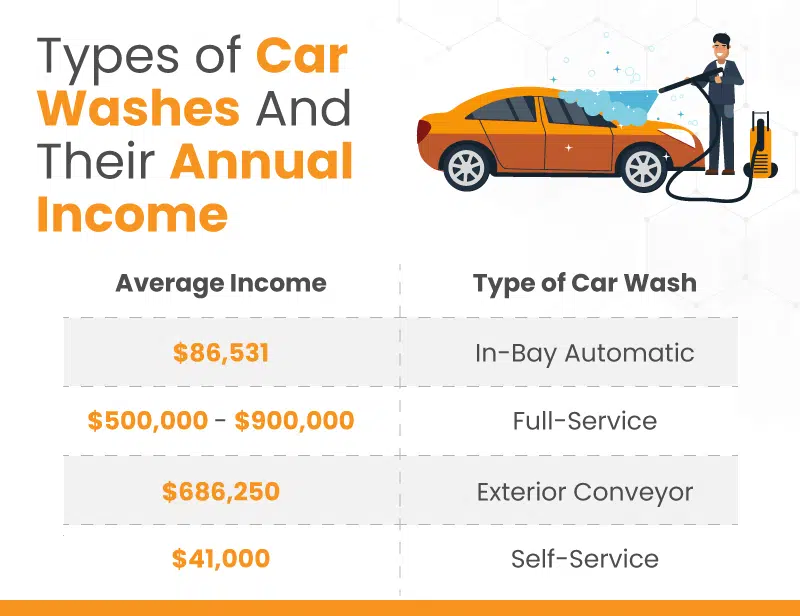
Image Source: koronapos.com
Getting Started: What is a Self-Serve Car Wash?
Let’s start with the basics. A self-serve car wash is a place where people clean their own cars. The wash provides the bays, water, soap, brushes, and vacuums. Customers pay for the time they use or for specific services.
- Customers do the work: People like that they can clean their car just how they want.
- Simple setup: It usually has several bays or stalls.
- Coin or card payment: Machines in each bay take money.
- Less staff needed: This is a big difference from full-service washes.
This business model has lower labor costs. This can help the self serve car wash profitability picture. But it still has costs for upkeep and supplies.
Seeing the Money Come In: Car Wash Business Revenue
How does a self-serve car wash make money? The main way is through people paying to use the wash bays.
- Bay Usage: Customers pay for wash time. They choose options like soap, rinse, wax, and spot-free rinse. Each option costs money or uses up paid time.
- Vacuum Cleaners: Most self-serve washes have vacuums. These are usually paid separately, often with coins. They are a good source of extra income.
- Vending Machines: Selling items like car air fresheners, cleaning cloths, or car care products from vending machines adds a little more money.
- Automatic Wash: Some self-serve places also have an automatic wash bay. This costs more but needs less work from the customer. This can boost car wash business revenue a lot.
Each bay or vacuum works like a small store. The money adds up from many customers throughout the day.
Factoring In How Much They Earn: Average Car Wash Earnings
Talking about average car wash earnings is tricky. There is no single number that fits every wash. Earnings change a lot based on where the wash is and how it is run.
- Small washes: A small wash in a quiet town might make less per year.
- Busy washes: A wash in a busy spot in a city might make much more.
- Estimates vary: Some sources say an average wash might make $40,000 to $70,000 per year per bay. This is just the money coming in (revenue).
- Overall revenue: A wash with 4-6 self-serve bays and a few vacuums could potentially bring in $150,000 to $400,000 or more in total yearly revenue.
- With automatic wash: Adding an automatic bay can push total revenue higher, maybe to $500,000 or even $700,000+ per year in good spots.
Remember, these are rough numbers for money coming in. This is not the profit. Profit is what is left after paying all the bills.
Figuring Out What You Spend: Self Serve Car Wash Expenses
Making money is one thing, but spending money is also a big part of the business. Self serve car wash expenses can eat into the revenue. You must know these costs to understand the real self serve car wash profitability.
Let’s look at the main costs:
h4. Paying for the Property
- Rent or Mortgage: You either pay rent for the land and building, or you pay a mortgage if you bought the property. This is often the biggest fixed cost. Location affects this cost a lot. Land in a busy city spot costs more than land in a small town.
- Property Taxes: Local taxes on the property add to the cost.
h4. Keeping the Machines Running
- Water: Cars need water to get clean. Water bills can be high, especially in places where water is scarce or costly.
- Electricity: Power runs the pumps, heaters (for hot water), lights, vacuums, and payment systems. This is another big cost. Heating water in cold places uses a lot of electricity or gas.
- Chemicals: Soap, wax, spot-free rinse chemicals, and other cleaning products are needed all the time. Buying these in bulk can help save money.
- Maintenance and Repairs: Machines break down. Pumps, hoses, spray guns, coin acceptors, and vacuums need fixing or replacing. This can be a big and unplanned expense. Regular check-ups help prevent big problems.
- Utilities: Other costs like sewage, gas (if used for heating), and trash removal.
h4. Other Costs to Consider
- Insurance: You need insurance to cover things like accidents, damage to property, or someone getting hurt.
- Marketing and Advertising: Letting people know about your wash costs money. Signs, local ads, or online marketing helps bring customers in.
- Supplies: Things like paper towels, hand soap for a small restroom, or small items for sale in vending machines.
- Licensing and Permits: Fees to the city or state to operate the business.
- Small Staff Costs: Even self-serve washes might need a part-time person to clean up, handle problems, or do basic repairs.
- Payment Processing Fees: If you accept credit cards (which you should!), the card companies charge fees for each transaction.
Adding up all these self serve car wash expenses gives you a clear picture of the money going out.
h5. Example of Monthly Expenses
Here is a very simple example for a small wash with 4 self-serve bays:
| Expense Category | Estimated Monthly Cost |
|---|---|
| Rent/Mortgage & Taxes | $2,000 – $5,000 |
| Water & Sewage | $800 – $2,000 |
| Electricity & Gas | $1,000 – $2,500 |
| Chemicals & Supplies | $500 – $1,500 |
| Maintenance & Repairs | $300 – $1,000 |
| Insurance | $100 – $300 |
| Marketing | $50 – $200 |
| Fees & Licenses | $50 – $150 |
| Total Estimated Monthly Expenses | $4,800 – $12,650 |
This table shows a range. A wash in a high-cost area will be at the higher end. A wash in a lower-cost area will be at the lower end. This is just an example. Actual costs will be different for every location.
Pinpointing What is Left: Monthly Income Self Serve Car Wash
Now we can start to figure out the monthly income self serve car wash owners might see after paying bills. This is the profit.
Profit is: Total Revenue – Total Expenses
Let’s use the example monthly expenses from above. We need to estimate monthly revenue. This is hard without knowing the specific wash, but let’s use a simple idea.
Imagine a wash with 4 bays and 3 vacuums.
* Each bay makes an average of $15-$25 per hour it is in use.
* Let’s say each bay is used 5 hours a day on average (very rough guess).
* 4 bays * 5 hours/day * $20/hour = $400 per day from bays.
* $400/day * 30 days/month = $12,000 per month from bays.
* Vacuums might bring in an extra $50-$100 per day total.
* $75/day * 30 days/month = $2,250 per month from vacuums.
* Total Estimated Monthly Revenue = $12,000 + $2,250 = $14,250
Now subtract the estimated expenses ($4,800 to $12,650) from the estimated revenue ($14,250).
- Lower Expense Scenario: $14,250 (Revenue) – $4,800 (Expenses) = $9,450 Monthly Profit
- Higher Expense Scenario: $14,250 (Revenue) – $12,650 (Expenses) = $1,600 Monthly Profit
This shows a wide range for monthly income self serve car wash businesses can have. In this simple example, monthly profit could be anywhere from $1,600 to over $9,000. This translates to a yearly profit of roughly $19,200 to $108,000.
This is a very basic example. Real numbers depend heavily on how busy the wash is and how well expenses are managed. A wash with an automatic bay would likely have much higher revenue and potentially higher profit, but also higher initial costs and operating expenses.
Learning What Makes Money Change: Factors Affecting Car Wash Profit
Many things make the profit go up or down for a self-serve car wash. It is important to know these factors affecting car wash profit to run a successful business.
- Location, Location, Location: This is often the most important factor.
- Is the wash on a busy road? More cars passing by means more potential customers.
- Is it easy to get in and out? People don’t want to struggle to turn into the lot.
- Is it near homes or shopping areas? People tend to wash cars close to where they live or run errands.
- Is there a lot of competition nearby? Having many other washes close by can lower your customer numbers and prices.
- Weather: Weather has a huge impact.
- Rainy days mean almost no customers.
- Cold weather, especially freezing temperatures, stops people from washing their cars outside. It also means you might need to close bays to prevent freezing damage.
- Nice, sunny days bring lots of customers.
- Events like pollen season or dusty conditions can increase demand.
- Pricing: What you charge for wash time and options matters.
- If prices are too high, customers go elsewhere.
- If prices are too low, you might not make enough money to cover costs, even if you are busy.
- Finding the right price balances value for the customer and profit for the owner.
- Condition of the Wash: Is the wash clean and well-kept?
- Customers like clean bays, working machines, and good water pressure.
- A dirty or broken wash makes people drive away.
- Regular cleaning and fixing things right away are key.
- Quality of Service/Supplies: Do the soaps clean well? Is the spot-free rinse actually spot-free?
- Good quality chemicals and equipment lead to cleaner cars and happier customers who come back.
- Hours of Operation: Most self-serve washes are open 24/7. This lets customers wash their cars any time it is convenient for them.
- Marketing and Visibility: Do people know your wash exists? Good signs, a clean look, and perhaps some local ads help bring people in.
- Economic Conditions: When the economy is bad, people might wash their cars less often or wash them at home to save money.
Managing these factors well can greatly improve self serve car wash profitability.
The First Big Step: Cost to Open Self Serve Car Wash
Opening a self-serve car wash is a major investment. The cost to open self serve car wash can be very high, often hundreds of thousands of dollars, and sometimes over a million, depending on the size and location.
Here are the main costs involved when starting:
- Buying the Land: This is often the single biggest cost. Prime locations cost a lot more.
- Building the Structure: Building the wash bays, equipment room, and maybe a small office. This includes concrete pads, walls, and roofing.
- Buying Equipment:
- The washing equipment itself (pumps, booms, sprayers, soap dispensers for each bay).
- Water heating system.
- Water treatment system (like a reverse osmosis system for spot-free rinse).
- Vacuum cleaner units.
- Payment systems (coin machines, bill acceptors, credit card readers).
- Security cameras.
- Lighting.
- Permits and Fees: Costs for getting approvals to build and operate.
- Utility Connections: Bringing in water, electricity, and sewage lines. This can be very costly if the property is undeveloped.
- Paving and Landscaping: Creating the driveway, parking areas, and making the place look nice.
- Initial Supplies: Buying the first large amounts of chemicals.
- Working Capital: Money needed to cover expenses for the first few months before the business is making enough profit.
h5. Cost Range Example
The cost to open self serve car wash varies greatly:
- Small, Basic Wash (Rural/Less Prime Area): $200,000 – $500,000
- Medium Wash (Suburban Area, Good Location): $500,000 – $1,000,000
- Large Wash (Busy City Location, Multiple Bays, maybe Automatic): $1,000,000 – $3,000,000+
These are just estimates. The actual cost depends on land prices, building costs in the area, and the quality and amount of equipment installed. This high upfront cost is why self-serve car washes are a long-term investment.
Waiting to Get Your Money Back: Car Wash Return on Investment
Car wash return on investment (ROI) looks at how long it takes to earn back the money you spent to open the wash. It also measures how much profit you make compared to the cost.
- Calculating ROI: A simple way to think of ROI is (Annual Profit / Total Investment Cost) * 100%.
- Typical ROI Time: Because the initial cost is high, it can take several years to get your money back. A common timeframe for car wash return on investment to pay back the initial cost is 5 to 10 years, or even longer for very expensive projects.
- Improving ROI: You improve ROI by:
- Increasing revenue (more customers, higher prices if possible).
- Lowering expenses (managing costs for water, power, chemicals, doing regular maintenance to avoid expensive repairs).
- Choosing a good location from the start.
A well-run wash in a good spot will have a better ROI than a poorly run wash in a bad spot.
Planning for Success: Self Serve Car Wash Business Plan
Before opening a car wash, or to improve an existing one, a self serve car wash business plan is very helpful. It is a roadmap for the business.
A good business plan includes:
- Summary: A short overview of the whole plan.
- Company Description: What your wash is like, its goals.
- Market Analysis: Who are your customers? Who are your competitors? What are prices like in the area?
- Organization and Management: How the business will be run, who will do what.
- Service Line: What services you will offer (wash bays, vacuums, vending, automatic wash).
- Marketing and Sales Strategy: How you will attract customers.
- Financial Projections: This is a key part. It includes:
- Startup costs (the cost to open self serve car wash).
- Projected revenue (how much money you expect to make).
- Projected expenses (self serve car wash expenses).
- Projected profit (monthly income self serve car wash after costs).
- Cash flow statements (tracking money in and out over time).
- Analysis of car wash return on investment.
Creating a solid self serve car wash business plan forces you to think through all parts of the business. It helps you find potential problems and plan how to deal with them. It is also necessary if you need a loan from a bank.
Earning a Living: Car Wash Owner Salary
The car wash owner salary is not a fixed amount like a regular job. The owner’s income comes from the profit the business makes.
- Drawing a Salary: An owner can choose to pay themselves a regular salary from the business profit.
- Taking Distributions: Owners can also take money out of the business profit less regularly, maybe once a year or when there is extra cash.
- Profit Reinvestment: Smart owners often put some of the profit back into the business. This could be for upgrades, major repairs, or expansion. This helps the business grow and make more money in the future.
- Depends on Profitability: If the wash is very profitable, the owner can take a larger salary or more money out. If profit is low, the owner might take very little or no salary for a time.
- Varies Greatly: Just like the overall profit, the potential car wash owner salary varies a lot. An owner might take home anywhere from $20,000 to $100,000+ per year, depending entirely on the business’s success and how they choose to manage the money.
It is important to have enough profit to pay the bills, set money aside for unexpected repairs, reinvest in the business, and then pay the owner.
Summing Up Self Serve Car Wash Profitability
To wrap up the idea of self serve car wash profitability, it is clear it is not a simple question with a single answer.
- Potential is Real: Self-serve car washes can be very profitable businesses.
- Investment is High: But they require a large amount of money to start.
- Costs Must Be Managed: Keeping a close eye on self serve car wash expenses is vital.
- Revenue Varies: How much money comes in depends a lot on external factors like location and weather, and how well the wash is run.
- Profit is Not Revenue: The money made after paying all bills is the true measure of success.
The average car wash earnings can range widely. The monthly income self serve car wash provides to the owner after all costs can be a few thousand dollars or much more. It takes careful planning (using a self serve car wash business plan), smart management, and a good location to achieve strong car wash return on investment and a healthy car wash owner salary.
It’s a business that requires work, upkeep, and dealing with things you cannot control, like the weather. But for the right person in the right place, it offers a chance for good returns on the initial cost to open self serve car wash.
Frequently Asked Questions (FAQ)
h4. Are self-serve car washes still popular?
Yes, many people still prefer self-serve washes. They like being able to clean their car themselves, control the washing process, and often find it cheaper than automatic washes.
h4. How much does it cost to wash a car at a self-serve?
Costs vary. Often, you buy time, for example, $3-$5 for a few minutes. Longer washes or using extra features cost more. A full wash might cost $5 to $15 or more depending on time used and prices.
h4. Is owning a self-serve car wash a lot of work?
It might seem hands-off, but it requires regular work. You need to clean the bays daily, restock chemicals, do basic repairs, collect money, handle customer issues, and manage the business side. It’s less labor than a full-service wash but not zero work.
h4. How can I make my self-serve car wash more profitable?
Focus on location, keep the wash clean and well-maintained, offer good quality chemicals, consider accepting credit cards (many customers don’t carry cash), add popular extras like powerful vacuums or vending machines, and market your wash locally. Controlling your water and energy costs is also important.
h4. What are the biggest risks?
Bad weather (especially long periods of rain or freezing), high competition, major equipment breakdowns, rising utility costs, and a poor location are key risks that can hurt profitability.