How many speed sensors does a car have? It is not just one. The number changes from car to car. Most cars have between 4 and 6 speed sensors. There is usually one sensor at each wheel. These help with braking and grip. There are also sensors on the gearbox. These help the car shift gears smoothly. These sensors tell the car’s brain how fast things are moving. This is the vehicle speed sensor purpose. They are key parts of how your car knows its speed and stays safe on the road.
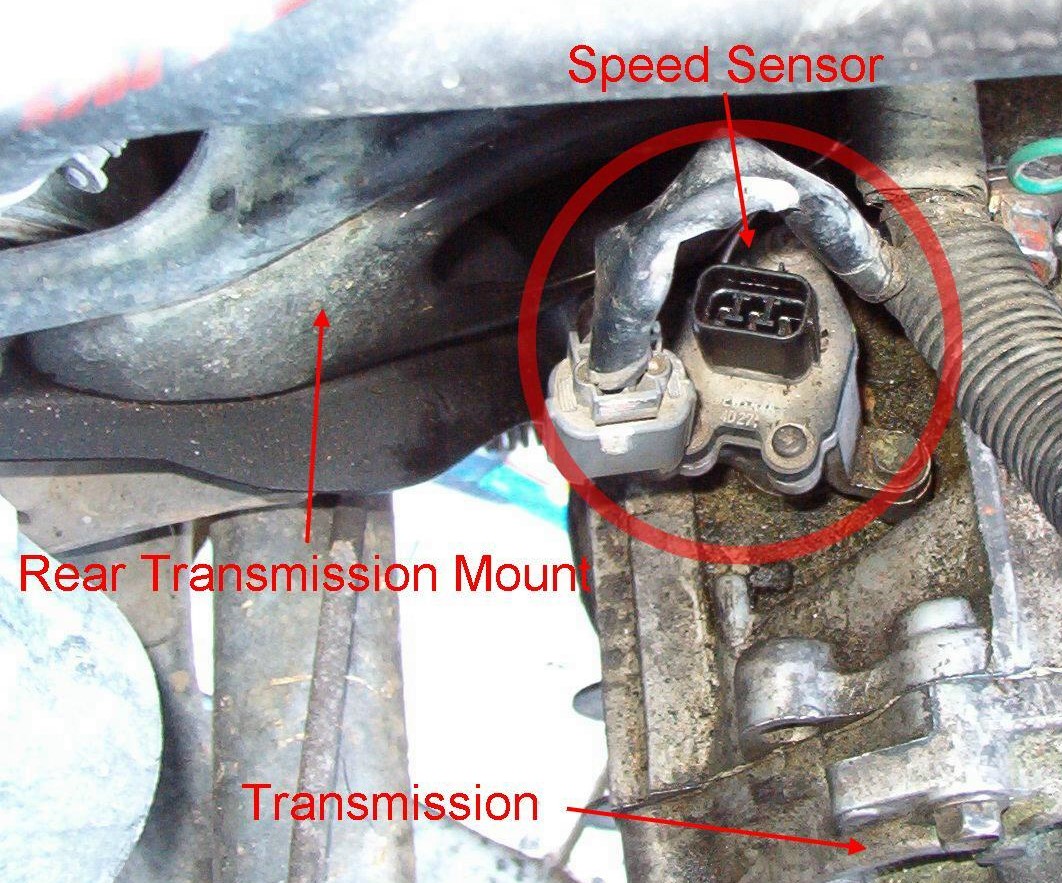
Image Source: hillsideautomotiverepair.com
Deciphering the Role of Speed Sensors in Your Car
Cars today are smart machines. They use many small parts that work together. Speed sensors are very important parts. They are like the car’s eyes for speed. They watch how fast wheels turn and how fast parts inside the gearbox spin.
Why does a car need to know these speeds? Many reasons! The car’s computer uses this speed data for lots of things.
- It helps you see how fast you are driving on the dashboard.
- It helps the car stop safely without sliding. This is the Anti-lock Braking System (ABS).
- It helps the car keep grip when you speed up fast or drive on slippery roads. This is Traction Control.
- It helps the car stay straight if you turn too hard. This is Stability Control.
- It helps automatic gearboxes pick the right time to change gears.
- It helps the engine run right based on how fast the car is going.
Because speed data is needed for so many different jobs, cars have more than one speed sensor. Where they are and what they do tells us how many speed sensors does a car have.
Exploring Wheel Speed Sensors
Most people know cars have wheels. Did you know each wheel has its own speed sensor? This is where many of the car’s speed sensors are found.
Number of Wheel Speed Sensors
A modern car almost always has one speed sensor at each wheel. So, if your car has four wheels, it likely has four wheel speed sensors. This answers the question: Number of wheel speed sensors. It is usually four on a standard car.
These sensors are a key part of the ABS system. The ABS sensor count per car is typically four. They are also often called ABS sensors because that is their main job. But they do more than just help with ABS.
What Wheel Speed Sensors Do
These sensors watch how fast each wheel is spinning. They do this many times each second. They send this speed data to the car’s main computer or a special computer just for the brakes and stability systems.
- Stopping Safely (ABS): If you brake hard, a wheel might want to stop spinning completely. If a wheel stops, the car can slide. The wheel speed sensor sees this stop. It tells the computer fast. The computer then quickly lets up the brake just on that wheel. This lets the wheel spin a little again. Then it puts the brake back on. It does this many times a second. This stops the wheel from locking up. It helps you steer while braking hard. This is a very important job for the sensors.
- Keeping Grip (Traction Control): If you speed up fast, a wheel might spin too quickly, especially on wet or snowy roads. This is losing grip. The sensor sees the wheel spinning much faster than the other wheels or faster than the car is moving. It tells the computer. The computer can then reduce engine power or gently apply the brake to that spinning wheel. This helps the wheel get grip again.
- Staying Straight (Stability Control): If you turn a corner too fast, the car might start to slide sideways. The stability control system uses the speed data from all four wheel sensors. It compares the speed of the wheels on the left side to the right side. It also compares the speed of the front wheels to the back wheels. If the speeds don’t match up how they should for the turn, the computer knows the car is sliding. It can then apply brakes to just one or two wheels. This helps turn the car back where you want it to go.
So, the vehicle speed sensor purpose here is all about safety and control. Each wheel sensor gives the computer a piece of the puzzle about how the car is moving and whether it is about to lose control.
How Wheel Speed Sensors Work Simply
Most wheel speed sensors work using magnets. There is a ring with teeth or magnetic marks that spins with the wheel. The sensor is fixed close by. As the ring spins, the teeth or marks pass by the sensor. The sensor feels this passing. It creates a small electrical pulse for each tooth or mark that goes by.
The computer counts how many pulses happen in a set amount of time. More pulses mean the wheel is spinning faster. Fewer pulses mean it is spinning slower. It’s like counting how many times a striped pole goes by your window on a train. The faster the pole goes by, the faster the train is moving.
Location of Wheel Speed Sensors
Where do these sensors sit? The location of vehicle speed sensor at the wheel is near the wheel hub. They are close to the spinning part of the wheel. This is usually near the brake disc or drum. They are small parts, often just a wire leading to a sensor body that bolts onto the steering knuckle or axle housing. The magnetic ring they read is usually built into the wheel hub bearing or attached to the axle shaft.
- Front Wheels: Usually mounted behind the brake disc area.
- Rear Wheels: Can be mounted near the brake drum or disc, or sometimes near the differential if it’s a rear-wheel-drive car.
Knowing the speed of each wheel is critical. It is why cars need multiple speed sensors, at least one for each wheel. This explains how many sensors on ABS system – typically four.
Grasping Transmission Speed Sensors
Besides the wheels, the gearbox (transmission) is another place cars have speed sensors. These sensors watch how fast parts inside the gearbox are spinning.
How Many Transmission Speed Sensors
Most cars with automatic gearboxes have at least two speed sensors on the transmission. Some might have more, especially modern ones with many gears. So, how many transmission speed sensors? Usually 1 to 3, with 2 being common.
Input and Output Speed Sensor Function
The two most common transmission sensors are called the input speed sensor and the output speed sensor.
- Input Speed Sensor: This sensor sits near the front of the transmission. It watches the speed of the shaft that comes from the engine. This shaft spins at engine speed (or close to it). It is the power going into the gearbox.
- Output Speed Sensor: This sensor sits near the back of the transmission. It watches the speed of the shaft that goes to the wheels (the driveshaft or axle shafts). This shaft spins based on how fast the wheels are turning. It is the power coming out of the gearbox.
Why Two Sensors on the Transmission?
Why does the gearbox computer (the Transmission Control Module or TCM) need both speeds?
- Checking the Gear: The computer knows how fast the input shaft should spin compared to the output shaft for each gear. For example, in first gear, the input shaft spins much faster than the output shaft. In a high gear, they spin closer to the same speed. The computer divides the input speed by the output speed. This tells it what gear the transmission is in. It also tells the computer if the transmission is shifting right or if a part called the torque converter is working correctly.
- Finding Problems: If the input shaft is spinning very fast but the output shaft is not spinning as fast as it should for the gear it is in, it means something is slipping inside the transmission. The computer can spot this problem using these two sensors.
- Helping the Engine: The main engine computer also uses the output speed sensor’s reading. It’s another way for the car to know its overall speed. This speed data helps the engine computer decide how much fuel to give, how to control the engine’s idle speed, and other things.
So, the input and output speed sensor function is key for the gearbox to work right. They give the computer the data it needs to shift gears smoothly and efficiently. They also provide speed data for other parts of the car.
Location of Transmission Sensors
As the name suggests, these sensors are on the transmission housing. The location of vehicle speed sensor on the gearbox means looking under the car. They are often small sensors that screw into the side or top of the transmission case. Wires connect them to the car’s computer system.
Discovering Different Types of Car Speed Sensors
We have talked about where speed sensors are (wheels, transmission) and what they do. How do they actually sense speed? There are a few main ways they work. These are the types of car speed sensors.
- Magnetic (Passive) Sensors: These are simpler. They use a permanent magnet inside the sensor. They read a spinning ring with teeth made of metal. As the teeth pass the sensor, they change the magnetic field. This creates a small voltage pulse. The computer counts these pulses to find speed. They need the wheel or shaft to be spinning fast enough to make a strong signal.
- Hall Effect (Active) Sensors: These are more common on newer cars, especially for wheel speed. They need a small amount of electricity to work. They read a spinning ring with magnetic poles (north and south). As the poles pass the sensor, they cause the sensor to switch its voltage on and off very quickly. This creates a clear digital signal (like 1s and 0s). Hall effect sensors can read speeds down to almost zero, which is very important for ABS and stability control.
- Magneto-Resistive Sensors: These are also active sensors and similar to Hall effect. They change their electrical resistance when a magnetic field changes. They also read a magnetic ring. They can give a very clear signal, even at low speeds.
No matter the type, the job is the same: turn the spinning of a wheel or shaft into an electrical signal that the car’s computer can understand as speed.
The Big Picture: The Vehicle Speed Sensor’s Job
You might hear the term “Vehicle Speed Sensor” or “VSS.” Sometimes this refers to one specific sensor, often the output speed sensor on the transmission. But often, the “Vehicle Speed Sensor” data that the car uses for things like the speedometer, cruise control, power steering feel, and fuel injection calculations is not from just one sensor.
The car’s main computer (the Powertrain Control Module or PCM, or sometimes the Body Control Module) takes the speed data from multiple sensors and figures out the car’s overall speed.
- It might use the average speed of the non-slipping wheels from the wheel speed sensors.
- It might use the reading from the transmission output speed sensor.
The computer compares these readings. If one reading looks wrong compared to the others, it might ignore it or set a trouble code.
So, the speedometer sensor location is not a single place. The speed shown on your dashboard is calculated by the computer using data from the wheel sensors and often the transmission output sensor. The vehicle speed sensor purpose is to provide this master speed value that the whole car system relies on.
Why Cars Need Many Speed Sensors
This brings us back to the main point and answers why do cars have multiple speed sensors. It is all about having the right kind of speed information for the right job.
- Individual Wheel Speed: Needed for ABS, Traction Control, and Stability Control. These systems need to know exactly what each wheel is doing on its own. If one wheel is locking up while others are spinning, or one wheel is spinning freely while others have grip, the system needs to know which wheel is misbehaving to fix it. Four wheel sensors are needed for this.
- Transmission Shaft Speeds: Needed for the gearbox computer to know what gear it’s in, if it should shift, and if parts are slipping. The speeds inside the transmission are different from the overall vehicle speed. Input and output sensors give this specific internal information.
- Overall Vehicle Speed: Needed for the driver’s speedometer, cruise control, navigation systems, and many engine and transmission control strategies. This speed is often figured out by the computer using the other sensor data.
Think of it like this:
- Wheel sensors are like knowing how fast each of your feet is moving when you run. Are they moving together? Is one foot slipping?
- Transmission sensors are like knowing how fast your legs are pumping versus how fast you are actually covering ground. Are your legs working hard but you’re not going fast? (Maybe you’re running in place or on sand).
- The overall vehicle speed is like knowing how fast your whole body is moving from point A to point B.
Each piece of information is useful, but they tell you different things. The car needs all these different speed readings to work safely and efficiently.
Summing Up the Speed Sensor Count
So, let’s put it together. How many speed sensors does a car have?
- Most modern cars have four wheel speed sensors (one at each wheel). These are crucial for safety systems like ABS and Traction Control.
- Most cars with automatic gearboxes have at least two transmission speed sensors (input and output). These help the gearbox shift correctly.
- Some cars might have additional sensors in places like transfer cases (on 4WD/AWD vehicles).
This means a typical car has between 4 and 6 speed sensors.
- A car with ABS but a manual gearbox might have 4 wheel sensors and maybe just one sensor for overall vehicle speed (often on the gearbox output). Total: 5.
- A car with ABS and an automatic gearbox usually has 4 wheel sensors and 2 transmission sensors. Total: 6.
The exact number can vary slightly based on the car’s features and how the engineers designed the system. But four wheel sensors plus one or two transmission sensors is a very common setup.
What Happens When a Speed Sensor Goes Bad?
Speed sensors are important. If one stops working right, the car’s computer won’t get the correct speed data. This can cause problems.
- Warning Lights: The ABS light, Traction Control light, Stability Control light, or even the Check Engine light might turn on. This is the car telling you something is wrong.
- Safety Systems Stop Working: If a wheel speed sensor fails, the ABS, Traction Control, and Stability Control systems usually turn off. This is because they can’t trust the speed data. Your regular brakes will still work, but you lose the help from these safety systems.
- Shifting Problems: If a transmission speed sensor fails, an automatic gearbox might shift hard, at the wrong times, or go into a “limp mode.” Limp mode often means the car only uses one or two gears to protect the gearbox.
- Incorrect Speedometer: Sometimes, a bad speed sensor can make your speedometer not work or show the wrong speed. However, because the car often uses multiple sensors to figure out speed, this is less common than problems with the safety or shifting systems.
- Other Issues: Cruise control might not work. Engine performance might be affected because the engine computer uses speed data.
If a warning light comes on related to braking, traction, or shifting, it is a good idea to have a mechanic check the speed sensors. Fixing or replacing a bad sensor can often fix these issues.
Interpreting Speed Sensor Signals
The car’s computer is always watching the signals from the speed sensors. It uses these signals to make fast decisions.
- When you brake hard, the computer looks for a sudden drop in speed from one wheel sensor compared to the others.
- When you accelerate quickly, it looks for one wheel sensor showing a much higher speed than the others.
- When the transmission is changing gears, it looks at the input and output speed sensors to make sure the speeds match what they should be for the new gear.
These sensors work constantly in the background. You don’t see them working, but they are a big part of why modern cars are safer and easier to drive.
Maintaining Speed Sensors
Speed sensors are generally reliable. But they can fail.
- Dirt and Debris: Sometimes, metal shavings or dirt can stick to magnetic sensors and affect the signal.
- Damage: Wires leading to the sensor can be damaged by road debris, accidents, or even animals. The sensor itself can also be hit.
- Sensor Failure: Like any electronic part, the sensor itself can just stop working over time.
- Tone Ring Damage: The spinning ring the sensor reads can get cracked or damaged.
If a speed sensor is suspected to be bad, a mechanic can use a scanner tool. This tool plugs into the car’s computer port. It can read the trouble codes the computer has stored. It can also often show the live speed reading from each sensor while the car is being driven or a wheel is spun. This helps figure out which sensor is the problem.
Repair usually means replacing the faulty sensor. The cost can change based on the car and the sensor’s location. Wheel sensors are sometimes part of the wheel bearing assembly, making the repair a bit more complex and costly. Transmission sensors are usually easier to get to.
FAQ: Common Questions About Car Speed Sensors
Here are some quick answers to common questions people ask about these sensors.
Q: Can I drive if my ABS light is on because of a bad speed sensor?
A: Yes, you usually can drive the car. Your regular brakes should still work. However, the ABS, Traction Control, and Stability Control systems will likely not work. This means the car is less safe in hard braking or slippery conditions. It’s best to get it fixed soon.
Q: How do I know if a speed sensor is bad?
A: The most common signs are warning lights on the dashboard (ABS, Traction Control, Stability Control, or Check Engine). You might also notice problems with how the automatic transmission shifts or if your speedometer is not working right.
Q: Is the Vehicle Speed Sensor (VSS) the same as an ABS sensor?
A: Not exactly. An ABS sensor (wheel speed sensor) measures the speed of a single wheel. The term “Vehicle Speed Sensor” often refers to the main speed signal the car’s computer uses for overall vehicle speed. This signal is derived from one or more sensors, including wheel speed sensors and transmission output speed sensors.
Q: Are speed sensors expensive to replace?
A: The cost varies a lot. The sensor part itself might cost anywhere from $20 to $200 or more. The labor cost to replace it depends on where it is located. A wheel sensor might take less time than a transmission sensor that is hard to reach.
Q: Can a dirty speed sensor cause problems?
A: Yes, especially magnetic sensors. Build-up of metal shavings or dirt on the sensor tip can weaken the signal. Cleaning the sensor might fix the issue, but often if a sensor is reporting bad data, it needs to be replaced.
Q: Do manual transmission cars have speed sensors?
A: Yes, they usually have at least one speed sensor, often on the output shaft of the transmission. This sensor provides the main vehicle speed signal for the speedometer and engine computer. They do not need input/output sensors in the same way an automatic does, but they still need to know how fast the car is going. If they have ABS, they also have wheel speed sensors.
Bringing it All Together
Cars rely on accurate speed information from many points. The answer to how many speed sensors does a car have is not a simple single number. Instead, it’s about the different types of speed data the car needs for safety, performance, and basic functions.
Most cars have four sensors watching the speed of each wheel for stability and braking help. Many also have one or two sensors on the transmission to manage gear changes. Together, these sensors provide the car’s brain with the full picture of how fast different parts are spinning and how fast the car is truly moving down the road. They are small parts but play a vital role in how your car works and protects you. Knowing about them helps you understand your car a little better.