So, how long does it take for car paint to dry? Generally, car paint can feel dry to the touch within a few hours, but it takes much longer for the paint to fully harden and cure. This curing process can take anywhere from 24 hours to several weeks, depending on various factors.
If you’re asking how long to paint a car, this involves more than just drying time. It includes preparation, application, and drying/curing periods. For a professional job, a complete car paint job from start to finish can take anywhere from a few days to over a week, with the car needing to stay in a controlled environment for the paint to properly dry and cure. Understanding car paint drying time is crucial for achieving a durable and aesthetically pleasing finish. It’s not just about when the paint feels hard; it’s about when it’s truly ready for the next steps, like buffing or reassembly. This guide will delve into the specifics of automotive paint drying and help you decipher the complexities of paint curing time.
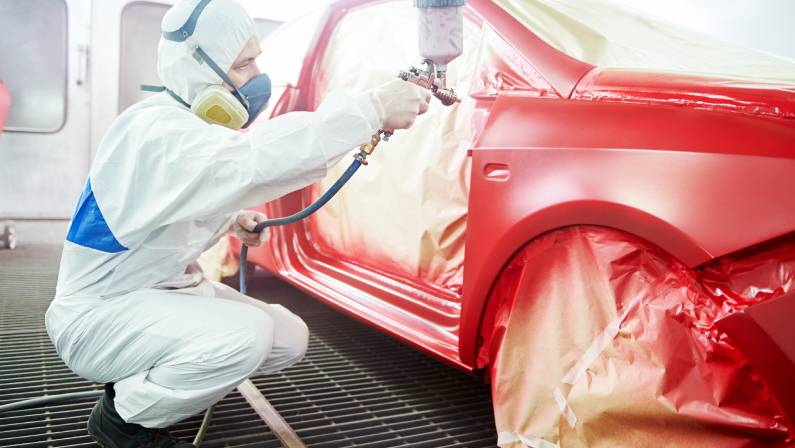
Image Source: status-automotive.com
Deciphering Automotive Paint Drying Stages
When we talk about car paint drying, it’s important to know there are different stages. It’s not just a simple on-off switch. Think of it like baking a cake. It might look done on the outside, but the inside needs time to set.
Surface Drying
This is the first stage. The solvents in the paint evaporate, leaving a dry film on the surface. At this point, the paint might feel hard to the touch. You could potentially handle the painted surface without smudging it significantly.
- Typical Time: A few hours (e.g., 2-6 hours)
This is what most people mean when they ask how long paint takes to dry. However, this is just the beginning of the process.
Flash Off Time
This is a critical period between coats. It allows some of the solvents to evaporate before the next layer is applied. This prevents issues like solvent popping or poor adhesion between layers.
- Purpose: To allow volatile solvents to escape.
- Duration: Varies, but often 15-30 minutes between coats.
Tack-Free Drying
In this stage, the paint is no longer tacky. You can gently touch it without leaving a fingerprint. It’s still soft underneath, though.
- Significance: Indicates enough solvent has evaporated for the surface to resist minor contact.
- Timeframe: Usually within 6-12 hours.
Hard Dry
The paint is now firm, but the chemical curing process is still ongoing. It’s less susceptible to damage than when it was tack-free, but it’s still not at its full strength.
- Characteristics: The paint has a more solid feel.
- Expectation: Can take up to 24 hours or more.
Paint Curing Time: The Deep Dive
This is the most important, yet often overlooked, stage. Paint curing time refers to the time it takes for the paint’s chemical cross-linking to complete. This process is what gives the paint its ultimate hardness, durability, and resistance to chemicals and environmental factors.
- What happens: The resins and hardeners chemically bond, creating a strong, solid film.
- Full Cure: This is when the paint reaches its maximum hardness and chemical resistance.
How long does it take for car paint to cure? This is where the extended timelines come in. Full curing can take anywhere from 24 hours to 30 days, and sometimes even longer, depending on the paint type and conditions.
Factors Affecting Paint Drying and Curing
Several elements influence how quickly car paint dries and cures. Understanding these factors is key to managing expectations and ensuring a quality finish.
1. Type of Paint
Different paint formulations have different drying and curing mechanisms.
- Solvent-Borne Paints: These have traditionally been the most common type. They dry as solvents evaporate.
- Examples: Lacquers, enamels, urethanes.
- Drying: Can be relatively quick at the surface level.
- Curing: Slower chemical processes involved.
- Water-Borne Paints: These are becoming more popular due to environmental regulations. They dry as water evaporates, and then the resin particles fuse together.
- Drying: Can be slower initially as water evaporates.
- Curing: Often requires specific temperatures or infrared lamps to aid in curing.
- UV-Cured Paints: These paints cure rapidly when exposed to ultraviolet light.
- Application: Mostly for touch-ups or specific components, not typically whole vehicles.
- Drying: Almost instantaneous under UV light.
2. Environmental Conditions
The environment where the car is painted and dries plays a massive role.
- Temperature: Higher temperatures generally speed up evaporation and chemical reactions, leading to faster drying and curing. However, extreme heat can cause problems like blistering or improper leveling.
- Ideal Range: Typically between 65°F and 85°F (18°C to 29°C).
- Humidity: High humidity slows down the evaporation of water and solvents, significantly extending drying and curing times. Low humidity can sometimes cause the surface to dry too quickly, leading to issues.
- Impact: Affects both solvent-borne and water-borne paints.
- Airflow: Good ventilation and airflow help carry away evaporated solvents and moisture, promoting faster drying. In enclosed spaces, stagnant air can trap solvents.
3. Paint Application Thickness
How thickly the paint is applied directly impacts drying and curing.
- Thicker Coats: Take longer to dry and cure because there’s more solvent or water to evaporate, and the cross-linking has further to penetrate.
- Thinner Coats: Dry and cure faster. This is why painters often apply multiple thin coats rather than one thick one.
4. Type of Primer and Clear Coat
These layers also have their own drying and curing requirements.
- Primer Drying Time: Primers need to be dry to the touch and often hard before the base coat is applied.
- Base Coat Drying Time: The base coat (color coat) typically flashes off between coats but doesn’t fully cure until the clear coat is applied and has cured.
- Drying Time for Clear Coat: Clear coats are crucial for protection and gloss. They also have their own specific drying and curing schedules. Applying the clear coat too soon or too late can cause problems.
5. Additives and Reducers
The chemicals used to adjust paint viscosity and properties can also influence drying times.
- Reducers: Solvents added to thin the paint. The type and amount of reducer used can affect evaporation rates.
- Hardeners/Catalysts: For two-part paints (like urethanes), the ratio and type of hardener are critical for curing. Incorrect mixing or the wrong hardener will impact curing speed and quality.
Drying Time for Specific Automotive Paint Components
When you’re asking about car paint drying time, it’s useful to break it down by the layers of paint applied.
Drying Time for Base Coat
The base coat, which provides the color, is usually applied in thin layers.
- Between Coats: Needs sufficient flash-off time, typically 15-30 minutes, depending on temperature and humidity. This allows solvents to escape without trapping them in subsequent layers.
- Before Clear Coat: The base coat needs to be dry to the touch and slightly “flashed off” but not fully cured. If it’s too wet, the clear coat can cause the base coat to run or wrinkle. If it’s too dry and fully cured, the clear coat might not adhere properly, leading to delamination issues. This is often referred to as being in the “chemical bond window.”
Drying Time for Clear Coat
The clear coat is the protective top layer. Its drying and curing are vital for the longevity and appearance of the paint job.
- Surface Dry: Can be achieved within a few hours.
- Tack-Free: Within 6-12 hours.
- Hard Dry: Usually within 24 hours.
- Full Cure: This is where the extended timelines appear. Full cure for clear coat can take anywhere from 48 hours to 30 days. During this time, the paint is still vulnerable to scratches and impacts.
How Long to Paint a Car: A Practical Timeline
Knowing the individual drying times helps us estimate the overall process. How long to paint a car is a question with a variable answer.
A Simplified Timeline for a Full Car Paint Job:
- Preparation (Sanding, Masking, Priming): 1-3 days. This can be extensive, involving significant bodywork and meticulous masking.
- Primer Application and Drying: 4-8 hours for flash-off between coats, and a full day for the primer to harden sufficiently before sanding.
- Base Coat Application: This involves multiple thin coats with flash-off time between each. Total application time might be 2-4 hours, plus flash-off.
- Clear Coat Application: Similar to the base coat, multiple thin coats with flash-off time. Total application time might be 2-4 hours, plus flash-off.
- Initial Drying (Touch Dry/Hard Dry): 12-24 hours. The car can be handled carefully during this phase.
- Curing (Ready for Buffing/Reassembly): 24 hours to 7 days for most modern finishes to be safe for light buffing and reassembly.
- Full Curing (Maximum Hardness): 2-4 weeks or even longer. During this period, the paint is still hardening and achieving its full durability.
Total Time: A professionally done car paint job, considering all drying and curing, will likely require the vehicle to be off the road for at least 3-7 days, but the paint will continue to cure for weeks afterward.
Drying Time for Automotive Finishes: A Comparison
Let’s look at the typical ranges for different types of automotive finishes:
| Paint Type | Surface Dry (Touch) | Tack-Free | Hard Dry (Ready for light handling) | Full Cure (Maximum Hardness) |
|---|---|---|---|---|
| Single-Stage Enamel | 4-8 hours | 12-24 hours | 24-48 hours | 1-2 weeks |
| Base Coat/Clear Coat | 2-4 hours | 6-12 hours | 12-24 hours | 2-4 weeks |
| Water-Borne Base/Clear | 4-12 hours | 10-20 hours | 24-48 hours | 2-4 weeks |
| Lacquers | 1-2 hours | 4-6 hours | 8-12 hours | 1 week |
| Urethanes (2K) | 2-4 hours | 6-12 hours | 12-24 hours | 2-4 weeks |
Note: These are general estimates and can vary significantly based on the specific product and environmental factors.
What is paint curing time?
Paint curing time is the period required for the paint’s chemical structure to fully harden and develop its maximum durability and resistance. This involves cross-linking of the resin molecules.
Can I speed up car paint drying time?
Yes, to some extent, by controlling the environment. Using infrared lamps, ensuring good ventilation, and maintaining optimal temperature and humidity can help speed up the drying and curing process. However, you cannot force curing beyond the paint’s inherent chemical capabilities without potentially compromising the finish.
How long does it take to paint a car?
The entire process of painting a car, from preparation to the paint being reasonably cured for reassembly, can take anywhere from 3 days to over a week. This doesn’t include the full curing time.
What are the factors affecting paint drying?
Key factors include the type of paint used, ambient temperature, humidity, airflow, and the thickness of the applied coats.
How long does it take for clear coat to dry?
Clear coat typically takes a few hours to be touch dry, 6-12 hours to be tack-free, 12-24 hours to be hard dry, and 2-4 weeks for a full cure.
How long to buff car paint?
You should wait until the paint is sufficiently hard, typically at least 24 hours, but ideally several days to a week after the final clear coat application before attempting to buff or polish it. Buffing too early can cause damage or imperfections.
What is the drying time for base coat?
The base coat needs flash-off time between coats (around 15-30 minutes) and should be dry to the touch and flashed off before the clear coat is applied, but not fully cured.
What is the drying time for automotive finishes?
Drying time for automotive finishes ranges from a few hours for surface dryness to several weeks for full curing, depending on the specific type of finish and applied conditions.
Curing vs. Drying: The Critical Distinction
It’s crucial to differentiate between drying and curing.
- Drying: Primarily a physical process involving the evaporation of solvents or water. The paint film forms as these carriers leave.
- Curing: A chemical process where the paint’s components react and bond to form a strong, durable film. This is where the paint achieves its ultimate hardness and resistance.
You can have a paint job that is “dry to the touch” but still very soft and vulnerable because the chemical curing process is far from complete.
When Can You Safely Handle or Work on the Painted Surface?
This is a common question, especially if you’re planning to reassemble the car or if the car needs to be moved.
Handling and Light Contact
- Tack-Free: After 6-12 hours (depending on conditions), the paint should be tack-free. You can gently touch it without leaving a mark.
- Hard Dry: After 24 hours, the paint is generally hard dry. You can carefully handle it, but avoid applying pressure or dragging anything across the surface.
Reassembly
- Recommendation: Wait at least 24-48 hours before reassembling parts like trim, door handles, or lights. Even then, handle these parts with care.
Buffing and Polishing
- When to Buff: This is where patience is key. Buffing too early can create swirls, remove too much material, or even damage the still-curing paint. The generally accepted timeframe for how long to buff car paint after a professional paint job is at least 3-7 days, and often longer for a full cure. Some detailers prefer to wait up to a month for the paint to reach a significant stage of hardness before aggressive buffing.
- Initial Polish: A very light polish or glaze might be possible sooner, but a full cut and polish requires a well-cured finish.
Washing the Car
- First Wash: Avoid washing the car for at least 1-2 weeks. When you do wash it, use a mild soap and a soft cloth, and avoid high-pressure washers directed at the paint.
Common Problems from Premature Handling
Trying to rush the drying or curing process can lead to several issues:
- Fingerprints and Dents: The paint is soft and can easily be marred.
- Delamination: If clear coat or subsequent layers are applied too soon or too late to the base coat, they may not adhere properly and could peel away later.
- Poor Adhesion: The paint may not bond strongly to the substrate.
- Surface Imperfections: Orange peel, solvent popping, or poor leveling can occur if drying/curing is uneven or too rapid.
- Reduced Durability: The paint’s resistance to scratches, chemicals, and UV damage will be compromised if it hasn’t fully cured.
Tips for Optimal Drying and Curing
To ensure your paint job dries and cures properly, follow these tips:
- Follow Manufacturer Instructions: Always adhere to the specific drying and curing guidelines provided by the paint manufacturer.
- Control the Environment: If possible, paint and allow the vehicle to cure in a temperature-controlled, dust-free environment with good ventilation.
- Apply Thin Coats: This promotes even drying and better adhesion.
- Allow Adequate Flash-Off Time: This is crucial between coats of base and clear coats.
- Patience is Key: Resist the urge to rush the process. Allow sufficient time for the paint to cure before any aggressive handling or polishing.
- Use Appropriate Reducers and Hardeners: Ensure you are using the correct products and mixing ratios recommended for your paint system.
Frequently Asked Questions (FAQ)
Q1: Can I park my freshly painted car in the sun to help it dry faster?
While warmth can aid drying, direct, intense sunlight, especially on a hot day, can cause the surface to dry too quickly. This can lead to a phenomenon known as “alligatoring” or cracking, and can also trap solvents, causing issues like blistering or poor adhesion. It’s better to keep the car in a controlled, warm environment rather than direct sunlight.
Q2: What happens if I touch the car paint before it’s dry?
If you touch the paint before it’s tack-free or hard dry, you risk leaving fingerprints, smudges, or even tearing the soft paint film. This can ruin the finish and require additional sanding and repainting of the affected area.
Q3: Can I use a hairdryer to speed up car paint drying?
A hairdryer on a low, cool setting from a distance can sometimes help with flash-off between coats, especially in cooler conditions. However, using a hairdryer on a hot setting or holding it too close can cause the paint to dry too quickly on the surface, leading to potential problems like a dull finish or poor leveling, similar to direct sunlight. It’s not recommended for the full curing process.
Q4: How long should I wait before waxing or applying a sealant?
It’s best to wait until the paint has at least reached its hard dry stage, and ideally a week or two, before applying any wax or sealant. This allows the paint to breathe and continue its curing process without being encapsulated. Some high-quality ceramic coatings are designed to be applied after 24-48 hours, but always check the product specifications.
Q5: Does temperature affect paint drying time significantly?
Yes, temperature has a significant impact. Warmer temperatures generally accelerate the evaporation of solvents and the chemical reactions involved in curing. Cooler temperatures will slow down these processes, extending drying and curing times.
By now, you should have a much clearer picture of how long it takes for car paint to dry and cure. It’s a process that requires patience and attention to detail to achieve a beautiful and lasting finish.