Can you get your VIN number without your car? Yes, you can definitely get your Vehicle Identification Number (VIN) even if your car isn’t with you. This guide will show you how to find that crucial 17-digit code.
A Vehicle Identification Number, or VIN, is like a car’s fingerprint. It’s a unique 17-digit code that identifies a specific vehicle. Knowing how to locate VIN without car is essential if your car is stolen, in storage, or if you’re buying a used car and need to check its history before seeing it. This detailed guide will walk you through various methods to find VIN on paperwork, VIN lookup without vehicle, and other reliable sources.
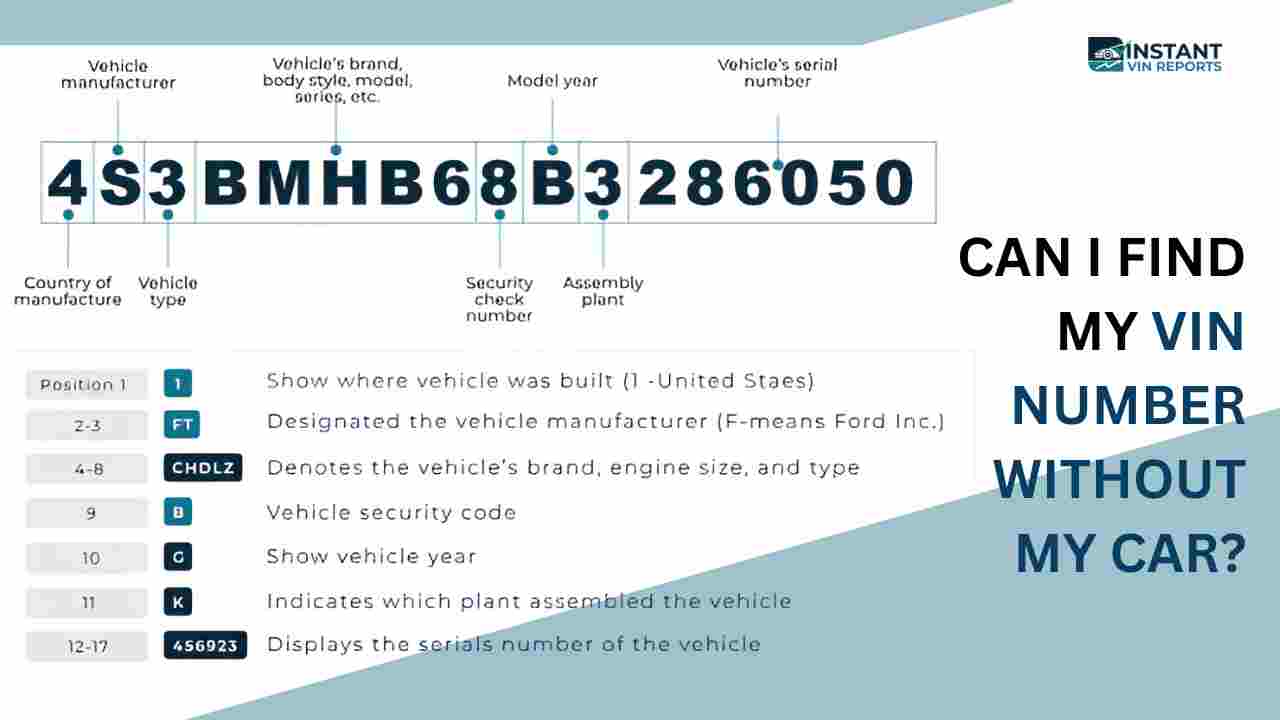
Image Source: instantvinreports.com
Why You Might Need Your VIN Without Your Car
Life happens, and sometimes you need your VIN, but your car isn’t readily available. Here are some common scenarios:
- Vehicle Theft: If your car has been stolen, the police will ask for the VIN to file a report and search for it.
- Insurance Claims: When you need to file an insurance claim, whether for an accident or theft, the VIN is a primary piece of information.
- Selling or Buying a Vehicle: Both buyers and sellers need the VIN to check vehicle history reports, confirm ownership, and process sales.
- Vehicle Registration and Title: You’ll need the VIN for official vehicle documentation.
- Repairs and Parts: Mechanics and auto parts stores often require the VIN to ensure they get the correct parts for your vehicle.
- Recalls: Manufacturers use VINs to notify owners about safety recalls.
- Vehicle History Reports: Services like CARFAX or AutoCheck use the VIN to provide a vehicle’s past.
Navigating Paperwork to Find Your VIN
The most common and reliable way to get your VIN without your car is by checking your vehicle-related documents. Many of these contain the VIN, often in plain sight.
VIN from Registration
Your vehicle’s registration certificate is one of the most accessible places to find your VIN.
- Where to Look: The VIN is usually printed prominently on the registration card issued by your state’s Department of Motor Vehicles (DMV) or equivalent agency. It might be labeled as “VIN,” “Vehicle Identification Number,” or simply a long string of letters and numbers.
- Accessibility: If you keep your registration in your wallet or glove compartment (though if the car is lost, this might not be an option), you likely have it handy. If not, you might need to contact your local DMV.
VIN from Insurance Policy
Your auto insurance policy is another excellent source for your VIN.
- Where to Look: When you receive your insurance policy documents, declarations page, or ID cards, the VIN is almost always listed. It helps the insurance company identify the exact vehicle they are insuring. Look for a field clearly marked “VIN.”
- Accessibility: Most insurance companies provide online portals where you can access your policy documents. If you can log in to your account, you should be able to find your VIN there. Alternatively, call your insurance agent or company, and they can look it up for you with proper identification.
VIN from Title
The vehicle title is the legal document that proves ownership. It’s a definitive source for your VIN.
- Where to Look: The VIN is a critical piece of information on the title. It will be clearly labeled.
- Accessibility: If you own the car outright and have the physical title, it will have the VIN. If you have a loan on the car, the title might be held by your lender. In such cases, you may need to contact your lender to obtain the VIN or a copy of the title.
VIN on Bill of Sale
If you recently purchased the vehicle, the bill of sale is a crucial document that should contain the VIN.
- Where to Look: This document details the transaction between the buyer and seller. The VIN is always included to identify the specific vehicle being sold.
- Accessibility: Keep this document in a safe place after purchasing a vehicle.
VIN from Purchase Agreement
Similar to the bill of sale, the purchase agreement or sales contract also lists the VIN.
- Where to Look: This is the initial document signed when agreeing to buy a vehicle, outlining the terms of the sale. The VIN is essential for legally binding the agreement to the specific car.
- Accessibility: This paperwork is vital for your records and will contain the VIN.
VIN from Repair Records
If you’ve had your car serviced at a reputable mechanic shop, they will have your VIN on file.
- Where to Look: Service invoices, repair orders, and maintenance records will almost always include the VIN. The mechanic uses it to track your vehicle’s service history and ensure they order the correct parts.
- Accessibility: Contact the repair shop where you last had service. If you have an account with them or can provide enough identifying information (like your name and phone number), they can retrieve your VIN from their records.
VIN from Dealership Records
If you purchased the car from a dealership, they will have your VIN in their sales and service records.
- Where to Look: The dealership keeps records of all sales, including the VIN of every car sold.
- Accessibility: Contact the dealership where you bought the car. Provide your name and possibly the approximate date of purchase, and they should be able to locate your VIN.
Using Online Tools and Services for a VIN Lookup
Beyond your own paperwork, several online resources can help you perform a VIN lookup without vehicle if you have a bit of identifying information.
Vehicle History Reports
Services like CARFAX and AutoCheck are designed for VIN lookup without vehicle.
- How it Works: You enter the VIN, and these services pull data from various sources, including DMV records, police reports, insurance claims, and service history.
- What You Need: While they primarily use the VIN, some services might allow you to search by license plate number or other identifiers in limited cases, but this is less common and reliable for obtaining the VIN itself. The core function is a VIN-based search.
- Limitations: These services are typically fee-based.
NHTSA VIN Decoder
The National Highway Traffic Safety Administration (NHTSA) offers a free VIN lookup tool.
- How it Works: You can use this tool to decode your VIN and learn about the vehicle’s specifications, including manufacturing details and any open safety recalls.
- What You Need: You need to know the VIN to use this decoder. It’s not a tool to find the VIN, but rather to verify and get information from it.
Manufacturer Websites
Some car manufacturers provide VIN lookup tools on their official websites.
- How it Works: These tools are often geared towards checking for recalls or accessing vehicle-specific information and services.
- What You Need: Again, you need the VIN to use these services.
Other Potential Ways to Retrieve Your VIN
If paperwork is scarce and online options aren’t yielding results, consider these less common methods.
From Other Vehicle Information
Sometimes, you might have other pieces of information that could indirectly lead you to your VIN.
- Parking Tickets or Toll Violations: If you’ve received any tickets or violations by mail, the VIN might be listed on those notices.
- Owner’s Manual: While less common, some owner’s manuals might have the VIN printed on them, especially in a section for vehicle information.
- Previous Insurance Cards: Even if you don’t have your current policy, an old insurance card might still have the VIN.
If Your Car Was Repossessed
If your car was repossessed, the lending institution will have the VIN on file.
- How to Proceed: Contact the company that repossessed the vehicle. They will be able to provide you with the VIN, along with details about how to retrieve your car.
If Your Car Was Sold by a Previous Owner
If you bought a car without getting all the necessary paperwork, or if a previous owner still has copies of documents, you might need to contact them.
- Direct Contact: If you have the contact information for the previous owner, reaching out to them to request the VIN or copies of relevant documents is a straightforward approach.
What If You Still Can’t Find Your VIN?
If you’ve exhausted all the above options and still cannot locate VIN without car, you might need to take more direct action.
Contacting the Department of Motor Vehicles (DMV)
Your local DMV is the ultimate authority on vehicle registration.
- What to Do: Visit your local DMV office or contact them by phone or through their website. You will likely need to provide proof of identity and explain why you need the VIN. They can usually look up your vehicle’s VIN using other identifying information like your driver’s license number, name, and address, especially if the vehicle was previously registered in your name in that state.
- Required Information: Be prepared to provide as much information as possible about the vehicle, such as the make, model, year, and license plate number.
Contacting the Manufacturer
If you know the make and model of your car, you can try contacting the manufacturer directly.
- How to Proceed: Some manufacturers have customer service departments that can help you retrieve your VIN, especially if you can provide proof of ownership or other identifying details.
Frequently Asked Questions (FAQ)
Q1: Can I get my VIN if my car was stolen?
A1: Yes. If your car was stolen, you can get your VIN from your registration, insurance policy, or by contacting the police department to file a report. They will need the VIN to help locate your vehicle.
Q2: What information do I need to provide to the DMV to get my VIN?
A2: You will typically need to provide your driver’s license, name, address, and any other identifying information about the vehicle you can recall, such as the license plate number, make, model, and year.
Q3: Is it safe to use online VIN lookup services that are not government-affiliated?
A3: While many third-party VIN lookup services are legitimate and useful for checking vehicle history, always be cautious. Ensure the website is secure (look for “https://” in the URL) and reputable. Avoid services that ask for excessive personal information beyond what’s necessary for the lookup. Government-affiliated sites like NHTSA are always safe for official information.
Q4: Can I find my VIN from a past parking ticket?
A4: It’s possible. Some parking tickets or violation notices include the vehicle’s VIN as part of the citation details. Check any such documents you may have received.
Q5: What if my car is currently in storage and I can’t access it?
A5: If your car is in storage, you should have access to paperwork like registration, insurance, or the bill of sale, which are the primary ways to retrieve your VIN without direct access to the vehicle.
Q6: If I bought the car used, and the seller didn’t give me all the paperwork, how can I find the VIN?
A6: If you know the seller’s contact information, try to reach out to them for the necessary documents. If that’s not possible, your best bet is to contact your state’s DMV, providing them with as much information as you have about the purchase and the vehicle.
This comprehensive guide should equip you with the knowledge to successfully find your VIN number without your car. Remember, your vehicle’s VIN is a critical piece of information, and knowing where to find it can save you a lot of time and hassle in various situations.