Can you put a marine battery in your car? Yes, you might be able to, but it’s not always a straightforward swap. While both are batteries, they are designed for different jobs, and using the wrong one can cause problems. This guide will help you figure out if a marine battery is a good fit for your car, looking at the differences between vehicle battery types and your car’s specific power needs.
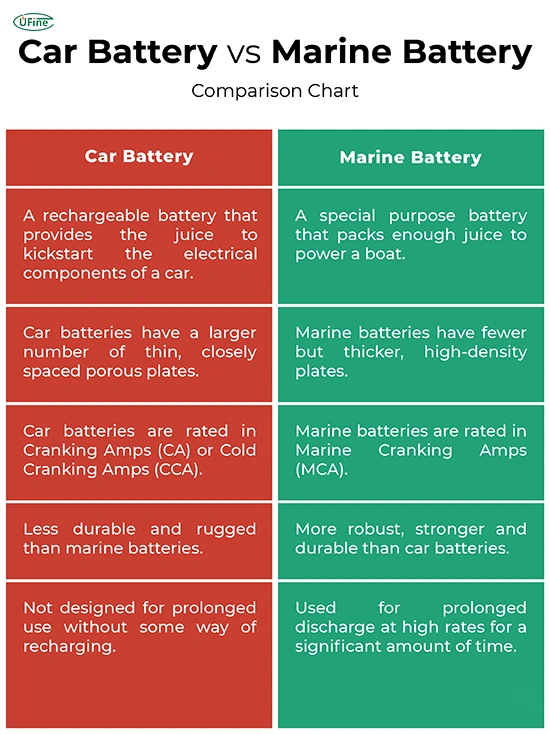
Image Source: www.ufinebattery.com
Deciphering Vehicle Battery Types
When you need a car battery replacement, you’ll encounter several types. Understanding these differences is key to making the right choice.
Car Batteries (Starting Batteries)
Standard car batteries, often called starting batteries, are built to deliver a massive burst of power for a short time. This is exactly what your car’s starter motor needs to crank the engine to life.
- High Cranking Amps (CCA): This is their main feature. CCA measures how much power a battery can deliver at 0°F (-18°C) for 30 seconds while maintaining a minimum voltage. A higher CCA is better for starting in cold weather.
- Shallow Discharge: Car batteries are designed to be discharged only slightly during normal starting. Deep, frequent discharges can significantly shorten their lifespan.
- Construction: They typically have thinner plates to maximize surface area for quick power delivery.
Marine Batteries
Marine batteries are a bit more specialized. They are generally designed to power boats’ electrical systems, which often have different demands than a car’s. There are two main categories:
Marine Starting Batteries
These are similar to car batteries. They are designed to provide a strong burst of power to start a boat’s engine. If you’re looking at a marine battery for your car, a marine starting battery is the closest match.
- Similar CCA ratings: They often have CCA ratings comparable to car batteries.
- Slightly more robust: Sometimes they are built a bit tougher to handle the vibrations and conditions on a boat.
Deep Cycle Batteries
This is where the main difference lies. Deep cycle batteries are built to provide a steady, moderate amount of power over a longer period. Think of powering trolling motors, fish finders, or other accessories on a boat without draining the battery too quickly.
- Designed for Deep Discharges: They can be discharged much more deeply and repeatedly without significant damage. This is achieved through thicker, more robust plates.
- Lower CCA (generally): While some dual-purpose batteries exist, pure deep cycle marine batteries typically have lower CCA ratings than car starting batteries because their primary function isn’t high-amp starting.
- Slower Discharge Rate: They deliver power more gradually.
The Crucial Differences: Marine vs. Car Battery
The core distinction between marine and car batteries comes down to their intended use and, consequently, their internal design.
Power Delivery Patterns
- Car Batteries: Think of a sprint. They give you a lot of power, very quickly, for a few seconds. This is all you need to turn the engine over.
- Marine Deep Cycle Batteries: Think of a marathon. They provide a consistent, lower level of power for extended periods. This is ideal for running accessories like lights, radios, or pumps on a boat.
Plate Design and Durability
- Car Batteries: Have thinner plates. This design maximizes surface area for rapid electrical discharge, perfect for starting. However, these thin plates are more susceptible to damage from deep discharges.
- Marine Deep Cycle Batteries: Have thicker, denser plates. These are built to withstand the stress of being discharged significantly and then recharged repeatedly. This makes them more durable for sustained power output but less efficient at delivering a massive surge of power.
Construction and Vibration Resistance
Marine batteries are often built to withstand the constant vibration and rocking of being on water. This can translate to a more robust casing and plate support, which isn’t always a priority for car batteries that experience less extreme movement.
Can You Put a Marine Battery in Your Car? The Compatibility Factor
So, can you make the switch? The answer depends on the specific type of marine battery and your car’s requirements.
Compatibility Considerations
When considering a marine battery as a car battery replacement, several factors need close examination.
- Battery Voltage: This is non-negotiable. Your car’s electrical system is designed for a specific battery voltage, typically 12 volts for modern vehicles. You must ensure the marine battery you choose also has a 12-volt rating. Using a different voltage will almost certainly damage your car’s electrical system.
- Physical Size and Terminal Placement: Batteries come in various group sizes (e.g., Group 24, Group 35, Group 65). These sizes dictate the physical dimensions of the battery and the location of its positive and negative terminals.
- Will it fit? You need to measure your car’s battery tray and compare it to the dimensions of the marine battery.
- Are the terminals in the right place? The battery cables in your car are often specific in length and routing. If the terminals are on the wrong side or in an awkward position, your cables might not reach, or they might be strained, posing a safety hazard.
- Cold Cranking Amps (CCA): This is arguably the most critical factor for a car battery. Your car’s engine requires a certain amount of CCA to start reliably, especially in colder climates.
- Check your car’s manual: It will specify the minimum recommended CCA for your vehicle.
- Compare ratings: You need to ensure the marine battery you select has a CCA rating that meets or exceeds your car’s requirements. A marine starting battery is more likely to have adequate CCA than a pure deep cycle battery.
- Reserve Capacity (RC): This rating indicates how long a fully charged battery can deliver a specific amount of power (usually 25 amps) before its voltage drops below a usable level. While important for marine applications, it’s less critical for a car’s primary starting function but can be a bonus for powering accessories.
- Weight: Marine batteries, especially deep cycle ones, can be significantly heavier than car batteries due to their thicker plates and more robust construction. Ensure your car’s battery tray and hold-down mechanism can support the extra weight.
When a Marine Battery Might Work
- As a Marine Starting Battery: If you find a marine battery specifically marketed as a “marine starting battery” and it has the correct voltage, sufficient CCA, and fits physically, it could potentially work. These are often dual-purpose batteries designed to offer a balance of starting power and deep cycling capability.
- For Cars with High Electrical Demands: Some custom vehicles or those with extensive aftermarket electronics (powerful sound systems, extra lighting) might benefit from a battery with higher reserve capacity. A deep cycle marine battery could theoretically be used in such a scenario, provided its CCA is still sufficient for starting and it fits. However, this is an edge case and often requires careful consideration of the entire car electrical system.
When a Marine Battery is Probably Not a Good Idea
- Pure Deep Cycle Marine Batteries: These are generally unsuitable for most cars as their primary starting battery.
- Insufficient CCA: Their CCA ratings are often too low to reliably start a car engine.
- Design Mismatch: They are designed for slow, steady discharge, not the high, short bursts needed for starting. While they can start an engine, doing so frequently can still degrade them faster than a dedicated starting battery.
- If CCA is Too Low: Even if a marine battery physically fits and has the correct voltage, if its CCA rating is significantly lower than what your car requires, you’ll experience starting problems, especially in cold weather.
- If it Doesn’t Fit Properly: Forcing a battery that doesn’t fit correctly can damage the battery, your car’s battery tray, or the battery cables. It can also lead to improper connections and potential shorts.
Comparing Marine and Car Batteries: A Table of Differences
To summarize, let’s look at a direct comparison.
| Feature | Car Battery (Starting Battery) | Marine Starting Battery | Marine Deep Cycle Battery |
|---|---|---|---|
| Primary Purpose | Engine starting (high burst of power) | Engine starting (high burst of power) | Powering accessories over time (steady output) |
| Discharge Style | Shallow discharges | Shallow discharges | Deep discharges |
| Plate Design | Thinner plates, high surface area | Thinner plates, high surface area | Thicker, denser plates |
| CCA Rating | High (critical for starting) | High (comparable to car batteries) | Lower (generally, less critical for starting) |
| Reserve Capacity | Lower | Lower | Higher (designed for sustained output) |
| Durability | Less resistant to deep discharge | More robust than car batteries for marine environment | Highly resistant to deep discharge |
| Weight | Moderate | Moderate to heavy | Often heavier |
| Typical Use | Cars, trucks, motorcycles | Boats (engine starting) | Boats (trolling motors, electronics, RVs, campers) |
The Role of Dual-Purpose Batteries
Many marine batteries are marketed as “dual-purpose.” These batteries attempt to bridge the gap, offering decent starting power (CCA) along with the ability to handle some deep cycling.
- Pros: Can be a good option if you have a vehicle with accessories that draw a lot of power when the engine is off, or if you frequently use your vehicle for camping or other activities that might require a longer power draw.
- Cons: They are often a compromise. They may not have the absolute highest CCA of a dedicated starting battery, nor the extreme deep-cycle longevity of a pure deep cycle battery. For a standard car, a good quality car starting battery is usually the more efficient and cost-effective choice.
Assessing Your Car’s Specific Power Needs
Every car is different. What your vehicle needs from its battery is paramount.
Engine Size and Compression
Larger engines with higher compression ratios require more power to crank. This means your car needs a battery with a higher CCA rating.
Climate Conditions
If you live in a cold climate, CCA becomes even more critical. Starting an engine at low temperatures is significantly harder, and you need a battery that can deliver the necessary power. A marine battery with insufficient CCA will struggle or fail to start your car in the cold.
Aftermarket Accessories
Do you have a powerful stereo system, extra lights, winches, or other electrical accessories? These items draw power, and some might even draw significant power when the engine is off.
- Higher Reserve Capacity: If you have many accessories, a battery with a higher Reserve Capacity (RC) might be beneficial. This is where a deep cycle marine battery’s strength lies. However, it still needs to meet your car’s starting requirements.
- Second Battery Systems: For very demanding electrical setups, many people opt for a dual-battery system, where a dedicated deep cycle battery powers accessories, and a separate, powerful starting battery handles the engine ignition.
The Risks of Using the Wrong Battery
Putting a marine battery in your car isn’t just about whether it will work; it’s also about the potential downsides.
Poor Starting Performance
The most common issue is simply the inability of a low-CCA marine battery to start your car, especially in cold weather or if the engine is already a bit sluggish.
Reduced Battery Lifespan
Even if a marine battery can start your car, frequently using it for the high-amp bursts required for starting can shorten its overall lifespan compared to a dedicated car battery. This is especially true for pure deep cycle batteries.
Electrical System Damage
While less common if the voltage is correct, using a battery with significantly different discharge characteristics could potentially stress components of your car’s electrical system, though this is usually a secondary concern to starting performance.
Overheating and Fire Hazard
If the battery is improperly sized, secured, or if the cables are strained due to incorrect terminal placement, there’s a risk of overheating, short circuits, and even fire. The physical dimensions and terminal configurations must match your car’s setup.
Making the Switch: Practical Steps and Precautions
If you’ve assessed your needs and decided to try a marine battery, proceed with caution and the correct information.
Step 1: Check Your Car’s Battery Specifications
- Owner’s Manual: This is your best friend. It will tell you the recommended group size, minimum CCA, and sometimes even terminal type.
- Current Battery: Look at the labels on your existing battery. It will likely have the group size and CCA rating printed on it.
Step 2: Select the Right Marine Battery
- Marine Starting Battery: Prioritize this type if you’re considering a marine battery for your car.
- Dual-Purpose Battery: A viable option if it meets or exceeds your car’s CCA requirements and fits physically.
- Deep Cycle Battery: Generally, avoid these as your primary car battery unless you have a very specific, high-demand electrical setup and a separate, adequate starting battery.
Step 3: Verify Physical Fit and Terminals
- Measure: Get the dimensions of your car’s battery tray.
- Compare: Check the dimensions of the marine battery you’re considering.
- Terminal Orientation: Ensure the positive and negative terminals will align with your car’s battery cables.
Step 4: Ensure Sufficient CCA
- Compare Ratings: Match the marine battery’s CCA to your car’s recommended CCA. Aim for at least the manufacturer’s minimum, and more if you’re in a cold climate or have a larger engine.
Step 5: Installation
- Safety First: Disconnect the negative cable first, then the positive.
- Secure Properly: Ensure the battery is firmly secured in the tray using the hold-down mechanism. Loose batteries are dangerous.
- Connect Correctly: Connect the positive cable first, then the negative.
- Test: Start your car to ensure it cranks over.
When in Doubt, Stick to the Standard
For most car owners, the simplest and safest approach is to stick with a battery specifically designed as a car starting battery. They are engineered for your vehicle’s needs, readily available, and typically more cost-effective than marine batteries. If you’re experiencing issues with your car’s electrical system or battery performance, consulting a qualified mechanic is always the best course of action. They can diagnose the problem accurately and recommend the correct car battery replacement without guesswork.
Frequently Asked Questions (FAQ)
Will a marine battery damage my car?
A marine battery with the correct battery voltage (12V) and sufficient CCA (Cold Cranking Amps) that fits properly is unlikely to damage your car’s electrical system. However, a marine battery with too low CCA, incorrect voltage, or a poor physical fit can lead to starting problems or potential damage.
Can I use a deep cycle marine battery as a car battery?
While a deep cycle battery can start a car in a pinch, it’s not ideal for long-term use as a primary car battery. Their design prioritizes sustained power over high-burst starting power, meaning their CCA is often insufficient. Frequent use for starting can also shorten their lifespan.
What’s the difference between a marine starting battery and a car battery?
A marine starting battery is very similar to a car battery. Both are designed for high-burst starting power. Marine starting batteries may be built with slightly more robust construction to withstand vibrations and environmental conditions found on boats. A marine vs car battery comparison generally highlights that marine batteries are often more versatile, with deep cycle and dual-purpose options available.
My marine battery has a higher reserve capacity than my old car battery. Is that good?
Higher reserve capacity means the battery can power accessories for longer periods. While this can be beneficial for vehicles with many electronics, it doesn’t replace the need for sufficient CCA to start your engine. Always prioritize meeting your car’s power needs for starting.
Can I use a marine battery for my RV or camper?
Yes! Deep cycle marine batteries are excellent for RVs, campers, and boats because they are designed to power lights, appliances, and electronics for extended periods without damaging the battery. They are ideal for “house power” applications in these vehicles.