Image Source: writing.rocks
Can You Jump A Car With A Prius?
Yes, you can jump start a car with a Prius, but with important considerations. A Prius, being a hybrid vehicle, has both a gasoline engine and an electric motor, along with a high-voltage battery and a separate 12-volt auxiliary battery. While the 12-volt battery is what you’ll use for a jump start, the hybrid system’s complexity means a specific procedure is required to avoid damaging either vehicle.
Deciphering Hybrid Power: Your Prius as a Jumper
The question of whether a Toyota Prius can jump start a car is a common one, especially as hybrids become more prevalent. The answer is a nuanced yes, but it’s crucial to approach this task with the correct information. Unlike a traditional gasoline-powered car that directly uses its main battery to power a starter motor, a Prius operates on a more complex system.
The Role of the 12-Volt Battery in a Prius
Every Prius, like any conventional car, has a 12-volt auxiliary battery. This battery is essential for powering the car’s electronic systems when the hybrid system is not active, including the ignition, lights, and the initial startup sequence that engages the hybrid system. When you think about jump starting a conventional car with a hybrid like a Prius, it’s this 12-volt battery you’re essentially tapping into.
However, it’s not as simple as just connecting jumper cables to any battery. The location of this 12-volt battery and the car’s internal systems require a specific method to ensure a safe Prius jump start.
Why a Prius Jump Start Differs
The primary reason for the difference lies in the hybrid powertrain. The Prius has a high-voltage battery pack that drives the electric motor, and this system is separate from the 12-volt battery. Attempting to jump start another vehicle incorrectly could potentially interfere with the delicate hybrid electronics, leading to costly repairs. This is why a standard jump start hybrid car procedure needs extra care compared to jumping a non-hybrid.
How to Safely Jump Start a Car Using a Prius
When you need to power a dead battery Prius or use your Prius to help another vehicle, following the manufacturer’s recommended procedure is paramount. Attempting to jump start a car with a Prius without the right knowledge can be risky.
Locating the 12-Volt Battery and Terminals
In most Prius models (from the third generation onwards, typically 2010 and newer), the 12-volt auxiliary battery is not as readily accessible under the hood as in traditional cars. It’s often located in the trunk or cargo area. This is a critical difference.
Prius Jump Start Procedure:
- Locate the Battery: Open the rear hatch or trunk. You’ll typically find the 12-volt battery under a cover or panel. Consult your owner’s manual for the exact location for your specific Prius model.
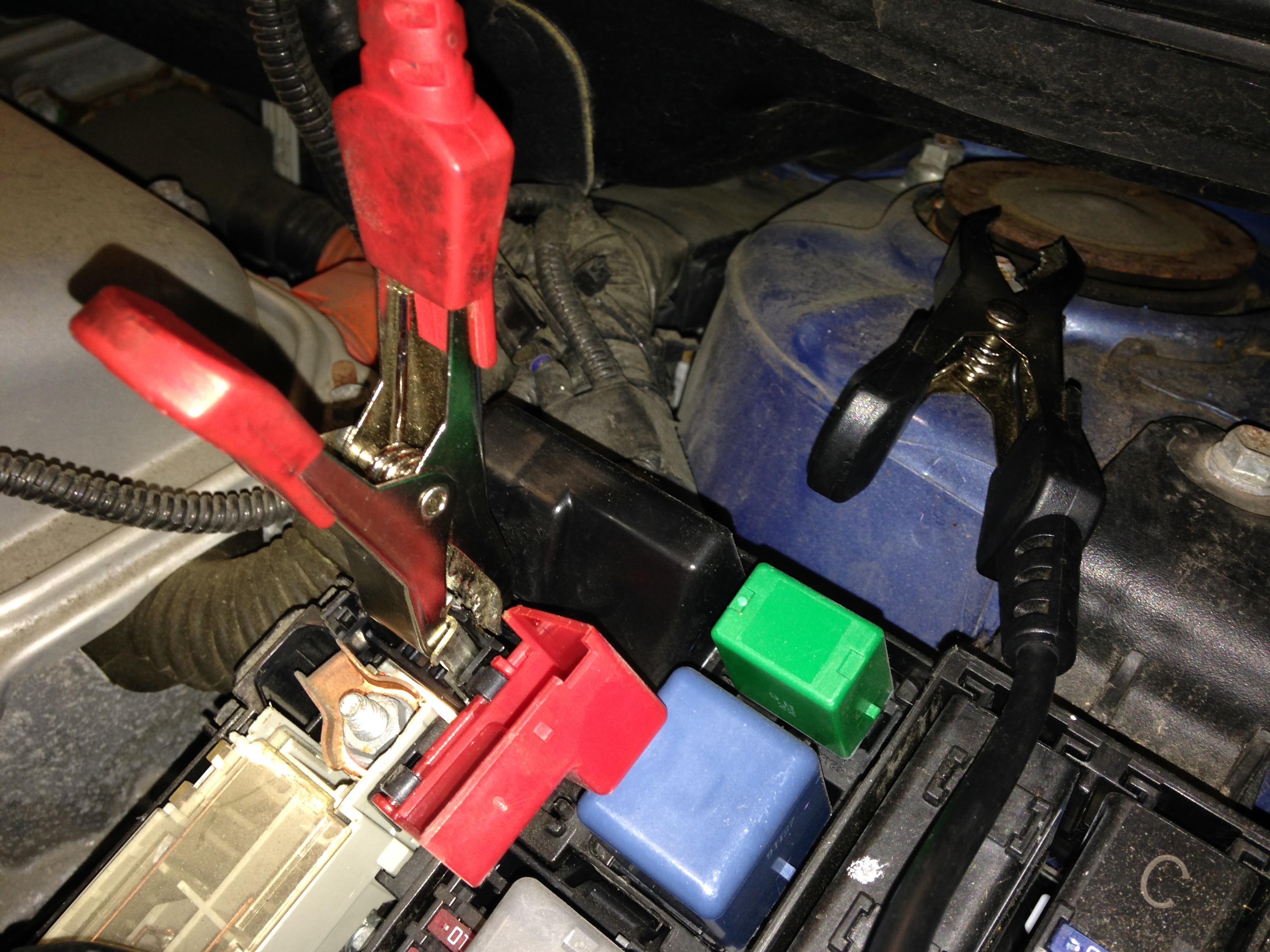
- Identify the Jump Points: Crucially, Toyota often provides dedicated jump points under the hood, even if the battery itself is elsewhere. These are usually a positive (+) terminal and a grounding point (negative (-) terminal). Again, your owner’s manual is the best resource. These jump points are designed to safely channel power from the 12-volt battery.
- Prepare the Vehicles: Park the car with the dead battery close to the Prius, but ensure the vehicles are not touching. Turn off both cars completely. Ensure all accessories (lights, radio, AC) are off in both vehicles.
- Connect the Jumper Cables (Positive First):
- Attach one red (positive) clamp to the positive (+) jump terminal of the Prius.
- Attach the other red (positive) clamp to the positive (+) terminal of the dead battery in the other car.
- Connect the Jumper Cables (Negative Second):
- Attach one black (negative) clamp to the negative (-) jump terminal (grounding point) of the Prius.
- Attach the other black (negative) clamp to an unpainted metal surface on the engine block or chassis of the car with the dead battery. Avoid connecting directly to the dead battery’s negative terminal. This is a crucial safety step to prevent sparks near the battery, which could ignite hydrogen gas if the battery is significantly discharged.
- Start the Prius: Start the Prius and let it run for a few minutes. This allows its 12-volt battery to charge the dead battery. You might need to rev the Prius engine slightly to provide more power.
- Attempt to Start the Dead Car: Try to start the car with the dead battery. If it starts, let it run for a few minutes while connected.
- Disconnect the Cables (Reverse Order):
- Remove the black (negative) clamp from the grounded car.
- Remove the black (negative) clamp from the Prius.
- Remove the red (positive) clamp from the dead car.
- Remove the red (positive) clamp from the Prius.
- Keep Both Cars Running: Allow both cars to run for at least 15-20 minutes (preferably longer) to ensure the dead battery gets a sufficient charge. Driving is the best way to do this.
Can a Prius Battery Power Another Car?
Yes, the 12-volt battery in a Prius can power another car’s dead battery, effectively acting as a jump starter. However, it’s vital to reiterate that you are using the Toyota Prius battery boost through its designated jump points, not directly connecting to the high-voltage hybrid battery. The hybrid system itself is not designed to directly supply power for a jump start.
Differences in Jump Starting Electric Cars vs. Hybrids
It’s important not to confuse jump starting electric car with a hybrid. Pure electric vehicles (EVs) do not have a traditional 12-volt battery in the same way a hybrid or gasoline car does. EVs rely on their large high-voltage battery pack to power everything. While EVs might have a small 12-volt battery to manage systems, they cannot be used to jump-start another vehicle, nor can they be jump-started by a conventional car in the same manner. A hybrid like the Prius, however, retains a conventional 12-volt system for essential functions, making a jump start possible.
Hybrid Car Jump Lead Considerations
When you need hybrid car jump lead connections for a Prius, ensure you are using good quality, thick gauge jumper cables. Thin or poor-quality cables can overheat and melt, posing a fire hazard, and may not deliver enough current to successfully start a dead battery.
Table: Jumper Cable Quality and Gauge
| Cable Gauge | Amperage Rating | Suitability for Jump Starting |
|---|---|---|
| 10 Gauge | 400A+ | Excellent |
| 12 Gauge | 300A-400A | Good |
| 14 Gauge | 200A-300A | Adequate for smaller vehicles |
| 16 Gauge | Below 200A | Not Recommended |
Using cables rated for at least 400 amps is ideal for ensuring efficient power transfer.
The Prius’s Internal Power Management
The Prius has a sophisticated power management system. When the 12-volt battery is low, the hybrid system will often automatically engage the gasoline engine to charge the 12-volt battery. This is why you don’t need to keep the Prius running for extended periods before attempting the jump start; the car’s systems will manage power.
However, if the 12-volt battery in the Prius itself is dead, you would need to jump start the Prius first. This is a less common scenario but is handled similarly – by connecting jumper cables to the designated jump points of another vehicle’s 12-volt battery.
Common Pitfalls and Warnings
- Incorrect Cable Connection: As mentioned, connecting the negative (black) clamp directly to the dead battery’s negative terminal can create a spark. This is a significant safety concern, particularly if the battery is venting hydrogen gas. Always connect the final negative clamp to a metal ground on the receiving vehicle’s chassis.
- Touching Clamps: Never let the red and black clamps touch each other once they are attached to a battery or jump point.
- Wrong Vehicle Type: Attempting to jump start a fully electric vehicle (EV) with a Prius is not possible, as they have fundamentally different power systems.
- Overcharging: While modern cars have alternators and hybrid systems that manage charging, leaving the cables connected for an excessive amount of time after the car has started is unnecessary and could theoretically cause issues, though this is rare.
- Damaging Electronics: The most significant risk is damaging the sophisticated electronics in either the Prius or the vehicle being jumped if the procedure is not followed precisely.
When Your Prius Battery Might Need a Boost
If your Prius won’t start, and you suspect a dead 12-volt battery, you might be wondering if you can jump start a car using a Prius. The symptoms of a dead 12-volt battery in a Prius include:
- The car not entering “Ready” mode.
- Lights flickering or not turning on.
- The infotainment system or dashboard displays not powering up.
- A clicking sound when trying to start.
In such cases, your Prius will need a jump start from another vehicle. The Prius jump start procedure would involve finding the designated jump points (usually under the hood, as described earlier) and connecting jumper cables from a running vehicle.
Can a Prius Battery Power Another Car? A Deeper Dive
The hybrid system’s inverter can convert the high-voltage battery’s DC power to AC power for the electric motor. It can also, through a DC-DC converter, charge the 12-volt battery. However, the hybrid system is not designed to output raw DC power directly from the high-voltage battery to jump-start another car’s 12-volt system. The 12-volt system is what’s used, with the hybrid’s gasoline engine or its stored energy in the high-voltage battery acting as the ultimate source to keep that 12-volt system running.
Think of it this way: your Prius’s 12-volt battery is like a smaller, standard car battery. When you jump-start another car with your Prius, you’re essentially using your Prius’s 12-volt battery as the source of power. The Prius’s engine and hybrid system then work to keep its own 12-volt battery sufficiently charged.
Jump Starting a Conventional Car with a Hybrid: What to Expect
When you jump start a conventional car with a hybrid, the process is generally smooth if done correctly. The hybrid car’s battery management system is designed to be robust. The primary challenge is always the correct connection and ensuring you are using the designated jump points, not trying to directly access the hybrid components.
Frequently Asked Questions (FAQ)
Q1: Can I jump start my Prius from another car?
A1: Yes, you can jump start a Prius if its 12-volt battery is dead. You will need another car and jumper cables. Connect the cables to the designated jump points under the hood of your Prius (refer to your owner’s manual for precise location).
Q2: What happens if I connect the jumper cables incorrectly to my Prius?
A2: Connecting the cables incorrectly can lead to serious damage to your Prius’s electrical system, hybrid components, or even the other vehicle’s electronics. Always follow the manufacturer’s instructions and the correct connection sequence.
Q3: Can I use my Prius to charge another car’s battery like a power bank?
A3: Not directly from the high-voltage hybrid battery. You can use the Prius’s 12-volt battery to jump-start another car’s dead 12-volt battery, which is the standard jump-starting procedure.
Q4: Is it safe to jump start a car with a hybrid battery?
A4: Yes, it is safe as long as you follow the correct procedure and use the designated 12-volt battery jump points. Do not attempt to connect to the high-voltage hybrid battery.
Q5: What if my Prius’s 12-volt battery is completely dead?
A5: If your Prius’s 12-volt battery is so dead that it cannot power the car’s systems to initiate a jump start for another vehicle, you will need to have your Prius’s battery jump-started by another vehicle.
Q6: Do I need special jumper cables for a Prius?
A6: No, you do not need special jumper cables. However, using good quality, thick gauge jumper cables (10 or 12 gauge) is highly recommended for any jump start, including using a Prius.
Q7: My Prius is a hybrid. Does that mean its engine is always on when I jump-start?
A7: When jump starting another car, you will need to start your Prius. The gasoline engine may start automatically to help charge the 12-volt battery, or it may stay in electric mode if the battery charge is sufficient. Either way, the 12-volt system is what provides the power.
Q8: How long should I let the Prius run before trying to start the other car?
A8: Let the Prius run for at least 5 minutes at idle or slightly higher RPMs. This gives its 12-volt battery a chance to transfer some charge to the dead battery.
In conclusion, while the idea of jump starting electric car concepts can be confusing, a Prius, being a hybrid, has a functional 12-volt system that allows it to assist other vehicles with a dead battery. By adhering to the specific Prius jump start procedure, you can safely provide a Toyota Prius battery boost and help out a fellow driver in need. Always consult your owner’s manual for the most accurate and model-specific information.