Yes, you can flat tow a Smart car, but with significant caveats and specific equipment. Flat towing a Smart car behind an RV or other vehicle is possible, but it requires careful consideration of the vehicle’s unique design and the proper Smart car towing equipment. This guide will delve into the specifics of towing a Smart car safely, covering the necessary procedures, common pitfalls, and expert recommendations for Smart car recreational towing.
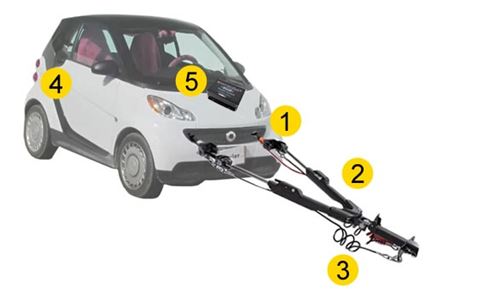
Image Source: www.etrailer.com
The Nuances of Smart Car Towing
Smart cars, particularly the popular Smart Fortwo models, are compact and lightweight, making them an attractive option for those seeking a supplemental vehicle to tow behind their RV or motorhome. The idea of towing a Smart Fortwo behind an RV conjures images of freedom and convenience – exploring new destinations with a nimble city car ready for use. However, the question of can you flat tow a Smart car safely isn’t a simple yes or no. It depends heavily on the specific model year, transmission type, and the adherence to meticulous towing procedures.
Smart Car Dinghy Towing: What Experts Say
When discussing Smart car dinghy towing, or flat towing, experts generally agree that it’s feasible, but not for all Smart car models. The primary concern revolves around the transmission and drivetrain. Many Smart Fortwo models, especially those with the automated manual transmission (often referred to as the “semi-automatic” or “robotized manual”), are not designed for prolonged flat towing without modifications or specific towing setups.
Why the Transmission Matters:
- Lubrication: In a traditional manual transmission, the input shaft is always connected to the gearbox, and when the clutch is disengaged, the output shaft spins freely. This rotation can keep the transmission’s internal components lubricated by the transmission fluid.
- Automated Manual Transmissions: Smart cars with automated manual transmissions have a clutch that is operated by a hydraulic actuator, controlled by a computer. When you’re flat towing a Smart car, if the transmission is left in neutral, the output shaft (connected to the wheels) will spin, but the input shaft and pump mechanisms may not be adequately lubricated. This can lead to premature wear and costly damage to the transmission.
Towing a Smart Car Behind RV: Key Considerations
If you’re considering towing a Smart car behind RV, the first and most crucial step is to consult your Smart car’s owner’s manual. This document will provide the definitive answer for your specific model year and transmission. It will outline whether flat towing is permissible and, if so, what specific procedures must be followed.
Crucial Checks Before Towing:
- Model Year: Older Smart Fortwo models, particularly those with early iterations of the automated manual transmission, are often more problematic for flat towing. Newer models may have different transmission designs or manufacturer recommendations.
- Transmission Type: Identify whether your Smart car has a true automatic transmission, a manual transmission, or the automated manual transmission. The latter is where most of the complications arise.
- Owner’s Manual Guidance: Always prioritize the information in your owner’s manual. It’s the most reliable source of information for your specific vehicle.
How to Tow a Smart Car: The Right Way
Assuming your Smart car model is deemed towable for flat towing, the process involves more than just putting it in neutral and hooking it up. How to tow a Smart car safely involves specific steps and equipment to protect both the Smart car and your towing vehicle.
The Critical Step: Transmission Neutral and Ignition
For flat towing a Smart car, the universally recommended procedure for models that permit it involves:
- Engaging Neutral: Shift the transmission into the “N” (Neutral) position.
- Turning Off the Ignition: Crucially, turn the ignition key to the “Accessory” (ACC) position. This is vital because it allows the steering wheel to unlock and the transmission’s electronic control unit (ECU) to be powered. Without power, the steering wheel will lock, making it impossible to steer the Smart car as you tow it. Leaving the ignition in the ACC position also powers essential systems, including the transmission’s neutral safety switch.
- Securing the Steering Wheel: With the ignition in ACC, ensure the steering wheel is unlocked. Some owners use a steering wheel lock or a simple strap to keep the steering wheel straight and prevent it from turning unexpectedly, which could destabilize the towing setup.
Smart Car Towing Precautions You Cannot Ignore
Even with the correct transmission settings, several Smart car towing precautions are paramount to prevent damage and ensure safety:
- Braking Systems: Many smaller vehicles towed behind RVs require a supplemental braking system. This system activates the towed vehicle’s brakes in conjunction with the RV’s brakes, reducing the strain on the RV’s brakes and providing a more controlled stop. For a Smart car, this is highly recommended, as its light weight might not be enough to trigger the RV’s brake controller effectively.
- Tow Bar and Base Plate: A robust tow bar designed for dinghy towing is essential. This connects to a custom-designed base plate that mounts securely to the Smart car’s frame. Generic hitches are not sufficient.
- Safety Chains: Always use safety chains or cables that are rated for the weight of the Smart car. These are a critical backup in the event the primary connection between the vehicles fails.
- Lights: Ensure the Smart car’s taillights, brake lights, and turn signals are functional and synchronized with the RV. This typically requires a wiring harness and light kit specifically designed for towing.
- Speed and Distance: Adhere to recommended towing speeds. Smart cars, being small, can be more susceptible to trailer sway or instability at higher speeds. Also, be mindful of the distance between the towing vehicle and the Smart car.
- Regular Checks: Before each leg of your journey, perform a thorough check of all connections, lights, and the steering wheel lock.
Smart Car Towing Dolly vs. Flat Towing
When considering how to tow a Smart car, you might also come across the option of using a Smart car towing dolly. This is a different method of towing and can be a viable alternative for some Smart car models, especially those that are not recommended for flat towing.
How a Towing Dolly Works
A towing dolly is a small, two-wheeled trailer onto which the front wheels of the vehicle being towed are placed. The rear wheels of the towed vehicle are then lifted off the ground.
Advantages of a Towing Dolly for Smart Cars:
- Transmission Protection: When using a dolly, the drive wheels of the Smart car (typically the rear wheels) remain on the ground. However, the steering wheels are lifted. Crucially, the transmission is not engaged, and the drive wheels are not spinning. This eliminates the lubrication concerns associated with flat towing.
- Simpler Setup: For some, setting up a towing dolly can feel more straightforward than dealing with the potential complexities of a towed vehicle’s braking system for flat towing.
Disadvantages of a Towing Dolly:
- Storage: Towing dollies require significant storage space. When not in use, you’ll need a place to store it.
- Maneuverability: While the Smart car itself is nimble, towing with a dolly can sometimes affect the overall maneuverability of the RV setup, especially in tight turns or parking lots.
- Weight: The dolly itself adds weight to your towing setup.
Smart Car Towing Equipment Checklist
For successful and safe Smart car towing, the following equipment is generally required:
| Equipment Type | Description | Important Considerations for Smart Cars |
|---|---|---|
| Tow Bar | Connects the RV to the Smart car’s base plate. Available in various styles (e.g., telescoping, non-telescoping). | Ensure it’s rated for the weight of your Smart car and compatible with your RV’s hitch. |
| Base Plate | A custom-fit frame that mounts securely to the Smart car’s chassis, providing attachment points for the tow bar. | This is vehicle-specific and crucial for a secure connection. It must be installed by a professional or someone with significant mechanical expertise to ensure it doesn’t compromise the Smart car’s structure. For some Smart car models, specific base plates are engineered to allow for the necessary clearance and connection points. |
| Supplemental Braking System | Activates the Smart car’s brakes when the RV brakes. Options include portable or permanently installed systems. | Highly recommended for all Smart car towing. It significantly improves safety and is often legally required in many states or provinces for towed vehicles over a certain weight. Some systems are designed to be less intrusive and can be integrated with the Smart car’s existing brake pedal. |
| Wiring Harness/Light Kit | Connects the RV’s lights (tail, brake, turn signals) to the Smart car’s taillights. | Ensure the kit is compatible with the Smart car’s electrical system to avoid damaging the vehicle’s computer or lights. |
| Safety Cables/Chains | Backup connection in case of primary tow bar failure. | Must be rated for the Smart car’s weight and routed correctly to allow for turning without binding. |
| Steering Wheel Lock | Prevents the steering wheel from turning while towing. | Essential for most Smart car flat towing scenarios to keep the steering wheel unlocked. A simple strap or a dedicated steering wheel lock can be used. Some specialized towing setups may include a mechanism to keep the steering centered. |
| Towing Dolly (Alternative) | A two-wheeled trailer that lifts the front wheels of the Smart car off the ground. | Ideal for Smart car models not suitable for flat towing due to transmission concerns. Requires sufficient storage space for the dolly when not in use. |
| Towing Mirror Extension | Extends the RV’s side mirrors to provide a clear view of the Smart car and surrounding traffic. | Improves visibility and safety, especially for smaller vehicles like the Smart car. |
Which Smart Car Models Can Be Flat Towed?
The answer to which Smart car models can be flat towed is not universal and primarily depends on the transmission.
- Smart Fortwo Models with Automated Manual Transmissions: These are the most common Smart cars in North America. As previously discussed, these transmissions require careful consideration. Early models (roughly pre-2010) are often cited as being more problematic. Later models might be more tolerant, but the owner’s manual remains the ultimate authority.
- Smart Fortwo Models with True Manual Transmissions (Rare in North America): If you happen to have a Smart Fortwo with a genuine 5-speed manual transmission (more common in European markets), flat towing is generally much simpler and less risky, similar to towing other manual transmission vehicles.
- Smart Fortwo Models with True Automatic Transmissions (Very Rare): True automatic transmissions are extremely uncommon in Smart Fortwo models sold in most markets. If such a model exists, its towing capability would depend on the manufacturer’s specific recommendations for its automatic transmission.
Key Takeaway: Always verify your specific Smart Fortwo model’s towing recommendations in its owner’s manual. Many Smart owners have encountered transmission damage due to improper flat towing.
Smart Car Towing Equipment Installation
Proper installation of Smart car towing equipment is non-negotiable.
- Base Plate Installation: This is the most critical component. A poorly installed base plate can lead to structural damage to the Smart car or a failure during towing. It’s highly recommended to have this professionally installed by a certified RV technician or a shop specializing in towing setups. They understand the chassis and the stresses involved.
- Wiring Harness: Incorrect wiring can lead to blown fuses, malfunctioning lights, or even damage to the Smart car’s electronics. A professional installation ensures the system is wired correctly and safely.
- Braking System: Installing a supplemental braking system requires connecting it to the Smart car’s brake pedal and potentially its electrical system. This is a job best left to professionals to ensure it functions correctly and doesn’t interfere with the vehicle’s normal operation.
Common Mistakes and Pitfalls in Smart Car Towing
Many owners of Smart cars and other small vehicles make critical errors when attempting to tow them. Being aware of these pitfalls can save you significant repair costs and ensure your safety on the road.
Ignoring the Owner’s Manual
This is the most common and damaging mistake. The manufacturer’s recommendations are based on engineering and testing. Deviating from them, especially regarding the transmission and steering, is a recipe for disaster.
Not Powering the Ignition Correctly
Leaving the ignition key out or in the “Off” position when flat towing a Smart car with an automated manual transmission will lock the steering wheel. This makes directional control impossible. The key must be in the “Accessory” (ACC) position to unlock the steering and power necessary systems.
Overlooking Transmission Lubrication Issues
As highlighted, the automated manual transmission needs careful handling. Some owners attempt to add extra transmission fluid or engage a “neutral” setting without fully understanding how the lubrication system works when the engine is off and the wheels are spinning. Without proper research or professional advice, this can lead to catastrophic transmission failure.
Improper Use of Safety Equipment
- Loose Safety Chains: Safety chains that are too long can drag on the ground, get tangled, or fail to provide support if the tow bar disconnects.
- Inadequate Braking: Not using a supplemental braking system puts undue stress on the RV’s brakes and can lead to loss of control during emergency stops.
- Incorrectly Routed Hoses/Cables: Brake lines, electrical cables, and breakaway cables must be routed to prevent snagging on the road, curbs, or other obstacles.
Forgetting to Disengage Park Brake (If Applicable)
While most Smart cars don’t have a traditional handbrake that would interfere with towing, some might have an electronic parking brake. Always ensure any parking brake is fully disengaged.
Smart Car Recreational Towing: Tips for a Smooth Journey
Smart car recreational towing is about enjoying the freedom to explore. Here are some tips to make your towing experience as smooth and safe as possible:
- Pre-Trip Inspection: Before every trip, and especially after a longer stop, perform a thorough inspection of all towing connections, lights, tire pressure on both vehicles, and safety equipment.
- Practice Driving: If you’re new to towing a vehicle, practice maneuvering in a safe, open area like a large parking lot. Get a feel for how the Smart car tracks behind your RV, braking distances, and turning radius.
- Weight Distribution: Ensure the weight of your Smart car is properly accounted for in your RV’s overall weight capacity and that it’s distributed correctly for stable towing.
- Know Your Route: Plan your route, considering potential road restrictions for RVs and towed vehicles, such as low bridges, steep grades, or weight limits.
- Regular Stops: Take breaks every few hours to check your setup and allow both vehicles to cool down. This is also a good opportunity to check tire pressures and look for any signs of wear or damage.
Frequently Asked Questions About Smart Car Towing
Here are some common questions that arise regarding towing a Smart car:
Q1: Can I flat tow my Smart Fortwo if it has an automated manual transmission?
A1: It depends on the specific model year and manufacturer recommendations. Many Smart Fortwo models with automated manual transmissions are NOT recommended for flat towing without modifications or specialized equipment. Always consult your owner’s manual first. If it indicates it’s possible, ensure you follow the precise instructions regarding ignition position and neutral gear.
Q2: What happens if I flat tow my Smart car incorrectly?
A2: The most common and serious consequence is damage to the transmission. Because the lubrication system may not function correctly when the vehicle is towed with the engine off and the wheels spinning, you can experience premature wear, overheating, and ultimately, transmission failure. You can also damage the steering column if the ignition is not in the accessory position.
Q3: What is the best towing method for a Smart car?
A3: For Smart car models that are not recommended for flat towing, using a Smart car towing dolly is a safer alternative. If your Smart car is certified as flat-towable by the manufacturer, and you have the correct equipment (base plate, tow bar, braking system, lights), flat towing can also be an option.
Q4: Do I need a braking system when towing a Smart car?
A4: Yes, a supplemental braking system is highly recommended and often legally required when towing any vehicle, including a Smart car. It significantly enhances safety by helping to stop the towed vehicle in sync with the RV.
Q5: Can I use a regular tow truck U-Haul type dolly for my Smart car?
A5: While some U-Haul dollies can be used, it’s essential to confirm they are suitable for your specific Smart car model and that the Smart car can be safely secured to it. Always check the rental company’s guidelines and your vehicle’s owner’s manual. The key is ensuring the drive wheels are not engaged and that the steering is properly managed.
Q6: What type of base plate do I need for my Smart car?
A6: You will need a base plate specifically designed for your Smart car’s make, model, and year. These are typically manufactured by companies specializing in RV towing accessories and are engineered to attach securely to the Smart car’s chassis to provide attachment points for a tow bar.
Q7: How do I unlock the steering wheel of my Smart car when towing?
A7: To unlock the steering wheel, you must turn the ignition key to the “Accessory” (ACC) position. This powers the vehicle’s electrical system enough to disengage the steering lock but not enough to start the engine.
Q8: Are there any modifications needed for a Smart car to be flat towed?
A8: Some owners opt for modifications to improve the reliability of flat towing, such as installing a transmission cooler or a dedicated pump to ensure adequate lubrication. However, these are advanced modifications and should only be undertaken with expert advice. The most crucial “modification” is the correct installation of a proper base plate.
Conclusion: Towing Smartly
Smart car towing presents unique challenges due to the specific design of many models, particularly their transmissions. While the convenience of towing a Smart Fortwo behind an RV is appealing, safety and longevity of the vehicle must be the top priorities. By thoroughly researching your specific model, consulting the owner’s manual, investing in the correct Smart car towing equipment, and adhering to proper procedures, you can safely enjoy your Smart car as a towed vehicle. If in doubt, always err on the side of caution and consult with RV towing professionals or certified mechanics. Safe travels!