Image Source: capitalmotorcars.com
Your Guide: Can You Extend Your Car Lease?
Yes, you can often extend your car lease, but it’s not always a straightforward process. A lease extension, also known as a lease renewal or lease contract modification, is a common option for drivers who enjoy their current vehicle and want to keep it longer without committing to a new purchase or lease.
Deciphering Your Lease Extension Options
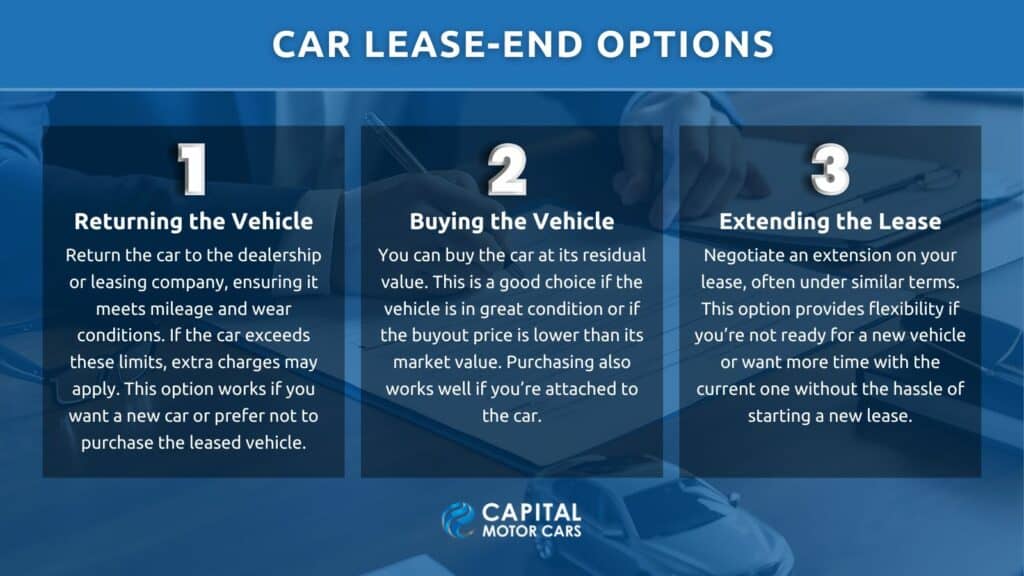
When your car lease is nearing its end, you typically have several pathways forward. Understanding these options is key to making the best decision for your automotive needs and financial situation. The most common choices include returning the lease vehicle, purchasing the car, or exploring a lease extension.
The Lease Extension Possibilities
A lease extension allows you to continue driving your leased vehicle beyond the original contract term. This can be a great way to gain more time with a car you love, especially if you’re not ready for a new vehicle or if market conditions make purchasing or leasing a new car less appealing.
- Short-Term Extensions: Most lease agreements allow for short-term extensions, usually for a few months, typically at a slightly higher monthly rate. This can be useful if you’re waiting for a new model to arrive or need a little more time to decide on your next move.
- Long-Term Extensions (Lease Renewal): In some cases, you might be able to negotiate a longer-term lease extension, essentially renewing your lease for a new period. This is less common than short-term extensions and often involves a formal lease contract modification.
Why Consider a Lease Extension?
Several scenarios might make a lease extension an attractive option:
- Attachment to Your Current Vehicle: You’ve grown accustomed to your car’s features, comfort, and reliability.
- Uncertainty About New Models: You’re not convinced by the latest offerings or are waiting for a specific model to be released or updated.
- Market Conditions: High interest rates, vehicle shortages, or inflated prices for new cars might make extending your current lease more financially sensible than buying or leasing a new one.
- Financial Reasons: You may need more time to save for a down payment on a new car or improve your credit score for better financing terms.
- Avoiding Early Lease Termination Penalties: If you’re considering getting out of your lease early, a lease extension might be a better alternative to costly early lease termination fees.
Evaluating the Financials of a Lease Extension
When you extend your lease, the financial terms usually change. The dealership or manufacturer will recalculate your monthly payments based on the extended term and the vehicle’s residual value at the end of the original lease.
- Monthly Payment Adjustments: Your monthly payment will likely increase. This is because the car has depreciated further, and the lender is now extending the loan period. The new payment will be based on the car’s current market value (or a pre-determined residual value) minus its projected value at the end of the extension period, spread over the new lease term.
- Mileage Limits: Be sure to confirm any mileage restrictions for the extension period. You might need to negotiate these based on your expected driving habits.
- Wear and Tear: The lease contract might have specific clauses regarding wear and tear during an extension. It’s essential to know these to avoid unexpected charges when the lease finally ends.
Navigating the Lease End Options
Your lease contract outlines your lease end options. Understanding these is crucial for a smooth transition, whether you choose to extend, buy, or return.
Returning the Lease Vehicle
This is the most straightforward option if you don’t wish to continue with the car.
- Inspection: The leasing company will typically schedule a pre-return inspection a few weeks before your lease ends. This allows you to identify any potential excess wear and tear charges.
- Finalizing the Return: On the agreed-upon date, you’ll return the vehicle to the dealership. You’ll likely need to settle any outstanding fees, such as excess mileage charges or damage not covered by the lease.
- Disposition Fee: Many leases include a disposition fee, which is charged upon return. This fee covers the costs the leasing company incurs in preparing the car for resale.
The Car Lease Buyout
A car lease buyout allows you to purchase the vehicle at the end of your lease term for a pre-determined price. This price is usually outlined in your original lease agreement, often referred to as the residual value.
-
How a Lease Buyout Works:
- Determine the Buyout Price: This is the residual value plus any remaining fees and taxes.
- Arrange Financing: You can pay cash or secure financing through a bank, credit union, or even the dealership. A finance lease buyout is when you take out a loan specifically to purchase the car.
- Complete the Purchase: Once financed and approved, you’ll sign the necessary paperwork, and the title will be transferred to you.
-
Pros of a Lease Buyout:
- You own the car outright.
- No mileage restrictions.
- No wear-and-tear charges.
- You can keep a car you like.
-
Cons of a Lease Buyout:
- You become responsible for all maintenance and repairs.
- The car may be outside of its warranty period.
- You might be paying more than the car’s current market value, especially if it’s an older model.
Considering a Lease Trade-In
While not a direct lease end option, lease trade-in is a possibility if you’re looking to get into a new car and your current lease is still active.
- How it Works: You can trade in your leased vehicle to a dealership towards the purchase or lease of a new car. The dealership will pay off the remaining balance on your lease.
- Equity: If the car’s market value is higher than the remaining lease balance, you have positive equity, which can be used as a down payment on your next vehicle.
- Negative Equity: If the market value is less than what you owe on the lease, you have negative equity. This difference will need to be paid out of pocket or rolled into your new car loan, increasing your monthly payments.
Factors Affecting Lease Extension Eligibility
Not all lease agreements are eligible for extension, and even when they are, there might be specific conditions.
Manufacturer Policies
- Manufacturer Approval: Lease extensions are typically managed by the manufacturer’s finance company (e.g., Toyota Financial Services, Ford Credit). Their policies dictate whether extensions are allowed and for how long.
- Vehicle Age and Mileage: Most manufacturers will only allow extensions on vehicles that are not too old and have not exceeded a certain mileage threshold. This is because the car’s resale value diminishes significantly over time.
Dealership Involvement
- Dealership as Intermediary: While the manufacturer’s finance company is the ultimate authority, you’ll usually work through your local dealership to arrange an extension.
- Dealership Incentives: Dealerships may be more or less motivated to approve extensions depending on their inventory and sales targets. They might also use the extension period as an opportunity to upsell you on a new vehicle.
Your Lease Contract Terms
- Review Your Original Agreement: Your original lease contract is the primary document that governs all aspects of your lease, including the possibility of extensions.
- Specific Clauses: Look for any clauses related to lease extensions, renewals, or modifications. Some contracts may explicitly state that extensions are not permitted.
The Process of Obtaining a Lease Extension
If you decide a lease extension is the right path, follow these steps:
Step 1: Contact Your Leasing Company or Dealership Early
- Timing is Key: Don’t wait until the last minute. Contact the leasing company or dealership at least two to three months before your lease is due to end. This gives you ample time to explore options and negotiate terms.
- Initial Inquiry: Start by asking if a lease extension is possible for your specific vehicle and contract.
Step 2: Discuss Terms and Conditions
- Monthly Payment: Inquire about the new monthly payment for the extension period.
- Mileage Allowance: Clarify the mileage limit for the extension. If the standard allowance is too low, see if you can negotiate a higher one.
- Duration: Determine the maximum length of the extension allowed.
- Wear and Tear: Ask if the wear and tear standards from your original lease still apply, or if there are any specific guidelines for the extension period.
Step 3: Review the Lease Contract Modification
- Formal Agreement: If an extension is approved, you’ll likely receive a lease contract modification or an addendum to your original lease.
- Read Carefully: Thoroughly review all the new terms and conditions before signing. Pay close attention to the revised monthly payment, mileage limits, and the end-of-extension terms.
Step 4: Sign and Fulfill New Terms
- Agreement: Once you’re satisfied with the terms, sign the modified lease agreement.
- Continue Payments: Make your payments according to the new schedule.
Alternatives to a Lease Extension
If a lease extension isn’t feasible or desirable, consider these other lease end options:
Option 1: Purchase Your Leased Vehicle (Car Lease Buyout)
As discussed, buying out your lease can be a good option if you’ve taken good care of the car and its residual value is attractive compared to the cost of a new vehicle. This includes a finance lease buyout if you need a loan.
Option 2: Lease a New Car
The most common route is to lease a new car lease. This allows you to drive a brand-new vehicle with the latest technology and safety features, typically under warranty.
-
Pros:
- Drive a new, up-to-date vehicle.
- Access to the latest technology and safety features.
- Manufacturer warranties cover most repairs.
- Predictable monthly payments.
-
Cons:
- New car depreciation.
- Mileage limitations and wear-and-tear charges still apply.
- May require a down payment.
Option 3: Buy a New or Used Car
If you prefer ownership, you can purchase a new or used car. This gives you the freedom to drive as much as you want without mileage restrictions and to customize the vehicle as you see fit.
Option 4: Return the Lease Vehicle
If you don’t want to keep the car or commit to a new lease or purchase, simply return the lease vehicle at the end of the term. Ensure you’ve met all contractual obligations to avoid extra charges.
Comparing Lease Extension with Other Options
Here’s a simple table to help compare the primary lease end options:
| Feature | Lease Extension | Car Lease Buyout | Return Lease Vehicle | New Car Lease |
|---|---|---|---|---|
| Ownership | No (temporary continued use) | Yes | No | No |
| Monthly Payment | Likely increases | Varies (loan payment + insurance) | N/A (lease ends) | Generally similar to original lease, may change |
| Mileage Limits | May be extended or negotiated | None | N/A (lease ends) | Yes |
| Wear & Tear | May still apply, check agreement | None | Excess charges may apply | Yes |
| Commitment | Short-term or longer (depends on terms) | Long-term (ownership) | No further commitment | Short-term (new lease contract) |
| Future Value Risk | Less of a concern for the lessee | Lessee bears all value risk | Not applicable | Lessee bears depreciation risk during lease term |
| New Technology Access | Limited (using older vehicle) | Limited (using older vehicle) | Limited (using older vehicle) | Yes |
| Maintenance Costs | Usually covered by warranty (if still applicable) | Lessee’s responsibility, potentially higher | Not applicable | Usually covered by warranty |
Frequently Asked Questions (FAQ)
Q1: Can I extend my lease if I have exceeded the mileage limit?
Generally, it’s difficult to get an extension if you’ve significantly exceeded your mileage limit. The leasing company may offer a buyout option, or you may be required to pay the excess mileage charges upon return. It’s best to discuss your situation with the leasing company early on.
Q2: What happens if I don’t return my lease vehicle on time?
Failing to return your lease vehicle on time can result in significant penalties. You may be charged daily or weekly default rates, which are usually much higher than your regular lease payment. It’s crucial to adhere to the lease end date or arrange an extension or buyout in advance.
Q3: Can I negotiate the terms of a lease extension?
Yes, you can often negotiate the terms of a lease extension, especially the monthly payment and mileage allowance. Your negotiating power might depend on the vehicle’s condition, market demand, and the leasing company’s policies.
Q4: Will my insurance premium change if I extend my lease?
Your insurance premium might change slightly, depending on the new monthly payment and the updated value of the car at the start of the extension. It’s always a good idea to inform your insurance provider about the lease extension.
Q5: What is a finance lease buyout?
A finance lease buyout refers to purchasing your leased vehicle by taking out a loan specifically for that purpose. Instead of paying the lease company directly with cash, you secure financing from a bank, credit union, or other lender to cover the buyout cost. This allows you to own the vehicle while spreading the purchase cost over time.
Q6: Is it better to extend my lease or buy it out?
This depends on the specific numbers. If the buyout price is significantly lower than the car’s market value and you plan to keep the car long-term, a buyout might be more economical. If the buyout price is high, or you’re not ready for ownership responsibilities, extending the lease might offer more flexibility, especially if market conditions are unfavorable for new purchases.
Q7: What if I want to terminate my lease early and then extend?
Early lease termination usually involves significant penalties. If your goal is to continue with the car, it’s almost always better to explore a lease extension or a lease buyout rather than terminating early and then trying to re-lease or buy the same vehicle, which is often impractical.
Q8: What is a lease trade-in?
A lease trade-in is when you use your current leased vehicle as a trade towards a new vehicle purchase or lease. The dealership pays off the remaining balance of your lease, and any equity you have in the car can be applied to the new transaction.
In conclusion, extending your car lease is a viable option for many drivers. By thoroughly researching your options, understanding the financial implications, and communicating effectively with your leasing company, you can make an informed decision that best suits your automotive needs and financial goals. Remember to always review your lease contract and any proposed modifications carefully.