Yes, you can often extend a lease on a car, but it’s not always automatic or the best choice for everyone. This guide will help you explore your lease extension options, understand the process, and decide if it’s the right path for you.
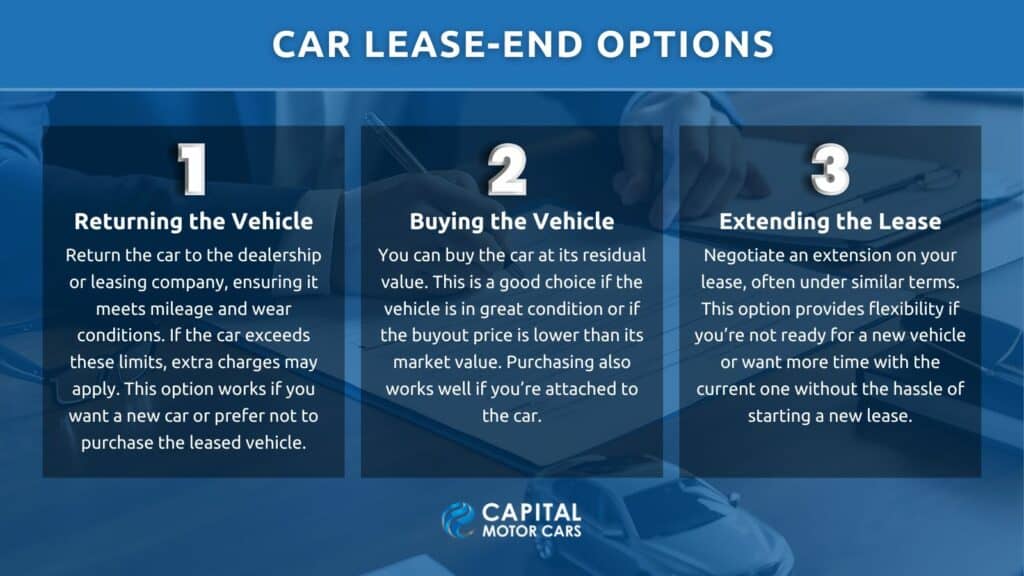
Image Source: capitalmotorcars.com
Why Consider a Lease Extension?
Life happens. Sometimes your circumstances change, and you’re not quite ready to commit to buying a new car or a different vehicle at the end of your lease term. A lease extension can offer a flexible bridge, allowing you to keep driving your current car for a little longer without the pressure of a new purchase or a sudden gap in transportation.
Here are some common reasons why drivers opt for a car lease renewal:
- Waiting for a New Model: Perhaps the redesigned version of your current car is coming out soon, and you want to wait for it.
- Financial Flexibility: You might be saving for a down payment on a house or dealing with unexpected expenses and need more time before taking on a new car payment.
- Uncertainty About Future Needs: Your job situation or family size might be in flux, making it hard to predict what type of vehicle you’ll need in a few years.
- Satisfaction with Current Vehicle: You might simply love your current car and don’t want to part with it just yet.
Types of Lease Extension Options
When your lease is nearing its end, the dealership or leasing company will typically present you with a few choices. One of these is usually a lease extension option. These can vary, but they generally fall into a few categories:
Short-Term Extensions
These are usually offered for a few months, typically 6 to 12 months. They are designed to provide temporary flexibility.
- How it Works: You continue paying your current monthly lease payment, sometimes with a slight adjustment. Mileage restrictions and other lease terms generally remain the same.
- Pros:
- Keeps you in your familiar car.
- Gives you more time to make a decision about your next vehicle.
- Simple process, usually requiring minimal paperwork.
- Cons:
- Doesn’t reduce the overall cost of ownership in the long run.
- The car is likely aging, and you’re still paying for it.
- May not be available for all vehicles or all lease agreements.
Extended Lease Programs
Some manufacturers offer programs that allow for longer lease extensions, sometimes up to 24 months. These are less common than short-term extensions.
- How it Works: These extensions might come with different terms, possibly a slightly higher monthly payment or different mileage allowances. It’s crucial to read the specifics of these programs carefully.
- Pros:
- Provides significant breathing room if you need it.
- Can be a good option if you’re waiting for a specific model or personal event.
- Cons:
- Less common, so availability is limited.
- Terms and conditions can be more complex.
Lease Buyout
While not strictly a lease extension, a lease buyout is a very common and popular lease end option that effectively allows you to keep driving your car indefinitely.
- How it Works: At the end of your lease term, you have the option to purchase the car for a predetermined price, known as the residual value. This price is usually set at the beginning of your lease. You can often finance the buyout amount through the dealership or your own lender.
- Pros:
- You own the car outright, with no further mileage restrictions or wear-and-tear charges.
- You can continue driving a car you know and like.
- Can be a good deal if the residual value is significantly lower than the car’s market value.
- Cons:
- You’ll need to secure financing or have the cash available.
- You’ll be responsible for all maintenance and repairs once you own it.
- The car may be older and require more maintenance.
Lease Rollover
A lease rollover usually refers to trading in your current leased vehicle for a new lease on a different car. This isn’t an extension of your current lease, but it’s a way to continue driving a new car without a gap.
- How it Works: You trade in your existing leased vehicle and immediately start a new lease on a different car. If you have positive equity in your trade-in (meaning its market value is higher than what you owe on the lease), that equity can sometimes be rolled into the new lease, reducing your monthly payments.
- Pros:
- Always driving a new, warrantied vehicle.
- Can potentially lower your monthly payments if you have equity.
- Cons:
- You’re always leasing and never own a vehicle.
- Leasing multiple cars in a row can be more expensive in the long run than buying.
- If you have negative equity, it will increase the cost of your new lease.
How to Request a Lease Extension
The process for requesting a lease extension is generally straightforward, but it’s important to start early.
1. Review Your Lease Agreement
Before contacting the leasing company, pull out your original lease contract. Look for any clauses related to extensions. Some leases explicitly state whether extensions are permitted and under what terms. This will give you a baseline understanding of your rights and the leasing company’s policies.
2. Contact Your Leasing Company or Dealership
Reach out to the leasing company (or the dealership where you leased the car) well in advance of your lease end date. Many companies prefer to be contacted 60-90 days before the lease expires.
- What to Ask:
- “Are lease extensions available for my vehicle?”
- “What are the terms and duration of a potential extension?”
- “What will the monthly payment be for an extension?”
- “Will there be any changes to the mileage allowance or other lease terms?”
- “What are my lease end options beyond an extension?” (This is a good way to ask about buyout and trade-in possibilities).
3. Negotiate the Terms
If an extension is offered, carefully review the proposed terms. Don’t be afraid to negotiate.
- Key Areas for Negotiation:
- Monthly Payment: Can it be kept the same as your current payment, or is there room for adjustment?
- Mileage Allowance: If you expect to drive more or less than your original contract, see if the mileage allowance can be adjusted.
- Duration: While they might offer a set period, you can inquire about shorter or longer extensions if available.
4. Formalize the Agreement
If you agree to an extension, ensure all new terms are put in writing and signed by both parties. This usually involves an addendum to your original lease agreement. Read it thoroughly before signing.
When an Extension Might Not Be the Best Choice
While a lease extension can be convenient, it’s not always the financially savviest move. Consider these scenarios where other lease end options might be better:
High Mileage Usage
If you’ve exceeded your mileage allowance or anticipate doing so during an extension, the fees for excess mileage can be substantial. It might be more cost-effective to consider a lease buyout or a new lease with a higher mileage allowance.
- Excess Mileage Charges: These are typically charged per mile over your contracted limit, often $0.15 to $0.30 per mile. For example, going over by 5,000 miles could cost you $750 to $1,500.
Significant Wear and Tear
If your car has sustained damage beyond normal wear and tear (e.g., significant dents, scratches, stained upholstery), you might face hefty charges at the end of the lease. Extending the lease means you’re still responsible for the car’s condition.
The Car is Aging
As cars age, their reliability can decrease, and repair costs can increase. If your leased vehicle is already a few years old, extending the lease means you’re likely to face more maintenance and potential repair bills, which are not covered by the lease agreement beyond the warranty period.
Better Purchase or Lease Deals Available
The market for new cars and leases is constantly changing. You might find that the residual value for your current car is higher than its market value, making a buyout less attractive. Or, new lease deals on updated models could offer better value than continuing to drive your older vehicle. Exploring other car financing options or new lease specials is wise.
You’re Ready for a New Vehicle
If you’ve enjoyed your leased car but are eager to drive the latest model with updated technology and features, an extension might feel like a step backward. In this case, a lease rollover or purchasing a new car would be more appropriate.
Lease Buyout vs. Lease Extension: A Comparison
To help you decide, let’s compare a lease buyout with a lease extension side-by-side.
| Feature | Lease Extension | Lease Buyout |
|---|---|---|
| Ownership | You do not own the car. | You own the car outright. |
| Monthly Payment | Usually similar to current payment, may increase. | Depends on loan terms if financing, or zero if cash. |
| Mileage Limits | Usually continue, may be adjustable. | No mileage limits. |
| Wear & Tear | You are still responsible for charges. | No further wear & tear charges. |
| Maintenance | Covered by warranty (if applicable). | You are responsible for all maintenance/repairs. |
| End Goal | Temporary continuation of driving. | Permanent ownership. |
| Long-Term Cost | Can be more expensive if you’re always extending. | Can be cheaper in the long run if purchased at good value. |
| Flexibility | Offers short-term flexibility. | Full flexibility once owned. |
The Lease Buyout Process
If a lease buyout seems like the right path, here’s what to expect:
1. Determine the Buyout Price
Your lease agreement will state the residual value, which is the estimated value of the car at the end of the lease term. This is your starting point for the buyout price. You may also need to pay sales tax and acquisition fees, depending on your state and the leasing company.
2. Check the Car’s Market Value
It’s crucial to compare the buyout price with the car’s current market value. Websites like Kelley Blue Book (KBB), Edmunds, and NADA Guides can provide estimates. If the market value is significantly higher than the buyout price, a buyout is likely a good deal.
3. Secure Financing (If Needed)
If you don’t have the cash to buy the car outright, you’ll need to explore car financing options.
- Dealership Financing: The leasing company (often affiliated with the car manufacturer) will likely offer financing.
- Bank or Credit Union Loans: You can also shop around for auto loans at your bank or local credit union. Often, you can get competitive rates this way.
4. Complete the Paperwork
Once you’ve arranged financing or have the funds ready, you’ll need to complete the buyout paperwork with the leasing company. This typically involves signing over the title and paying any outstanding fees. The leasing company will then send you the title, which you can then use to register the car in your name.
Early Lease Termination
Sometimes, you might need to exit your lease before the scheduled end date. This is known as early lease termination. It’s important to distinguish this from an extension.
- How it Works: You pay a penalty to end the lease agreement early. This penalty can be significant and is often calculated as the remaining payments plus any fees, minus the car’s current market value.
- When to Consider: This is usually a last resort. It might be considered if you have a major life change (like moving overseas) or if the car has become unreliably expensive to repair and you want out of the contract.
- Cost: It’s almost always more expensive to terminate a lease early than to see it through or explore other lease end options.
Frequently Asked Questions (FAQs)
Q1: Can I extend my lease if I’m over my mileage limit?
A: It depends on the leasing company. Some may allow an extension but will adjust your monthly payment or mileage allowance. Others might not allow extensions if you’re significantly over. You’ll need to contact them directly.
Q2: What happens if I don’t return my leased car on time?
A: If you don’t return the car or arrange an extension or buyout by the lease end date, you could face significant penalties and charges for continued use, which are typically much higher than your regular lease payment.
Q3: Will my insurance premiums change if I extend my lease?
A: Your insurance provider should be notified of the extension. The premium may or may not change significantly, depending on the insurer’s policies and the car’s updated lease end date.
Q4: Can I negotiate the residual value if I want to buy out my lease?
A: Typically, no. The residual value is a pre-set figure in your original lease contract and is generally not negotiable for a buyout.
Q5: What if the leasing company doesn’t offer extensions?
A: If extensions aren’t offered, your primary lease end options are to return the car, purchase it at the residual value (lease buyout), or potentially sell it to another dealer (a lease trade-in).
Q6: What is a lease trade-in?
A: A lease trade-in is when you sell your leased vehicle to a dealership before the lease term officially ends. If the car’s market value is higher than what you owe on the lease, you can use the difference as a down payment on a new vehicle. However, many manufacturers have restrictions on third-party lease buyouts, so check with your leasing company first.
Q7: How far in advance should I decide on a lease extension?
A: It’s best to start the conversation with your leasing company or dealership at least 60-90 days before your lease is set to expire. This gives you ample time to explore all your options and make an informed decision.
Conclusion
Deciding what to do at the end of your car lease can feel complex, but by exploring your lease extension options, understanding a lease buyout, and considering alternatives like a lease rollover or even early lease termination (as a last resort), you can make the best choice for your financial situation and lifestyle. Remember to always review your lease agreement carefully and communicate with your leasing provider to get the most accurate information for your specific situation. Whether you choose to extend, buy, or move on to a new vehicle, being informed is key to a smooth transition.