Can toothpaste damage car paint? Yes, using toothpaste on car paint can potentially cause damage. While some people suggest using toothpaste for minor scratches, it acts as an abrasive, and its chemical makeup is not designed for car finishes. It can create more scratches, dull the paint, and leave residue.
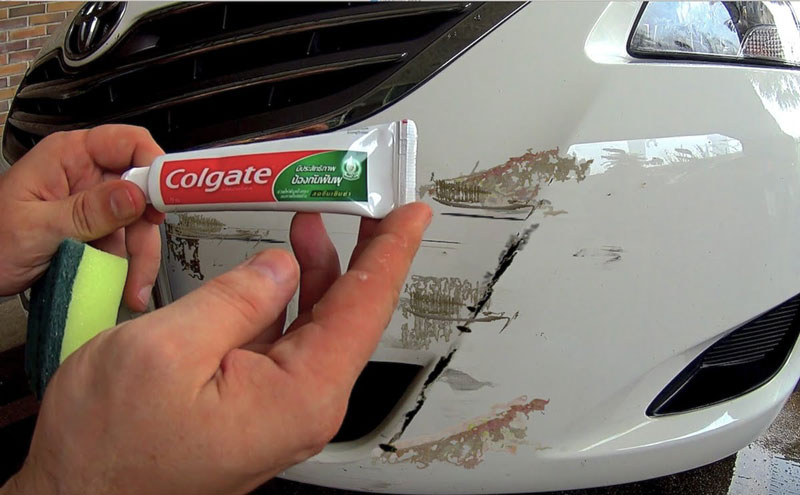
Image Source: ceramicpro.com
The Idea Behind Using Toothpaste on Car Paint
Many people look for easy ways to fix small marks on their cars. Scratches are annoying. They make a car look old or messy. You might see online tips that say you can fix these scratches with something simple you have at home. One popular idea is using toothpaste.
Why do people think toothpaste works? Toothpaste is made to clean teeth. It often has small particles in it. These particles help scrub away dirt and stains from your teeth. Think of it like a very fine sand or grit. When you rub toothpaste on a surface, these tiny bits can smooth it down a little. This is called abrasion. People hope this same scrubbing action can smooth out a scratch on car paint.
The thought is simple: rub the toothpaste on the scratch, and it will gently wear down the edges of the scratch. This might make the scratch less visible. It sounds easy and cheap, right? But is it safe for your car’s finish? That’s where the problems start. Using toothpaste on car scratches might seem like a quick fix, but it comes with big risks.
Discovering How Car Paint Protects Your Car
To understand if toothpaste can hurt your car, you need to know a little about car paint. Car paint isn’t just one layer of color. It’s a system with different layers. Each layer has a job.
- Primer Layer: This goes right onto the metal body of the car. It helps the paint stick and stops rust.
- Base Coat Layer: This is the layer that gives your car its color. It can be red, blue, black, or any other color you see. This layer is sensitive and needs protection.
- Clear Coat Layer: This is a very important layer. It’s a clear layer that goes on top of the base coat. It’s like a shield. It protects the color layer from the sun (UV rays), rain, dirt, and small bumps. It also makes the paint look shiny and deep. Most minor scratches you see are only in this clear coat layer. The goal of fixing a scratch is usually to smooth this clear coat without removing too much of it.
This clear coat is tough, but it can be damaged. When people talk about fixing scratches, they are usually talking about fixing problems in this clear coat. The clear coat is what makes your car look new and bright. Keeping it smooth and clear is key to a good-looking car finish.
Learning What’s Inside Toothpaste
Now, let’s look at toothpaste. What is it made of? Toothpaste has many ingredients. They all do different things for cleaning teeth.
- Abrasives: These are the tiny particles mentioned earlier. They scrub teeth clean. Common abrasives are hydrated silica, calcium carbonate, and aluminum hydroxide. These particles are hard. Their hardness is key to how they might affect car paint. Think of them like very, very fine sandpaper.
- Fluoride: This helps make teeth stronger and prevents cavities. It’s a chemical.
- Detergents: These make the toothpaste foam. They help lift away food bits and plaque. Sodium lauryl sulfate (SLS) is a common one. These are chemicals that can react with surfaces.
- Binders: These help hold the toothpaste together so it doesn’t separate in the tube.
- Humectants: These keep the toothpaste from drying out. Glycerin and sorbitol are examples. They keep it moist.
- Flavorings and Sweeteners: These make toothpaste taste good.
- Water: This mixes everything together.
The abrasives in toothpaste are the main reason people think it can fix scratches. They provide the scrubbing power. But the size, shape, and hardness of these abrasives are made for tooth enamel, not for the delicate clear coat on a car. Toothpaste abrasive car paint interaction is risky because the abrasive particles might be too harsh for the clear coat.
Also, consider the toothpaste chemicals car paint. Ingredients like detergents, fluoride, and even the binders or humectants are not meant to be left on a painted surface. They could potentially stain or react with the clear coat or wax layer.
Seeing Why Toothpaste Can Hurt Car Paint
Using toothpaste on your car’s paint is risky. Here’s why it can cause damage instead of fixing it:
- Harsh Abrasives: As we talked about, toothpaste has abrasives. These are particles that rub and scrub. While they are fine for hard tooth enamel, they might be too rough for the softer clear coat on your car. Rubbing these abras abrasives on the paint can create new, tiny scratches. Instead of fixing one scratch, you might end up with a dull area full of many micro-scratches. This is a real danger of clear coat damage toothpaste.
- Creating More Scratches: The goal is to make the original scratch less visible. But if the abrasives in the toothpaste are harder than the clear coat, they will cut into it. This doesn’t smooth the scratch; it makes the surface rougher on a tiny level, causing a hazy look. Using toothpaste for car paint scratches often makes the problem worse by adding more scratches.
- Dulling the Finish: Even if toothpaste doesn’t make obvious new scratches right away, its abrasive action wears down the smooth clear coat surface. The clear coat is what makes your car shiny. When you make it less smooth, it reflects light differently. This leads to a dull, hazy spot where you used the toothpaste. The beautiful car finish toothpaste residue might also make the area look cloudy or stained.
- Uneven Results: It’s very hard to rub toothpaste evenly on a small scratch area. You might rub too hard in one spot or not enough in another. This can leave uneven patches on the paint. One spot might look duller than the area around it. This makes the ‘fix’ look worse than the original scratch.
- Chemical Reactions: Toothpaste contains various chemicals. Detergents, flavorings, and other ingredients are not tested for use on car paint. They could potentially stain the paint, leave lasting marks, or react with the clear coat in unpredictable ways.
- Doesn’t Actually Fix Deep Scratches: Toothpaste can only possibly help with the very lightest surface marks. It works by trying to level the clear coat. If a scratch goes through the clear coat to the color layer, toothpaste can’t fix it. It can only damage the clear coat that’s left or the color layer itself.
In short, the abrasive nature and unknown chemical interactions mean that using toothpaste for car paint scratches is a gamble. It’s much more likely to hurt the paint than to help it properly.
Decoding if Toothpaste Removes Car Wax
Car wax is another layer on your car’s paint. It sits on top of the clear coat. Wax adds extra shine and protection. It helps water bead up and makes the surface slick. People sometimes ask, does toothpaste remove car wax?
Yes, the abrasive action of toothpaste can remove wax. But it won’t do it evenly or cleanly. The scrubbing particles will rub off some of the wax where you apply it. However, this removal will be spotty and uneven. You’ll have patches where the wax is gone and patches where it’s still there.
Removing wax unevenly isn’t helpful. If you wanted to remove wax, you would use a product made for that, like a dedicated car wash soap or a wax stripper, applied to the whole car for an even result. Using toothpaste just in one spot removes the protection from that area, leaving it more exposed. It doesn’t function as a proper car wax remover. Instead, it’s just scraping away whatever is on the surface, including the wax, while risking damage to the clear coat underneath.
So, while toothpaste abrasive car paint action might remove some wax, it’s not effective or safe for this purpose. It’s a side effect of its rough scrubbing that contributes to the potential damage.
Why Toothpaste Isn’t a Smart Fix for Car Paint
Given the risks, why do people still suggest it? Mostly because it’s a cheap and readily available ‘home remedy.’ People see a surface scratch and think, “I’ll just try this easy trick.” However, the potential cost of fixing the damage caused by toothpaste is much higher than using the right product in the first place.
Toothpaste is made for teeth. Teeth are much harder than car paint’s clear coat. What’s safe for enamel isn’t safe for paint. Using toothpaste is like trying to fix a wooden table with sandpaper meant for metal. It’s the wrong tool for the job.
- Unpredictable Results: Different toothpastes have different abrasives (types, sizes, hardness). You don’t know how a specific toothpaste will react with your car’s specific paint finish. It’s a complete guess.
- Not a Real Repair: Even if it makes a light scratch less visible by hazing the area around it, it hasn’t truly ‘fixed’ the scratch. It has just masked it, often by causing other damage. Real scratch repair involves using products designed to gently smooth or fill the scratch area safely.
- Toothpaste Safe for Car Paint is a Myth: There is no toothpaste on the market that is specifically made or tested to be safe for car paint. Its primary purpose and chemical makeup are for oral hygiene, not auto detailing. You should never assume something designed for one use is safe for a completely different surface, especially something sensitive like car paint.
Therefore, polishing car paint with toothpaste is not recommended by car care experts or paint professionals. It’s a folk remedy that has a high chance of backfiring and causing more harm than good.
Safer and Better Ways to Fix Car Scratches
Instead of risking your car’s paint with toothpaste, there are proper ways to deal with scratches. The best method depends on how deep the scratch is.
Figuring Out Scratch Depth
Before you fix a scratch, you need to know how deep it goes.
- Surface Scratches: These are very light marks, often called swirls or cobwebs. They are only in the very top of the clear coat. You might only see them in certain light. You can often feel them slightly with your fingernail, but your nail doesn’t catch in them.
- Clear Coat Scratches: These go deeper into the clear coat. You can usually feel them with your fingernail, and your nail might catch a little. The scratch looks white because you are seeing the edge of the clear coat layer.
- Color Coat Scratches: These go through the clear coat and into the color layer. You will see the color is gone, and you might see the primer layer or even the metal if it’s very deep. Your fingernail will catch easily.
Toothpaste might have a tiny effect on only the very lightest surface scratches, but at the risk of creating haze or new scratches. For clear coat scratches and deeper ones, toothpaste is useless and harmful.
Recommended Alternatives to Toothpaste
Here are the right tools and products for fixing car scratches: These are the proven alternatives to toothpaste car scratches.
H4: For Light Surface Scratches & Swirls
- Car Polish: This is designed specifically for car paint. Polishes contain very fine abrasives (much finer and more controlled than toothpaste abrasives). They work by gently removing a tiny amount of the clear coat to level the surface and smooth out light marks. They bring back the shine.
- Method: Apply a small amount of polish to a soft foam applicator pad or microfiber cloth. Rub gently in a back-and-forth motion (not circles) over the scratch area. Use light to medium pressure. Wipe away residue with a clean microfiber cloth. You might need to repeat.
- Scratch Removal Kits/Liquids: Many products are sold specifically as “scratch removers.” These are usually fine abrasive compounds or polishes designed for slightly deeper clear coat scratches than a regular polish can handle.
H4: For Deeper Clear Coat Scratches
- Rubbing Compound: This is more abrasive than polish. Use it only on scratches that your fingernail catches on but don’t go through the color. Rubbing compound removes more clear coat material to level the scratch. Use with caution, as using too much or rubbing too hard can remove too much clear coat.
- Method: Similar to polish, apply to an applicator and rub over the scratch. Start with light pressure and increase slightly if needed. Use sparingly. Follow up with a finer polish to remove any hazing left by the compound and restore shine. Always check the product’s instructions.
- Machine Polishing: For better and safer results with compounds and polishes, especially on larger areas or deeper clear coat scratches, using a machine polisher (like a dual-action polisher) with appropriate pads and products is the professional approach. This provides even pressure and speed.
H4: For Scratches Reaching the Color Layer or Deeper
- Touch-Up Paint: If the scratch goes down to the color or primer, you need to add paint back. Touch-up paint kits match your car’s color code. They usually include the color paint and sometimes a clear coat.
- Method: Clean the scratch well. Carefully apply the base color paint into the scratch line using the small brush or pen tip provided. Let it dry completely. Apply clear coat if needed, following kit instructions. This fills the scratch rather than smoothing the surrounding paint. It might not be perfectly invisible but protects the metal and stops rust.
- Professional Repair: For deep or large scratches, going to a body shop is often the best solution. They can properly fill, sand, paint, and clear coat the area to make it look like new.
Comparing Methods:
| Method | Scratch Type Best For | Abrasiveness Level | Risk to Paint | Ease of Use (DIY) | Cost | Effectiveness |
|---|---|---|---|---|---|---|
| Toothpaste | Very light surface (maybe) | Varies widely | HIGH (hazing, new scratches, dulling) | Easy (but risky) | Very Low | Very Poor / Harmful |
| Car Polish | Light surface scratches/swirls | Low, fine | Low (if used correctly) | Medium | Low-Medium | Good for minor marks |
| Rubbing Compound | Deeper clear coat scratches | Medium-High | Medium (requires care) | Medium | Medium | Good for deeper clear coat |
| Scratch Remover Kit | Light to medium clear coat | Low-Medium | Low-Medium | Medium | Medium | Good for target scratches |
| Touch-Up Paint | Color coat or deeper | None (filling) | Low (if applied carefully) | Medium | Medium | Fills, protects |
| Professional Repair | Any scratch, including deep | High (controlled) | Very Low (done by expert) | Very Low (drop off car) | High | Excellent |
As you can see, using products made for car paint is always the safer and more effective approach. Polishing car paint with toothpaste doesn’t fit into any recommended car care practice.
Fixing Up After Using Toothpaste
What should you do if you’ve already tried using toothpaste for car paint scratches and are worried about the result?
First, gently clean the area. Use a car wash soap and water to wash away any car finish toothpaste residue. Rinse thoroughly.
Once clean and dry, look closely at the area in good light. Did the toothpaste fix the scratch? Or did it leave a dull spot, haze, or new fine scratches?
- If it looks okay: You might have gotten lucky because the scratch was very light or the toothpaste was not very abrasive. Clean the area well again and consider applying a car wax or sealant to protect the clear coat you might have slightly thinned.
- If it looks dull or hazy: The toothpaste likely damaged the clear coat surface. You will need to use a car polish designed for clear coats to try and fix this. Apply the polish with a soft pad and rub gently. This can sometimes remove the haze caused by fine scratches from toothpaste.
- If it looks worse with more scratches: This means the toothpaste abrasives were too rough. You will need to use a more aggressive car polish or a light rubbing compound, followed by a polish, to try and level the surface and remove the new scratches. This takes care and should only be done if you are comfortable with the process, as using rubbing compound adds another risk if not done correctly.
- If you think it went through the clear coat: If the area looks very bad, uneven, or you see color changes, you might need professional help from a detailer or body shop.
Always clean the area thoroughly after using any product, including toothpaste, to remove all residue. Leftover toothpaste can continue to affect the paint surface or attract dirt.
Keeping Your Car’s Paint Looking Good
Preventing scratches is easier and cheaper than fixing them. Here are some tips to protect your car’s finish:
- Wash Regularly and Properly: Use car-specific wash soap (not dish soap!) and soft wash mitts (like microfiber or lambswool). Use the two-bucket method (one bucket with soapy water, one with clean rinse water for your mitt) to avoid putting dirt back on the car and scratching it. Rinse the car thoroughly before washing to remove loose dirt.
- Dry Safely: Use clean, soft microfiber drying towels. Pat the car dry or gently pull the towel across the surface. Don’t rub hard.
- Be Careful When Parking: Park away from other cars, trees (sap and bird droppings hurt paint), and areas where people might brush against your car.
- Watch Out for Automatic Car Washes: Some automatic car washes, especially those with large brushes, can cause swirl marks and scratches. Touchless washes are safer for the paint finish, but might not clean as well. Hand washing is generally the best option for paint health.
- Wax or Sealant: Apply a quality car wax or synthetic sealant regularly. This adds a protective layer on top of the clear coat. It makes the paint more resistant to light scratches, UV rays, and environmental fallout. It also makes washing easier. Does toothpaste remove car wax? Yes, in a bad way, so protect your paint properly with real wax/sealant.
- Use Microfiber: When wiping or touching your paint, always use clean, soft microfiber cloths. Paper towels, rough cloths, or old t-shirts can scratch the paint.
- Avoid Harsh Chemicals: Keep harsh cleaners, solvents, and certainly household products like toothpaste, away from your car’s paint.
By taking good care of your car’s paint, you can keep it looking great and minimize the chance of getting scratches in the first place. This reduces the need for any kind of scratch repair, whether with proper products or risky home remedies like toothpaste.
Summarizing Why Toothpaste is Not the Answer
To wrap things up, using toothpaste on car paint is not a recommended or safe way to fix scratches. While the abrasive nature might make a very light scratch seem less visible, it works by potentially damaging the clear coat. It can cause hazing, dullness, and create new, fine scratches. The chemicals in toothpaste are not meant for car paint and could cause unpredictable reactions or stains. Toothpaste safe for car paint is simply not true.
Proper alternatives to toothpaste car scratches exist, including specific car polishes, compounds, and touch-up paints designed for the delicate layers of car paint. These products, when used correctly, offer a much safer and more effective way to restore your car’s finish.
If you have a scratch, figure out how deep it is and use the appropriate car care product. If you’re unsure, consult a professional detailer or body shop. Protect your investment by using products made for your car, not for your teeth. Polishing car paint with toothpaste is a bad idea that can lead to expensive repairs.
Frequently Asked Questions
H4: Does toothpaste actually make car scratches disappear?
H5: No, toothpaste doesn’t make scratches disappear. At best, for very light surface scratches, its abrasive action might slightly round the edges of the scratch or create enough hazing around it to make it less noticeable. However, this is usually at the expense of the clear coat’s smoothness and shine, potentially causing more widespread dullness or new micro-scratches in the area.
H4: Can using toothpaste ruin my car’s paint permanently?
H5: It can cause permanent damage, especially to the clear coat. If the toothpaste is very abrasive or you rub too hard, it can wear down the clear coat unevenly, creating dull spots or visible swirl marks that are difficult or expensive to remove. If the damage is deep, it might require professional repainting.
H4: What kind of scratches might toothpaste seem to fix?
H5: Toothpaste might seem to lessen the look of only the very lightest surface swirls or marks that are barely visible and don’t catch your fingernail. For anything deeper, it won’t work and will likely make the paint look worse.
H4: Is there any type of toothpaste that is safe for car paint?
H5: No. All toothpastes are formulated for cleaning teeth, not car paint. They contain abrasives and chemicals not intended for automotive finishes. Even gel toothpastes, which might seem less abrasive, can contain chemicals harmful to paint over time or with friction. There is no toothpaste safe for car paint.
H4: How can I remove toothpaste residue from my car paint?
H5: If you’ve used toothpaste, wash the area immediately and thoroughly with a quality car wash soap and plenty of water. Use a soft wash mitt or microfiber cloth. Make sure all paste and foam are rinsed away completely to prevent staining or chemical reaction from car finish toothpaste residue.
H4: What should I use instead of toothpaste for light scratches?
H5: Use a product specifically designed for car paint scratch removal. For light surface scratches or swirls, a car polish is appropriate. For slightly deeper clear coat scratches, use a dedicated scratch remover liquid or a light rubbing compound followed by a polish. Always follow the product instructions.
H4: Does toothpaste remove car wax?
H5: Yes, the abrasives in toothpaste will remove car wax where you apply it, but unevenly. It is not a proper method for removing wax and will also risk damaging the clear coat underneath. Use a proper car wash or wax stripper product if you intend to remove wax.
H4: Are toothpaste chemicals harmful to car paint?
H5: Yes, the various chemicals in toothpaste, such as detergents, fluoride compounds, and flavorings, are not formulated for car paint. They can potentially stain the paint, react with the clear coat or wax, and cause issues beyond just the abrasive damage. Toothpaste chemicals car paint interaction is not safe.
H4: How can I tell if toothpaste has damaged my clear coat?
H5: Clear coat damage from toothpaste often looks like a dull patch, a hazy area, or a spot with many tiny, fine scratches (swirls) concentrated where you rubbed. The area might not be as shiny as the surrounding paint. This is clear coat damage toothpaste can cause.
H4: Is polishing car paint with toothpaste ever a good idea?
H5: No, polishing car paint with toothpaste is never a good idea. It is a risky home remedy that uses a product not designed for car paint and is highly likely to cause damage instead of providing a proper, lasting repair or shine.