Yes, a car window can seem to break all by itself, but it’s not magic. When people see a car window shatters spontaneously, it’s usually because of hidden reasons. These can include issues with the glass itself, like a manufacturing defect car window, or things that happened after it was made, such as internal stress automotive glass, hidden damage car window break, or changes in temperature causing thermal shock car window damage. This strange breaking without anything hitting the glass is often called tempered glass spontaneous breakage.
Car windows are built tough. Most car windows, especially the side and rear ones, use a special type of glass called tempered glass. This glass is made using heat or chemicals. This process makes it much stronger than regular glass.
But this strength comes with a special way it breaks. Tempered glass is designed to break into many small, mostly harmless pieces instead of large, sharp shards. This makes it safer in an accident. However, the way it’s made also means it holds a lot of energy, or internal stress automotive glass. This stress is what makes it shatter completely when its outer surface is broken or if something inside the glass becomes a problem.
When a car window shatters spontaneously, it’s usually because one of these hidden issues reached a point where the glass could no longer hold together.
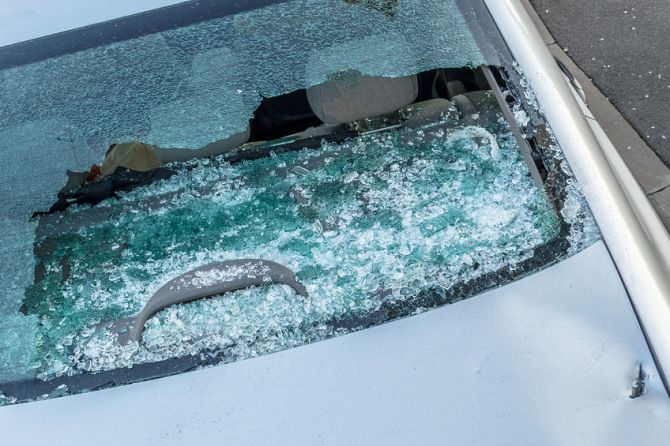
Image Source: only1autoglass.com
Why Tempered Glass Acts This Way
To grasp why a car window might break on its own, we need to look at how tempered glass is made. The glass is heated to a very high temperature, then cooled quickly on the outside surfaces. This rapid cooling makes the outer layers harden and contract faster than the inner core.
- The outside layers become very hard and are in a state of compression (pushed together).
- The inside core is still hot longer and is in a state of tension (pulled apart).
Think of it like a spring wound up tight. The outside is pushing in, and the inside is pulling out. This balance of forces makes the glass very strong against outside forces, like a rock hitting it. But if something disturbs this balance, especially within the core where there’s tension, the whole structure can fail instantly. This stored internal stress automotive glass is the energy released during tempered glass spontaneous breakage.
Main Reasons a Car Window Breaks on Its Own
There are a few key things that can cause a car window shatters spontaneously. None of them involve ghosts or nothing at all. They are all physical causes, even if they are hard to see.
Tiny Problems from When the Glass Was Made
Sometimes, the problem starts right in the factory. Glass is made from sand and other materials melted together. If there are tiny bits of other things in the mix, like nickel or sulfur, they can form small particles called nickel sulfide inclusions.
- These inclusions are very small, often less than a millimeter wide.
- They get trapped in the glass when it’s made.
- They are usually not a problem at first.
However, these nickel sulfide particles can change over time. As the glass heats up and cools down, these tiny particles can grow slightly. Even a very small growth can put extra pressure on the internal stress automotive glass. Because the glass is already under tension inside, this tiny extra pressure from a growing inclusion can be enough to break the glass. This is a classic cause of tempered glass spontaneous breakage due to a manufacturing defect car window.
It’s like having a tiny weak spot deep inside a stretched rubber band. The rubber band is fine until that weak spot starts to tear, then the whole thing snaps.
Heat and Cold: Extreme Temperature Effects
Temperature changes are a big deal for glass. Materials expand when they get hot and shrink when they get cold. Glass does this too. When a car window is exposed to big temperature swings, it can cause stress.
- If one part of the window is hot and another part is cold, like when a window is partly in the sun and partly in the shade, or if you use the defroster on a very cold window, it creates different amounts of expansion and contraction in different parts of the glass.
- This difference in how the glass wants to expand or shrink creates stress. This is known as thermal shock car window damage.
Imagine pulling on one side of a piece of glass while pushing on another. The glass doesn’t like that. While the glass is strong against even forces, uneven forces from temperature differences can be a problem. Extreme temperature car window cracking is more likely when there are already other hidden issues in the glass. For example, a small manufacturing defect car window or a bit of hidden damage car window break might be okay most of the time, but add the stress from thermal shock car window damage, and the window might fail.
Damage You Can’t See
Not all damage is a big crack you can easily spot. Car windows can get tiny nicks or scratches over time. These might happen from:
- Small stones hitting the glass.
- Wiper blades dragging dirt across the surface.
- Things bumping the edge of the window when you close the door.
These tiny spots might not look like much. But they create small weak points on the surface of the glass. Remember that tempered glass has its outer layers in compression. This compression makes it strong. If there is a tiny break in this compressed outer layer, it can allow the tension from the inner core to start to break the glass.
Over time, these small weak points can get bigger, even if you don’t notice it. Or, they might just sit there until something else adds stress, like the door slamming, a bump in the road, or extreme temperature car window cracking. A small piece of hidden damage car window break can be the trigger that causes the whole window to fail in a dramatic car window shatters spontaneously event.
It’s like a tiny crack in a chain link. The chain is strong until that tiny crack grows just enough, then the whole chain breaks under load.
Stress from How the Glass Was Put In
Sometimes, the way the window is installed in the car can cause stress.
- If the opening for the glass is not quite right.
- If the seals are too tight in one spot.
- If the glass is somehow twisted slightly when installed.
These issues can put constant, uneven pressure on the edges or surfaces of the glass. This extra, constant force adds to the natural internal stress automotive glass already present from the tempering process. Over time, this added stress can be enough to cause a tempered glass spontaneous breakage, especially if combined with one of the other reasons like a small defect or temperature change.
This kind of stress is less common with modern car manufacturing, but it is still possible, especially if a window was replaced and not put in perfectly.
Different Windows, Different Risks?
While the principles of tempered glass and spontaneous breakage apply to both side and rear windows, there can be slight differences in how and why they might break.
Side Window Spontaneous Shattering
Side windows are typically pure tempered glass. They are exposed to the elements, temperature changes, and the risks of tiny impacts from road debris or objects hitting the car’s side.
- They are used frequently (rolled up and down), which usually doesn’t cause breaking unless there’s an issue with the window mechanism twisting the glass or if the tracks are dirty, causing strain.
- They are very susceptible to thermal shock car window damage when one part is heated by the sun and another is not, or if you open a cold window when it’s very hot outside.
- Hidden damage car window break from small stone chips is common on side windows.
A side window spontaneous shattering is often one of the most noticeable examples people see of a car window breaking on its own, as the entire sheet of glass instantly turns into small cubes.
Rear Window Sudden Breakage
Rear windows are also usually tempered glass, but they often have the added feature of defrosting wires embedded in them or stuck to the surface.
- The defrosting wires heat the glass unevenly, especially when turned on in very cold weather. This creates significant thermal shock car window damage.
- If the wires themselves are damaged, or if there is a problem with how they were put on, it could potentially create a weak spot or extra stress point in the glass.
- Rear windows can also get hidden damage car window break from things placed in the back of the car or bumps.
A rear window sudden breakage, while less common than side window issues, can sometimes be linked directly to the stress caused by the defroster system rapidly heating the glass, especially if other factors like defects or hidden damage are present.
What the Breaking Looks Like
When a tempered glass window breaks because of spontaneous causes, it almost always shatters completely. It doesn’t just get a single crack like a windshield (which is made of laminated glass, a different type).
- The glass instantly breaks into thousands of small, cube-like pieces.
- These pieces usually stick together for a moment due to static electricity before falling.
- The entire window area is affected.
This characteristic shattering is a key sign that it was tempered glass spontaneous breakage rather than damage from a large impact (which might leave a point of impact visible) or vandalism (where objects might be left behind).
Seeing the Pieces: What to Look For
If your car window breaks on its own, look closely at the pieces if it’s safe to do so.
- Are they small and cube-shaped? This confirms it was tempered glass.
- Can you see a possible point where the break started? Sometimes there might be a tiny spot, perhaps near the edge, where the break seemed to originate. This could point to a manufacturing defect car window (like a nickel sulfide inclusion) or a tiny bit of hidden damage car window break.
- Did it happen right after a big temperature change? This might suggest thermal shock car window damage played a role.
It can be hard to know the exact cause without specialized tools, but observing the circumstances can help.
Is It Common?
While it’s certainly alarming and inconvenient when it happens, tempered glass spontaneous breakage is not an everyday event for most drivers. The vast majority of car windows will never break on their own.
Car manufacturers use quality control to try and prevent issues like manufacturing defect car window. However, no process is perfect, and the nature of tempered glass means it holds that stored internal stress automotive glass. When you factor in things like extreme temperature car window cracking and the possibility of hidden damage car window break over years of use, the chances, though small, are never zero.
What to Do If Your Car Window Breaks on Its Own
If you walk up to your car and find a shattered window that wasn’t broken by an external force, here’s what you should do:
- Stay Safe: The small glass pieces are less dangerous than sharp shards, but they are still glass. Be careful around the opening and the glass on the ground and inside the car.
- Secure the Opening: Cover the window opening to protect the car’s interior from weather and theft. Thick plastic sheeting and strong tape work well.
- Clean Up: Carefully sweep or vacuum up as much glass as possible from around and inside the car. Use gloves. There will be many tiny pieces in door panels and crevices.
- Document It: Take photos of the shattered window and the glass pieces. Note the date, time, temperature, and any other details you think might be relevant.
- Contact Your Insurance: Call your car insurance company. This type of damage is usually covered under comprehensive insurance. Explain what happened – that the window appeared to break spontaneously.
- Get It Fixed: Your insurance company will guide you on how to get the window replaced.
Can You Prevent It?
Preventing tempered glass spontaneous breakage is difficult because the main causes are either built into the glass (manufacturing defects, internal stress) or are everyday environmental factors (temperature changes) and normal wear and tear (hidden damage).
- You can’t prevent a nickel sulfide inclusion from growing.
- You can’t eliminate the internal stress automotive glass – that’s how tempered glass is made.
- You can’t stop extreme temperature car window cracking possibilities when the weather changes.
However, you can take some small steps that might slightly reduce risk, though they offer no guarantee:
- Avoid Extreme Temperature Changes: Try not to blast the defroster on high immediately on a freezing window, or roll down a freezing window instantly when it’s very hot. Let the car’s interior temperature adjust gradually.
- Handle With Care: Be mindful when closing doors firmly. Avoid bumping the glass edges with objects.
- Inspect (Though Hard): While you can’t see internal defects, you can sometimes spot significant chips or cracks on the surface that might worsen. If you see a large chip on a side or rear window, consider getting it checked.
- Quality Replacement: If a window is ever replaced, ensure a reputable shop does the work to minimize the risk of installation stress.
Ultimately, if a window breaks due to a manufacturing defect car window or its inherent internal stress automotive glass, there’s often little you could have done to stop it.
When It Might Be Something Else
It’s important to be sure the window truly broke on its own. Sometimes, damage might not be obvious right away.
- A small stone hitting the window while you were driving might only cause a tiny nick. The full shattering might happen hours later when the car cools down or hits a bump, releasing the tension from the hidden damage car window break. In this case, the stone was the cause, even though the break looked spontaneous later.
- Vandalism can sometimes be subtle. A sharp tool might be used to create a weak point, and the glass might shatter later.
If the break seems truly to have no external cause you can identify, and it fits the description of tempered glass spontaneous breakage (shattering into cubes), then it’s likely one of the internal or environmental factors discussed.
Manufacturer Defects and Warranties
If a window breaks due to a clear manufacturing defect car window shortly after buying a new car, it might be covered under the vehicle’s warranty. However, proving a defect like a nickel sulfide inclusion is the cause can be difficult and might require expert inspection.
For older cars, a spontaneous break is unlikely to be covered by the manufacturer. This is where your comprehensive car insurance coverage is important. It typically covers non-collision damage, including things like breakage from rocks, hail, or potentially, mysterious spontaneous shattering.
Summary Table of Reasons
Here is a simple look at the main things that can cause a car window to break on its own:
| Reason | What It Is | How It Can Cause Breakage |
|---|---|---|
| Manufacturing Defect | Tiny particles (like nickel sulfide) in the glass. | Particles grow slightly over time, adding stress to the core. |
| Internal Stress | Energy stored in tempered glass from how it’s made. | The base state of tension that makes it shatter when disturbed. |
| Thermal Shock | Quick, big changes in temperature on the glass. | Uneven expansion/contraction adds stress, especially with other issues. |
| Hidden Damage | Small chips, nicks, or scratches on the surface. | Creates weak spots in the strong outer layer, letting internal tension out. |
| Installation Stress | Window fitted too tightly or twisted slightly. | Adds constant uneven pressure to the glass edges or surface. |
Each of these can weaken the glass or add stress, making a tempered glass spontaneous breakage event possible.
The Reality of Random Breaking
While it feels random and sudden when a car window shatters spontaneously, there is always a physical reason. It’s usually a combination of the inherent nature of tempered glass (its internal stress automotive glass) meeting a trigger like a manufacturing defect car window, hidden damage car window break, or thermal shock car window damage from extreme temperature car window cracking.
Whether it’s a side window spontaneous shattering or a rear window sudden breakage, the event is a quick release of stored energy in the glass. It can be startling, but it’s a known behavior of tempered glass under certain conditions. Knowing the possible causes helps explain the ‘mystery’ and confirms that, yes, a car window can break on its own, but not without a hidden reason.
Frequently Asked Questions
Is it normal for a car window to break on its own?
No, it is not a common event. Most car windows will last the life of the car without spontaneously breaking. However, it is possible due to factors like hidden defects or stress.
What causes spontaneous glass breakage in cars?
It is typically caused by issues within the tempered glass itself, such as tiny manufacturing flaws (like nickel sulfide inclusions), stress from temperature changes (thermal shock car window damage), pre-existing tiny, unseen chips (hidden damage car window break), or stress from the installation.
Does car insurance cover spontaneous window breakage?
Yes, usually. Most comprehensive car insurance policies cover glass damage that is not caused by a collision, including breakage from unknown causes, vandalism, or objects hitting the car.
Can heat make a car window crack?
Extreme heat or, more specifically, rapid changes between hot and cold (thermal shock car window damage) can add stress to a car window. If there are other hidden issues, this added stress can cause the window to break.
Why did my rear window shatter suddenly?
Rear windows can shatter spontaneously for the same reasons as side windows (defects, hidden damage, temperature stress). The defroster system, which heats the glass, can sometimes contribute to thermal shock car window damage, especially in very cold weather, if other weaknesses are present.
Are side windows more likely to shatter on their own than front windshields?
Yes. Side and rear windows are made of tempered glass, which shatters completely when it breaks. Front windshields are made of laminated glass (two layers of glass with plastic in between), which usually just cracks but stays in one piece when damaged. Spontaneous breakage events discussed here primarily apply to the tempered side and rear windows.
Can slamming a car door cause a window to break?
While unlikely with properly installed glass and no underlying issues, a very hard slam could potentially add enough pressure or vibration to trigger a tempered glass spontaneous breakage if the window already has significant internal stress automotive glass due to a defect or hidden damage car window break. It’s usually the final straw, not the primary cause.
Can cold weather break a car window?
Extreme cold can cause glass to contract, while heat causes it to expand. Rapid changes in temperature, from very cold to warmer (like turning on the car’s heater or defroster), create stress. This extreme temperature car window cracking risk is higher if the glass has defects or prior damage.
What are nickel sulfide inclusions?
They are tiny particles, usually made of nickel sulfide, that can get trapped in the glass during manufacturing. Over time, they can grow slightly, putting stress on the tempered glass from the inside and causing it to break spontaneously. This is a form of manufacturing defect car window.
How can I tell if my window broke due to a defect or impact?
If the window shattered into many small pieces without any visible point of impact or external force, it is more likely tempered glass spontaneous breakage from a hidden defect or stress. If there is a clear point where something hit the glass, even a small one, it was likely caused by external impact activating an internal stress automotive glass release.