A car typically has one fuel injector per cylinder. So, a four-cylinder engine will usually have four fuel injectors, a six-cylinder engine will have six, and so on.
The number of fuel injectors a car has is directly tied to its engine configuration. Essentially, each cylinder in your car’s engine needs its own precise delivery of fuel to combust. This fuel is sprayed into the engine by a component called a fuel injector. Therefore, if your car has a four-cylinder engine, you’ll generally find four automotive fuel injectors. A V6 engine will have six, a V8 will have eight, and so forth. This straightforward relationship ensures that every cylinder receives the correct amount of fuel at the right time, crucial for efficient and powerful engine operation.
This article will delve into the specifics of the car fuel system, explaining how fuel injection works, the different fuel injector types, and why the fuel injector count matters for your vehicle’s performance.
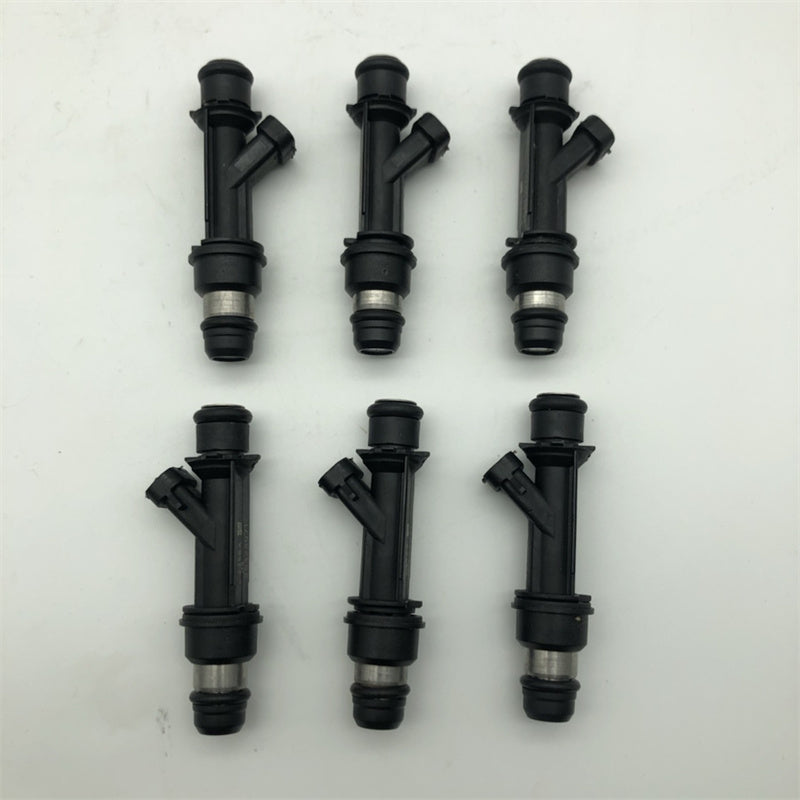
Image Source: wdpart.com
The Core of Fuel Delivery: What Are Fuel Injectors?
Fuel injectors are small, electronically controlled valves that spray fuel into your engine. Think of them as tiny, high-precision spray nozzles. Their primary job is to deliver a finely atomized mist of fuel into the combustion chamber or the intake manifold, where it mixes with air before being ignited by the spark plug. This precise fuel delivery is what makes modern gasoline engines so efficient and powerful.
How Fuel Injection Works: A Detailed Look
The process of fuel injection is a marvel of modern engineering. It’s a sophisticated dance between electronic signals, fuel pressure, and mechanical precision. Here’s a breakdown of how fuel injection works:
- Fuel Pump: The process begins at the fuel tank. An electric fuel pump draws gasoline from the tank and sends it through fuel lines towards the engine.
- Fuel Filter: Before reaching the injectors, the fuel passes through a fuel filter. This filter removes any contaminants, dirt, or debris that could clog the delicate injectors.
- Fuel Rail: The pressurized fuel then travels to a fuel rail. The fuel rail is a pipe that distributes fuel to each individual injector. It acts as a reservoir, ensuring a consistent supply of fuel is available to all injectors.
- Electronic Control Unit (ECU): The car’s brain, the Engine Control Unit (ECU) or Powertrain Control Module (PCM), constantly monitors various sensors around the engine. These sensors provide data on factors like engine speed (RPM), throttle position, air intake temperature, manifold pressure, and oxygen levels in the exhaust.
- Injector Activation: Based on the data from the sensors, the ECU calculates the exact amount of fuel needed for each combustion cycle. It then sends an electrical pulse to the appropriate fuel injector.
- Fuel Spray: This electrical pulse causes a tiny plunger inside the injector to lift, opening the valve for a fraction of a second. The pressurized fuel is then forced through a precisely engineered nozzle, creating a fine mist or spray pattern.
- Atomization: This atomization is key. A fine mist mixes with air much more effectively than a stream of liquid fuel, leading to more complete combustion.
- Intake Stroke: The fuel is typically sprayed into the intake manifold just before the intake valve (in port fuel injection) or directly into the combustion chamber (in direct injection) during the engine’s intake stroke.
This entire process happens thousands of times per minute, all orchestrated by the ECU to optimize performance, fuel economy, and emissions.
The Role of Engine Cylinders in Fuel Injector Count
As mentioned, the engine cylinders are the primary determinant of the fuel injector count. Each cylinder needs its own dedicated injector for optimal fuel delivery. Let’s look at common engine configurations:
- Inline-4 Engine: Most common in smaller to mid-size cars, these engines have four cylinders arranged in a straight line. Therefore, they typically have four fuel injectors.
- Inline-6 Engine: Found in some larger sedans, SUVs, and performance cars, these engines have six cylinders in a line. They will usually have six fuel injectors.
- V6 Engine: These engines have six cylinders arranged in two banks of three, forming a “V” shape. This configuration also requires six fuel injectors.
- V8 Engine: Popular in trucks, SUVs, and performance cars, V8 engines have eight cylinders in two banks of four. They will have eight fuel injectors.
- Boxer Engine (Flat Engine): Found in some Subaru and Porsche models, these engines have cylinders arranged horizontally opposite each other. A four-cylinder boxer engine will have four injectors, and a six-cylinder boxer will have six.
Fuel Injector Types: Variations in Design and Operation
While the basic function is the same, there are several types of fuel injector types, each with its own design and application:
Port Fuel Injectors (PFI)
- Description: These are the most common type of injectors found in older gasoline engines and many modern ones. They are located in the intake manifold, just above the intake valve for each cylinder.
- Operation: The injector sprays fuel into the intake port, where it mixes with air as the intake valve opens and the mixture is drawn into the combustion chamber.
- Advantages: Relatively simple design, lower cost, and less prone to fouling compared to direct injectors.
- Disadvantages: Fuel is not injected directly into the combustion chamber, which can lead to slightly less precise fuel control and potentially less efficient combustion compared to direct injection.
Direct Injection (DI) Injectors
- Description: These injectors are mounted directly in the cylinder head, spraying fuel precisely into the combustion chamber. This technology is becoming increasingly prevalent in modern gasoline engines.
- Operation: Fuel is injected directly into the cylinder under very high pressure, often during the compression stroke. This allows for more precise control over the fuel-air mixture and can lead to better fuel economy and higher power output.
- Advantages: Improved fuel efficiency, increased power output, better emissions control, and can enable more advanced combustion strategies like stratified charge.
- Disadvantages: More complex and expensive to manufacture, require higher fuel pressures, and can be more susceptible to carbon buildup on the injector tip and intake valves.
Common Rail Diesel Injectors
- Description: While this article focuses primarily on gasoline engines, it’s worth noting that diesel engine fuel systems utilize injectors in a similar, yet distinct, manner. In common rail diesel systems, fuel is stored in a high-pressure rail and delivered to injectors that spray directly into the combustion chamber.
- Operation: Diesel injectors are designed to handle the extremely high pressures and different fuel characteristics of diesel. They spray fuel directly into the cylinder, and the combustion occurs due to the heat of compression, not a spark plug.
- Advantages: Excellent fuel efficiency, high torque, and durability.
- Disadvantages: Can be more complex and costly to repair.
The Importance of the Fuel Delivery System
The fuel injectors are just one part of a larger, interconnected fuel delivery system. This system ensures that fuel is stored, filtered, pressurized, and delivered to the injectors reliably. Key components of the fuel delivery system include:
- Fuel Tank: Stores the gasoline.
- Fuel Pump: Draws fuel from the tank and pressurizes it.
- Fuel Filter: Removes impurities from the fuel.
- Fuel Lines: Transport the fuel.
- Fuel Rail: Distributes fuel to the injectors.
- Fuel Pressure Regulator: Maintains the correct fuel pressure in the system.
- Injectors: Atomize and spray fuel into the engine.
A properly functioning fuel delivery system is essential for the engine to run smoothly and efficiently. Any issue with this system, including a clogged or malfunctioning fuel injector, can lead to significant performance problems.
Symptoms of Failing Fuel Injectors
When fuel injectors begin to fail or become clogged, they can manifest in several noticeable ways:
- Misfires: If an injector is not delivering fuel properly, the cylinder it serves will not fire correctly, leading to engine misfires. You might feel this as rough idling or a loss of power.
- Rough Idling: An uneven fuel mixture across cylinders can cause the engine to run unevenly when idling.
- Poor Fuel Economy: Clogged or leaking injectors can disrupt the optimal fuel-air ratio, leading to increased fuel consumption.
- Loss of Power: If one or more injectors are not delivering the correct amount of fuel, the engine won’t be able to produce its full power.
- Check Engine Light: Modern vehicles have sophisticated diagnostic systems. If the ECU detects an issue with fuel delivery, it will often illuminate the “Check Engine” light.
- Difficulty Starting: In severe cases, failing injectors can make it difficult to start the engine, especially when cold.
- Fuel Smell: A leaking injector can cause gasoline fumes to be detectable around the vehicle.
Maintaining Your Fuel Injectors
Proper maintenance can help extend the life of your fuel injectors and ensure optimal engine performance:
- Use Quality Fuel: Opt for reputable gasoline brands and consider using fuel with detergent additives, which can help keep injectors clean.
- Regular Fuel System Cleaning: Periodic fuel system cleaning, either with an in-tank additive or a professional injector cleaning service, can help remove deposits and prevent clogging.
- Replace Fuel Filter: The fuel filter is designed to protect your injectors from contaminants. Replacing it at the recommended service intervals is crucial.
- Address Issues Promptly: If you notice any of the symptoms of failing injectors, it’s best to have your vehicle inspected by a qualified mechanic as soon as possible.
Direct Injection vs. Port Injection: A Performance Comparison
The debate between direct injection and port injection often comes up when discussing modern engines. Both have their merits:
| Feature | Port Fuel Injection (PFI) | Direct Injection (DI) |
|---|---|---|
| Injector Location | Intake manifold, before the intake valve | Directly in the combustion chamber |
| Fuel Spray | Mixes with air in the intake port, drawn into cylinder | Sprayed directly into the cylinder |
| Fuel Pressure | Lower | Higher |
| Combustion Control | Less precise | More precise |
| Fuel Economy | Generally good, but can be less efficient than DI | Often leads to improved fuel economy |
| Power Output | Good | Can achieve higher power output and torque |
| Emissions | Good, but DI can offer better control | Can offer better emissions control with advanced strategies |
| Cost | Generally lower | Generally higher |
| Carbon Buildup | Less prone to injector tip fouling | Can be more prone to injector tip and intake valve carbon deposits |
| Cooling Effect | Minimal direct cooling effect in the cylinder | Direct injection can have a cooling effect, enabling higher compression |
While direct injection offers many advantages in terms of performance and efficiency, port injection remains a viable and often simpler technology. Many manufacturers are also exploring hybrid systems that combine both PFI and DI for optimal results.
Frequently Asked Questions (FAQ)
Q1: How many fuel injectors does a 4-cylinder car have?
A 4-cylinder car typically has four fuel injectors, with one injector per cylinder.
Q2: Can I add more fuel injectors to my car?
Adding more fuel injectors than your engine is designed for is generally not recommended and would require significant modifications to the ECU, fuel system, and potentially the engine itself. Modern engines are finely tuned with their specific fuel injector count.
Q3: What happens if a fuel injector fails?
If a fuel injector fails, the cylinder it serves will not receive fuel, leading to engine misfires, a loss of power, rough idling, and potentially increased fuel consumption.
Q4: How do I know if my fuel injectors need cleaning?
Symptoms like rough idling, poor acceleration, decreased fuel economy, and the illumination of the “Check Engine” light can indicate that your fuel injectors may need cleaning.
Q5: Is direct injection better than port injection?
Direct injection generally offers better fuel economy and higher power output due to its precise fuel control, but port injection is a simpler and often more robust system. The “better” system often depends on the specific application and tuning.
Q6: What is the difference between a gasoline and diesel fuel injector?
Gasoline fuel injectors spray fuel into the intake manifold or combustion chamber in a liquid or atomized state to mix with air and be ignited by a spark. Diesel fuel injectors spray fuel directly into the combustion chamber under extremely high pressure, where it ignites due to the heat of compression. The design and operating pressures are significantly different.
In conclusion, the number of fuel injectors a car has is a fundamental aspect of its engine design, directly corresponding to the engine cylinders. Each injector plays a vital role in the car fuel system, ensuring precise fuel delivery for optimal performance and efficiency. By understanding how fuel injection works, the various fuel injector types, and the importance of maintaining the fuel delivery system, you can better appreciate the complex engineering that powers your vehicle.