Knowing your car’s trim level is crucial for several reasons, from understanding its features and capabilities to ensuring you order the correct parts or accessories. But how do you easily find out what trim your car is? You can find your car’s trim level by checking your owner’s manual, the Vehicle Identification Number (VIN) sticker, the vehicle’s exterior badging, and by using online VIN decoders.
This guide will walk you through the most effective methods to determine your car’s specific trim package without any hassle. We’ll explore how to decipher the automotive trim designation, check car’s options, and even delve into car model trim history.
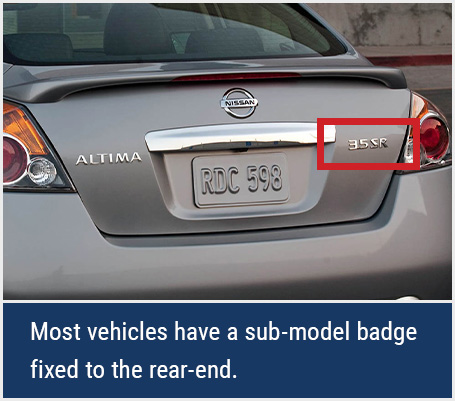
Image Source: www.buyautoparts.com
Why Knowing Your Car’s Trim Level Matters
Before we dive into the “how,” let’s briefly touch upon the “why.” Your car’s trim level is essentially its specific version or package within a particular model. Think of it like different editions of a book – they might be the same story, but one might have a hardcover, illustrations, or bonus chapters. Similarly, car trims often dictate variations in features, engine options, interior materials, exterior styling, and even safety equipment.
Here’s why car trim level identification is so important:
- Feature Set: Different trims come with different standard and optional features. Knowing your trim helps you identify what your car should have.
- Parts Ordering: When you need to buy replacement parts, like floor mats, seat covers, or even specific engine components, the correct trim level ensures compatibility.
- Resale Value: When selling your car, accurately stating its trim level can help you justify its price and attract buyers looking for specific features.
- Insurance: Some insurance companies may consider trim levels when assessing risk and determining premiums, especially if higher trims include more advanced safety or performance features.
- Customization and Upgrades: If you plan to upgrade or customize your vehicle, knowing your trim level helps you select compatible accessories and modifications.
Simple Ways to Find Your Car’s Trim Level
There are several straightforward methods you can use to find car’s trim level. You don’t need to be a car expert to do this!
1. Your Owner’s Manual: The Primary Source
Your car’s owner’s manual is the most definitive source for information about your vehicle, including its trim.
-
Where to Look:
- Inside the Front Cover: Often, the trim level is printed directly on a sticker inside the front cover or on the first few pages.
- Specifications Section: Look for a section detailing vehicle specifications. The trim level is usually listed here.
- Warranty Information: Sometimes, trim details are included in the warranty booklet.
-
What to Expect: The manual will usually clearly state the model year, make, model, and the specific trim designation (e.g., “Honda Civic EX-L,” “Ford F-150 Lariat,” “Toyota Camry SE”).
2. The Vehicle Identification Number (VIN) Sticker
The VIN is a unique 17-character code that identifies your car. It contains a wealth of information, and often, the trim level can be deduced from it or by using a VIN decoder.
-
Locating the VIN:
- Driver’s Side Dashboard: Look at the bottom corner of your dashboard, visible through the windshield from the outside.
- Driver’s Side Doorjamb: Open the driver’s door and look for a sticker on the door frame or pillar.
- Vehicle Registration and Insurance Documents: Your VIN is always listed on these.
-
Using the VIN for Trim Information:
- Online VIN Decoders: Numerous free online tools can decode your VIN. Simply enter the VIN into a reputable decoder, and it will often provide a detailed breakdown of your vehicle’s specifications, including the trim package. Websites like NHTSA’s VIN decoder or even many auto parts store websites offer this service.
- Dealer Services: Your local car dealership can also decode your VIN and tell you the exact trim.
3. Exterior Badging: Look for Clues
Most manufacturers place identifying badges on the exterior of the vehicle to denote the model and trim level.
-
Common Locations:
- Rear of the Vehicle: This is the most common spot. Look on the trunk lid, tailgate, or rear bumper.
- Sides of the Vehicle: For some models, especially trucks or performance cars, trim names might be on the front fenders or doors.
-
Examples: You might see badges like “GTI” for a Volkswagen Golf, “XLE” for a Toyota Camry, “Denali” for a GMC Sierra, or “Sport” for various models. These badges are direct indicators of the automotive trim designation.
4. The Vehicle’s Build Sheet (If Available)
The build sheet is a document that lists all the original options and features your car was built with. While not always readily available to the owner, it’s the most comprehensive list.
- How to Obtain One:
- Original Purchase Documents: Check your original sales contract or financing papers.
- Dealership: Some dealerships might be able to retrieve a copy of your car’s build sheet if you provide the VIN.
- Online Services: Certain paid services specialize in retrieving build sheets using your VIN.
5. Check Your Car’s Options via Online Resources
Beyond VIN decoders, you can also cross-reference your car’s features with known trim packages for that model year. This is a good way to confirm what you see or to check car’s options if badging is missing or unclear.
- Manufacturer Websites: Many car manufacturers have archives of past model year information. You can often find brochures or specification sheets online that detail the features of each trim level for a given year.
- Automotive Review Sites: Websites like Edmunds, Kelley Blue Book (KBB), and Car and Driver often provide detailed reviews and specifications for various car models, including breakdowns of their trim levels.
- Car Trim Level Decoder Tools: Some specialized websites act as a car trim level decoder, allowing you to input your car’s make, model, and year to see a list of available trims and their associated features.
Decoding the Clues: What to Look For
Once you’ve found potential indicators of your car’s trim, you need to know how to interpret them.
Common Trim Designations and What They Mean
Manufacturers use a variety of acronyms and words to denote trim levels. While these can vary greatly, here are some common examples and their general implications:
- Base/Standard: The entry-level trim, typically with fewer amenities and less powerful engine options.
- S/SE/LS/LX: Often represent mid-range trims, offering a balance of features and affordability.
- EX/LT/XLT: Usually signify upgraded trims with more comfort features, better engines, and enhanced styling.
- XLE/Limited/Platinum/Touring: Generally the top-tier trims, boasting premium materials, advanced technology, and the most powerful engine options.
- Sport/R/RS: Often indicate a focus on performance or sporty aesthetics, which might include suspension upgrades, sportier seats, or aerodynamic body kits.
- Off-Road/TRD/Trail Rated: Specific to SUVs and trucks, these trims are equipped for enhanced off-road capability with features like specialized tires, suspension, and drivetrain components.
- Hybrid/EV: Indicates a specific powertrain type, often paired with a particular trim level.
Example Table: Toyota Camry Trim Levels (Hypothetical for a specific year)
| Trim Level | Key Features Might Include |
|---|---|
| LE | Standard engine, cloth seats, basic infotainment system |
| SE | Sportier exterior styling, upgraded suspension, maybe larger wheels |
| XLE | Leather seats, sunroof, advanced driver-assistance features |
| TRD | Performance-tuned suspension, unique exterior accents, V6 engine |
This table illustrates how different trim names can correspond to distinct feature packages.
How to Determine Vehicle Trim Based on Features
If the badging is gone or unclear, you can often determine vehicle trim by systematically checking the features present in your car and comparing them to what’s standard or optional for each trim level of your model year.
Steps:
- Identify Your Car’s Make, Model, and Year: This is the absolute first step.
- Search for Trim Level Information: Use online resources (manufacturer archives, review sites) for your specific car.
- List Your Car’s Features: Go through your car and make a list of what it has. Pay attention to:
- Upholstery: Cloth, synthetic leather, genuine leather, special stitching?
- Infotainment System: Screen size, navigation, premium audio (e.g., Bose, JBL), Apple CarPlay/Android Auto.
- Comfort Features: Heated/ventilated seats, power-adjustable seats, sunroof, dual-zone climate control.
- Exterior Details: Alloy wheel size and design, LED headlights/taillights, fog lights, chrome accents, spoiler.
- Safety and Driver-Assistance: Blind-spot monitoring, adaptive cruise control, lane-keeping assist, parking sensors, backup camera.
- Engine and Performance: Engine size (e.g., 4-cylinder, V6), transmission type, all-wheel drive.
- Compare Your List to Trim Specifications: See which trim level’s feature list most closely matches your car. This is a great way to identify car’s features.
Advanced Techniques and Considerations
Sometimes, the basic methods might require a bit more digging.
Using a Car Trim Level Decoder Online
As mentioned, online VIN decoders are powerful tools. A good car trim level decoder will break down your VIN into various components, often explicitly stating the trim.
- How they work: These services access vast databases that link VINs to manufacturing specifications. The data embedded within the VIN itself often contains codes that the decoder translates.
- What to look for in a decoder:
- Accuracy: Does it consistently provide correct information for known vehicles?
- Detail: Does it offer more than just the trim, like engine options, body style, and even manufacturing plant?
- Reputation: Is it from a trusted source (e.g., government agencies, well-known automotive data providers)?
Exploring Car Model Trim History
Understanding the car model trim history can be beneficial, especially if you have an older vehicle or are looking at used cars. Over the years, trim names and the features they represent can evolve.
- Researching Past Years: If you find a VIN decoder or brochure for your car’s specific model year, you’ll get the most accurate trim information for that car. However, if you’re comparing vehicles or trying to identify features from memory, knowing how trims have changed can be helpful.
- Industry Trends: Manufacturers often introduce new trims or revise existing ones to adapt to market demands and technological advancements. For instance, “sport” trims have become increasingly popular, and features that were once exclusive to luxury trims are now found on mid-range options.
When Badging is Misleading or Absent
It’s not uncommon for badges to fall off, especially on older cars, or for them to be intentionally removed by previous owners. In these cases, relying on other methods becomes even more critical.
- VIN is Key: The VIN remains the most reliable identifier, even if external clues are missing.
- Feature Comparison: As detailed above, a thorough feature check is your next best bet.
- Professional Help: If you’re still unsure, a mechanic or dealership can often definitively identify your car’s trim.
Checking Car’s Options vs. Trim Level
It’s important to distinguish between the trim level and optional packages. A trim level is a pre-defined package of features. However, manufacturers often allow buyers to add optional packages that add or change features within that trim.
- Example: A “Honda CR-V EX-L” might be your trim level. Within the EX-L trim, you could have had the “Navigation Package” or the “Premium Audio Package” as an option.
- How to identify options: These are often listed on the original window sticker or build sheet. Your owner’s manual might also detail which options were available for your trim.
Troubleshooting Common Issues
Sometimes, you might encounter discrepancies or confusion.
My Car Seems to Have Features from Two Different Trims
This can happen due to optional packages or sometimes even factory errors or dealer add-ons.
- Optional Packages: Revisit the “Checking Car’s Options” section. You might have a base trim with several optional packages that elevate its feature set.
- Dealership Modifications: Some dealers add accessories or upgrade certain components before selling the car.
- Previous Owner Upgrades: A previous owner might have swapped out parts (e.g., wheels, stereo system).
The Badge is Unclear or Damaged
If the badge is illegible, carefully clean the area around it with a soft cloth and water. If it’s still unreadable, proceed with other methods like VIN decoding or feature comparison.
I Can’t Find My Owner’s Manual
Don’t panic! Many manufacturers provide digital versions of owner’s manuals on their official websites. Search for “[Manufacturer Name] [Model Name] [Model Year] owner’s manual.”
Final Thoughts: Your Car’s Identity at Your Fingertips
Knowing your car’s trim level is more than just a detail; it’s a key to understanding your vehicle’s capabilities and history. By utilizing your owner’s manual, VIN sticker, exterior badging, and the power of online resources, you can easily and accurately identify your vehicle trim package. Whether you’re ordering parts, planning upgrades, or simply curious about your car’s specific car specification trim, these methods will provide the answers you need.
Remember to always cross-reference information if possible, and don’t hesitate to consult your dealership if you’re still uncertain.
Frequently Asked Questions (FAQ)
Q1: What is the most reliable way to find my car’s trim level?
A1: The most reliable methods are checking your owner’s manual for a printed designation or using your Vehicle Identification Number (VIN) with an online VIN decoder. The VIN contains factory-specific codes that can pinpoint your exact trim.
Q2: Can the VIN tell me my car’s trim without a decoder?
A2: While the VIN itself contains coded information, it’s not directly readable by most people without a decoder. The VIN decoder translates those codes into understandable terms, including the trim level.
Q3: If my car’s badge is missing, can I still find the trim?
A3: Yes, absolutely. If the exterior badging is gone or unreadable, focus on your owner’s manual and especially the VIN. You can also compile a list of your car’s features and compare it to known trim levels for your car’s make, model, and year using online resources.
Q4: What if my car has features from different trim levels?
A4: This often means your car has optional packages that were added to a specific trim level. Manufacturers often offer bundles of features that can be added to a base or mid-level trim, enhancing its capabilities and comfort beyond the standard offering. Always check for original purchase documents or build sheets if available.
Q5: Are trim levels the same across different years for the same car model?
A5: Not necessarily. While some trim names may persist, the features and specifications associated with them can change significantly from one model year to the next as manufacturers update their vehicles. It’s important to check information specific to your car’s model year.
Q6: Where can I find a good online VIN decoder?
A6: Reputable sources include the National Highway Traffic Safety Administration (NHTSA) website, which offers a VIN lookup tool that can provide basic vehicle information. Many auto parts retailers and automotive information sites also offer free VIN decoding services. Always ensure the site looks legitimate and is well-reviewed.
Q7: Does the trim level affect my car’s performance?
A7: Often, yes. Higher trim levels may come with more powerful engine options, sport-tuned suspensions, or different drivetrain configurations (like AWD), all of which can affect performance. “Sport” or performance-oriented trims are specifically designed with enhanced performance in mind.
Q8: How can I check car’s options if I don’t have the original window sticker?
A8: Besides the VIN decoder and owner’s manual, you can often find original window sticker information by searching for your specific model year’s factory build information online, or by contacting a dealership with your VIN. Reviewing online car reviews for your model year will also detail the typical options available for each trim.