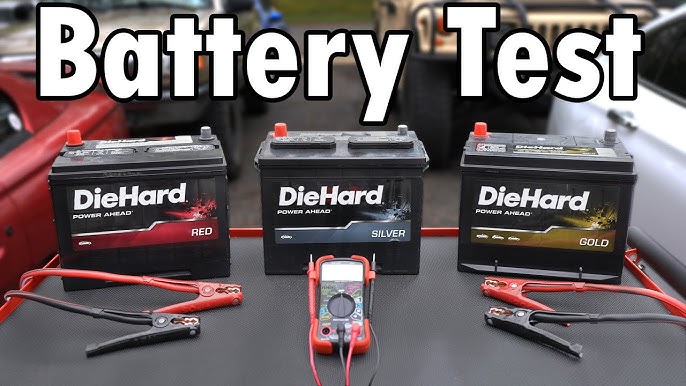
Image Source: i.ytimg.com
Can A Car Battery Be Bad But Test Good?
Yes, a car battery can be bad but still pass a standard test. This is a common frustration for car owners because it means a seemingly healthy battery can suddenly fail, leaving you stranded. Several factors contribute to this perplexing situation, often pointing to hidden battery defects or intermittent battery failure.
Why a Battery Might Pass a Test But Still Be Faulty
It’s a head-scratcher, isn’t it? Your car battery gets tested, and the mechanic says it’s fine. Then, a few days later, your car won’t start. How can this be? The simple answer is that typical battery tests often don’t reveal all potential problems. They are designed to catch the most obvious issues, like a completely dead cell or severe corrosion. However, they can miss subtler issues that only manifest under specific conditions.
Limitations of Common Battery Testing Methods
Most automotive shops rely on a few standard tests to assess a battery’s health. While these tests are useful, they have their battery testing limitations.
-
Voltage Test: This is the simplest test. A fully charged battery should read around 12.6 volts or higher. A voltage test only tells you if the battery is charged, not its ability to hold that charge or deliver power when needed. A battery can have a good voltage reading but still be weak internally.
-
Load Test: This is a more comprehensive test. A load tester simulates the electrical demand placed on the battery when you start your car. It applies a heavy load (usually half the battery’s rated cranking amps) for about 10-15 seconds and measures the voltage.
- A good battery should maintain a voltage above a certain threshold (often around 9.6 volts) during the load test.
- However, the voltage drop under load can be influenced by the battery’s internal resistance. A battery with slightly increased internal resistance might pass a brief load test but struggle when continuously called upon.
- The duration of the load test is also crucial. A short test might not reveal a battery that deteriorates quickly under sustained demand.
-
Hydrometer Test (for flooded lead-acid batteries): This involves checking the specific gravity of the electrolyte in each cell. Different specific gravity readings can indicate a discharged cell or a failing cell. However, this test is less common on modern sealed batteries and doesn’t always detect sulfation issues that can reduce capacity.
The core issue is that these tests are often performed when the battery is at rest or under a simulated, short-duration load. They don’t always replicate the real-world stress a battery faces during cold starts, when multiple accessories are running, or when the vehicle has been sitting for a while.
The Culprits: Hidden Battery Defects and Intermittent Failures
Several types of hidden battery defects can lead to a battery testing good but failing in reality. These often fall under the umbrella of intermittent battery failure.
-
Sulfation: Over time, lead sulfate crystals can form on the battery plates. If a battery is frequently discharged deeply or left in a discharged state, these crystals can harden, reducing the battery’s surface area for chemical reactions. A battery with mild sulfation might still have enough healthy plate surface to pass a brief load test but will have significantly reduced overall capacity and a higher internal resistance, leading to voltage drop under load sooner.
-
Internal Shorts or Weak Plates: A battery can have a subtle internal short circuit between plates within a cell, or one or more plates might be weakened due to age, vibration, or manufacturing defects.
- In a quiescent state (when the car is off), the voltage might appear normal.
- During a short load test, the healthy cells might compensate for the weak one, keeping the overall voltage within acceptable limits.
- However, during a prolonged cranking attempt or when running multiple electrical systems, the weak cell’s contribution diminishes rapidly, causing a more significant voltage drop under load and potentially leading to the engine not starting or electronic systems malfunctioning.
-
Phantom Battery Drain: This isn’t a battery defect itself but can make a good battery appear bad or cause a good battery to discharge prematurely. A phantom battery drain occurs when a vehicle’s electrical system draws power even when the ignition is off. This could be due to a faulty module, a stuck relay, or an aftermarket accessory that isn’t turning off properly.
- A battery that is healthy will eventually be drained by a phantom load, leading to a no-start situation.
- If you test the battery immediately after removing the parasitic draw, it might still test good. However, if tested after sitting with the draw, it might appear weak or dead.
-
Corrosion: While visible corrosion on the terminals is easy to spot, subtle internal corrosion can also occur. This increases the battery’s internal resistance and hinders its ability to deliver power efficiently.
Symptoms of a Weak Car Battery That Tests Good
Recognizing the subtle signs can help you avoid being caught off guard by a battery that has hidden battery defects. These are the weak car battery symptoms you should look out for:
- Slow Engine Crank: This is a classic sign. Instead of a quick, strong engine crank, you hear the starter motor turning the engine over more slowly than usual. This indicates the battery is struggling to provide the necessary battery cranking amps.
- Dimming Headlights or Interior Lights: When you turn on your headlights or other accessories, you might notice them dimming, especially when the engine is at idle or when you first start the car. This suggests the battery is not adequately supporting the electrical system.
- Dashboard Warning Lights: While some battery warning lights indicate a charging system problem (like the alternator), others can illuminate when the battery voltage drops too low, even if it’s intermittent.
- Electronics Acting Up: Power windows might move slower, the radio display might flicker, or other electronic components might behave erratically. This can happen when the battery’s voltage dips during operation.
- Clicking Sound When Trying to Start: If you hear a rapid clicking sound when you turn the key, it usually means the battery has enough power to engage the starter solenoid, but not enough to actually crank the engine.
- Corrosion on Terminals: While this can be cleaned, persistent or excessive corrosion can be a sign of internal battery issues or a compromised seal.
The Role of the Alternator and Other Charging System Components
It’s crucial to remember that a car’s starting and electrical system is a chain. A weak battery can mimic issues with the alternator, and vice-versa.
-
Alternator Load Test: When a mechanic tests your battery, they should ideally also perform an alternator load test. This test checks if the alternator is charging the battery effectively and providing enough power to the vehicle’s electrical systems while the engine is running.
- If the alternator isn’t charging properly, the battery will be depleted, making it seem like the battery is bad.
- Conversely, a bad battery can put an excessive strain on a healthy alternator, causing it to work harder and potentially fail prematurely.
-
Battery Capacity Test: While load tests are common, a true battery capacity test (also known as a reserve capacity test) is more thorough. This test measures how long a battery can deliver a specific amount of current (often 25 amps) at a specific temperature before its voltage drops below a usable level. This test is a better indicator of a battery’s ability to handle sustained loads and is more likely to expose hidden battery defects that a simple load test might miss. Unfortunately, it’s less commonly performed in a quick shop visit due to the time it takes.
When to Suspect a Battery That Tested Good
If you’ve had your battery tested and it passed, but you’re still experiencing starting problems or electrical quirks, consider these scenarios:
- The Test Was Superficial: As discussed, basic voltage and short load tests aren’t foolproof. The battery might have had just enough life left to pass.
- The Problem is Intermittent: The specific condition that causes the battery to fail might not have been present during the test. For example, a very cold morning or a prolonged period of inactivity might expose its weakness.
- There’s Another Underlying Issue: A phantom battery drain, a failing starter motor, or an issue with the alternator could be the real culprit. The battery might just be the symptom or the component that’s being stressed by another problem.
- The Battery is Aging: Batteries have a finite lifespan, typically 3-5 years. Even a well-maintained battery will eventually degrade, and its ability to hold a charge and deliver battery cranking amps will decrease, leading to intermittent battery failure.
Proactive Measures and What to Do
If you suspect your battery is on its last legs, even after a “good” test, here are some steps:
- Request a More Thorough Test: Ask your mechanic if they can perform a battery capacity test or if their load tester can be set for a longer duration.
- Check for Parasitic Draw: Have a mechanic perform a parasitic draw test to rule out any phantom battery drain. This involves measuring the current draw when the car is off.
- Inspect the Charging System: Ensure your alternator is working correctly. A failing alternator can lead to a dead battery, even if the battery itself is still good.
- Consider Battery Age: If your battery is over 3-4 years old, it’s wise to start thinking about replacement, even if it’s currently passing tests. It’s better to replace it proactively than to wait for it to fail at an inconvenient time.
- Monitor for Symptoms: Pay close attention to the weak car battery symptoms mentioned earlier. If they reappear, it’s a strong indicator that the battery is indeed the problem.
Table: Common Battery Issues and How They Might Affect Test Results
| Battery Issue | Description | How it Might Pass a Test | Real-World Impact |
|---|---|---|---|
| Mild Sulfation | Hardened sulfate crystals on plates reduce surface area. | May still have enough healthy area for a brief load test. | Reduced overall capacity, higher internal resistance, voltage drop under sustained load. |
| Internal Plate Weakness | One or more plates have lost conductivity or structural integrity. | Healthy cells compensate during a short test. | Reduced cranking power, intermittent electrical issues, eventual failure to start. |
| Minor Internal Short | A small bridge between plates that allows some current leakage. | Minimal voltage loss at rest or during short bursts of power. | Gradual self-discharge, reduced capacity, potential voltage drop under load. |
| Phantom Battery Drain | Unwanted electrical current draw when the car is off. | Battery tests good if tested before significant discharge. | Battery dies overnight or after a few days of sitting. |
| Age-Related Degradation | General wear and tear on internal components. | Can still meet minimum test standards for a while. | Reduced capacity, inability to hold charge, less battery cranking amps. |
Frequently Asked Questions (FAQ)
-
Q: My car battery is only two years old. Can it still be bad?
A: Yes, absolutely. While many batteries last longer, factors like extreme temperatures, frequent short trips, and underlying vehicle electrical issues can shorten a battery’s lifespan significantly. -
Q: If my car sometimes struggles to start but eventually starts, is that a sign of a bad battery?
A: Yes, intermittent starting issues are a common indicator of a weak battery, especially if it’s a battery that has previously tested as good. It suggests the battery’s ability to deliver sufficient battery cranking amps is inconsistent. -
Q: Can a bad battery damage my alternator?
A: A weak or failing battery can put extra strain on the alternator as it tries to compensate for the lack of power. This can cause the alternator to overheat and fail prematurely. -
Q: What is the best way to test a car battery for hidden defects?
A: A battery capacity test (reserve capacity test) is the most thorough. If that’s not available, look for a mechanic who performs a comprehensive load test that simulates real-world conditions and measures the voltage drop under load accurately. Also, ensure they check for parasitic draw. -
Q: How do I know if it’s the battery or the alternator?
A: A mechanic should be able to differentiate. If the battery voltage is low even after the engine has been running for a while, it suggests a charging issue (alternator). If the battery holds a charge but struggles to deliver power when starting, it points to the battery. -
Q: My car battery is sealed. Can I still check its condition?
A: Sealed or maintenance-free batteries cannot be tested with a hydrometer. You will rely on voltage and load testing. Some newer batteries also have built-in indicators, but these are not always reliable for detecting subtle issues.
In conclusion, while modern battery testers are sophisticated, they are not infallible. The possibility of a car battery being bad but testing good is a reality due to the nature of electrochemical components and the limitations of testing under controlled, often brief, conditions. By being aware of the symptoms and the potential for hidden battery defects, you can be better prepared to diagnose and address battery issues before they leave you stranded.