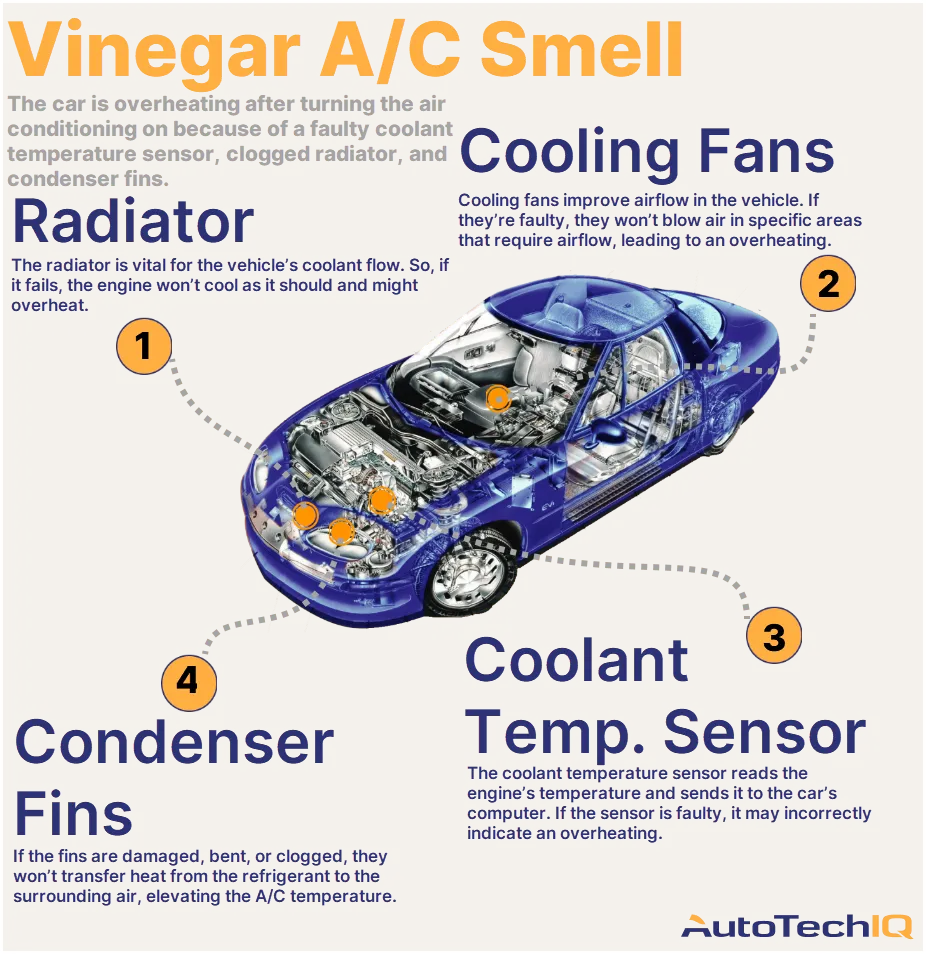
Image Source: www.autotechiq.com
Vinegar Smell in Car AC: Why it Smells Bad
Does your car’s air conditioning system emit a pungent vinegar odor when you turn it on? This unpleasant smell, often described as sour or vinegary, is a common issue that can make your driving experience quite disagreeable. Fortunately, there are usually clear reasons behind this AC smells bad phenomenon.
The vinegar odor in your car’s AC system is most commonly caused by the growth of bacteria or mold within the air conditioning components, particularly the evaporator core. These microorganisms thrive in damp environments and break down organic matter, producing volatile organic compounds (VOCs) that result in the characteristic vinegar smell. In some cases, a coolant smell that can be mistaken for vinegar might indicate a leak in the AC system or heater core, though this is less frequent.
Deciphering the Sour Scent: Common Culprits
That vinegar odor wafting from your car’s AC vents is your system’s way of telling you something isn’t quite right. It’s more than just an annoyance; it’s a signal that conditions within your AC system are ripe for unwelcome guests – primarily microorganisms. Let’s dive into the specific reasons why your car’s AC might smell like a forgotten bottle of salad dressing.
Bacterial and Fungal Havens in Your AC
The interior of a car’s air conditioning system, especially the evaporator core, is a prime breeding ground for bacteria and mold. This is due to the constant cycle of condensation that occurs when warm, humid air passes over the cold evaporator coils. This condensation, while necessary for cooling, creates a damp environment where microbes can flourish.
-
Bacteria in AC: Various types of bacteria can colonize the moist surfaces within the AC system. As they multiply and metabolize organic debris that inevitably accumulates (like dust, pollen, and even microscopic skin cells), they release byproducts. Some of these byproducts are volatile organic compounds (VOCs) that have a distinct, sour, or vinegary smell. Think of it like a miniature ecosystem developing inside your car, and the smell is its waste.
-
Moldy Car AC: Mold spores are present everywhere, and when they land in the moist interior of your AC system, they can take root and grow. Mold, like bacteria, breaks down organic matter. Certain types of mold produce mycotoxins and other compounds that contribute to that unpleasant, musty, or vinegary aroma. A persistent musty car smell is a strong indicator of mold growth.
The Role of Condensation and Moisture
The very process that cools your car – refrigeration – creates the conditions for these smells.
- Evaporator Core: This is the heart of your AC system. It’s where the refrigerant absorbs heat from the cabin air, causing it to cool. As the air cools, moisture from the air condenses onto the cold fins of the evaporator core, just like water droplets form on a cold glass on a humid day.
- Drip Pan and Drain Tube: This collected condensation is supposed to drain out of the vehicle through a dedicated drain tube. However, if this tube becomes blocked, water can pool within the AC system, creating a stagnant, damp environment that’s perfect for microbial growth.
When Organic Debris Becomes Food
Beyond just moisture, bacteria and mold need something to feed on. Over time, dust, pollen, dead insects, and other airborne debris can get trapped within the AC system, particularly on the evaporator core and cabin air filter.
- Clogged Cabin Filter: The cabin air filter is designed to trap these particles before they enter your cabin and circulate through the AC system. However, when the clogged cabin filter becomes saturated with debris, it not only reduces airflow but also provides a readily available food source for the very organisms you’re trying to avoid. If the filter is neglected, it can become a breeding ground itself, contributing to the overall smell.
Less Common, But Possible: AC Fluid Leak and Coolant
While less likely to produce a direct vinegar smell, it’s worth considering other possibilities, especially if the smell is accompanied by other symptoms.
- AC Fluid Leak: A leak in the AC system’s refrigerant lines could, in very rare circumstances, lead to an unusual odor. However, refrigerant typically has a chemical or slightly sweet smell, not usually vinegary.
- Coolant Smell: If you detect a sweet, syrupy smell, it’s more indicative of a coolant smell and likely points to a leak in the heater core or other cooling system components. While not vinegar, a coolant smell is also a serious issue that needs immediate attention. Sometimes, the sour notes of coolant mixed with a mild mustiness might be misinterpreted as vinegar.
Identifying the Source: A Detective’s Approach
Pinpointing the exact location of the vinegar odor can be challenging, but by observing where and when the smell is most prominent, you can narrow down the possibilities.
When the Smell Appears
- Immediately Upon Starting: If the smell hits you as soon as you turn on the AC, it suggests the problem is with the air that’s been sitting in the system. This points towards stagnant moisture and microbial growth on the evaporator or in ductwork.
- After the AC Has Been Running: If the smell only appears after the AC has been running for a while, it might indicate that the system is working hard, and the heat generated is activating dormant microbes.
- When Turning Off the AC: Sometimes, the smell is most noticeable when you turn off the AC but leave the fan running. This can be due to residual moisture on the evaporator core evaporating, releasing trapped odors.
What to Check First
When you’re troubleshooting a vinegar odor, start with the easiest and most common culprits.
The Humble Cabin Air Filter
The cabin air filter is your first line of defense against airborne contaminants entering your car’s interior. It’s also a common site for trapped moisture and organic debris, making it a prime suspect for that musty car smell.
- Location: The cabin filter is usually located behind the glove compartment or under the dashboard.
- Inspection: When you remove it, check for visible dirt, dust, leaves, or any signs of dampness or mold. A filter that looks dark and grimy is a strong indicator that it needs replacement. A clogged cabin filter also restricts airflow, making your AC work harder.
- Replacement: Replacing the cabin air filter is a relatively simple DIY task for many car owners. Consult your car’s owner manual for specific instructions.
The Evaporator Core: The Heart of the Problem
The evaporator core is where the magic of cooling happens, but it’s also the most likely place for that vinegar odor to originate.
- What it is: It’s a radiator-like component within your AC system. Warm refrigerant flows through it, and as cabin air blows over its cold fins, the refrigerant absorbs heat, cooling the air.
- Why it Smells: As mentioned, condensation forms on the evaporator fins. If this moisture doesn’t drain properly, or if organic debris accumulates on the fins, bacteria and mold will start to grow. The constant airflow then picks up these odors and distributes them throughout the cabin. An evaporator core issue directly relates to the smell.
The Drain Tube: The Unsung Hero (When it Works)
The AC system has a drain tube that allows condensation to exit the vehicle, usually under the car.
- Blockages: If this tube gets blocked by debris, leaves, or mud, water will back up into the AC housing. This creates a persistent damp environment, amplifying the growth of mold and bacteria and leading to that persistent vinegar odor.
- Symptoms of a Blocked Drain: You might notice water accumulating on the passenger side floorboard or a damp smell even when the AC is off.
Ductwork and Vents
The plastic ductwork that carries the cooled air throughout your cabin can also harbor moisture and debris, especially in areas where condensation might form.
- Moisture Traps: Any low spots or imperfections in the ductwork can become collection points for water.
- Vent Grilles: The grilles themselves can also accumulate dust, which then becomes damp when the AC is used, contributing to the overall smell.
Solutions and Preventative Measures: Tackling the Vinegar Smell
Once you’ve identified the likely cause, it’s time to take action. Fortunately, most causes of the vinegar odor can be addressed with proper car AC maintenance.
Deep Cleaning and Sanitization
For stubborn odors stemming from microbial growth, a more thorough cleaning is often required.
- AC System Cleaners: You can purchase specialized AC system cleaners designed to kill bacteria and mold and neutralize odors. These often come in aerosol cans that are sprayed into the AC intake vents while the system is running. Follow the product instructions carefully.
- Evaporator Core Cleaning: Some cleaners are specifically designed to be sprayed directly onto the evaporator core. This usually involves accessing the core, often through a drain port or by removing a panel.
- Ozone Treatment: A professional ozone treatment can be very effective at eliminating persistent odors by oxidizing and breaking down odor-causing molecules. This is a more intensive solution, often used by detailing shops.
Replacing the Cabin Filter: A Simple Fix
As discussed, a dirty or clogged cabin air filter is a frequent contributor to AC smells.
- Regular Replacement: Make a habit of replacing your cabin air filter according to your car manufacturer’s recommendations, or more frequently if you drive in dusty conditions. This is a cornerstone of good car AC maintenance.
- Quality Matters: Opt for a good quality filter, possibly one with activated carbon, which can help absorb odors.
Addressing Blocked Drains
If you suspect a blocked drain tube, it’s crucial to clear it.
- Locating the Drain: The drain tube is usually found on the firewall, under the car, on the passenger side. You might see a small rubber tube.
- Clearing the Blockage: You can try to gently probe the tube with a thin, flexible wire or use compressed air to blow out any debris. Be careful not to damage the tube.
Professional Inspection and Repair
If you’ve tried the above steps and the vinegar odor persists, or if you suspect a more serious issue like an AC fluid leak or a significant evaporator core issue, it’s time to consult a professional mechanic.
- Leak Detection: Professionals have specialized equipment to detect refrigerant leaks.
- Deeper Cleaning: They can perform more thorough cleaning and disinfection of the AC system, including accessing and cleaning the evaporator core more effectively.
- Component Replacement: If a component like the evaporator core is severely degraded or damaged, it may need to be replaced.
Preventing Future Vinegar Smells: Proactive Maintenance
The best way to deal with a vinegar odor is to prevent it from happening in the first place. Proactive car AC maintenance is key.
The “Dry” Run Trick
One of the most effective preventative measures is simple:
- Turn off AC Before Destination: A few minutes before you arrive at your destination, turn off the AC compressor but leave the fan running. This helps to blow out excess moisture from the evaporator core, allowing it to dry out. Less moisture means less opportunity for bacteria and mold to grow.
- Regular Fan Usage: Even when you don’t need cooling, occasionally running the fan on a fresh air setting can help circulate air and dry out the system.
Keep it Clean
- Regular Cabin Filter Replacement: As stressed before, this is vital.
- Periodic AC System Cleaning: Consider having your AC system professionally cleaned and inspected as part of your regular vehicle maintenance schedule, perhaps annually.
Address Spills Promptly
If you spill any liquids inside your car, especially sugary drinks, clean them up immediately. Spills can contribute to organic matter that fuels microbial growth in the AC system.
Fresh Air Mode
When possible, use the “fresh air” setting on your AC system instead of “recirculate.” Recirculating air can trap moisture and contaminants within the cabin, potentially leading to odors over time. Fresh air helps to vent the system and introduce drier outside air.
Frequently Asked Questions (FAQ)
Q1: Can a vinegar smell in my car AC be harmful to my health?
While unpleasant, the bacteria and mold causing the vinegar odor in your AC are generally not harmful to healthy individuals. However, for people with respiratory sensitivities, allergies, or asthma, the mold spores and VOCs released can potentially trigger symptoms. It’s always best to address the smell to ensure a healthier cabin environment.
Q2: How often should I replace my cabin air filter?
Most manufacturers recommend replacing the cabin air filter every 12,000 to 15,000 miles or once a year, whichever comes first. If you drive in very dusty or polluted areas, you may need to replace it more frequently. A clogged cabin filter is a major contributor to AC odors.
Q3: Is it safe to spray chemicals into my car AC system?
When using commercially available AC system cleaners, it is generally safe if you follow the product’s instructions precisely. These products are designed to be used in automotive AC systems. However, avoid using household cleaners or unapproved chemicals, as they could damage the system or create hazardous fumes.
Q4: What if the smell is sweet, not like vinegar?
A sweet smell is typically indicative of a coolant smell. This usually points to a leak in the heater core or another part of the cooling system. A coolant leak is a more serious issue that requires immediate attention from a mechanic, as it can lead to engine overheating and potential damage.
Q5: Can I clean the evaporator core myself?
Cleaning the evaporator core can be a bit more involved than replacing the cabin filter. While some DIY kits are available, accessing the core can be difficult and may require partial disassembly of the dashboard. If you are not comfortable with automotive repairs, it’s best to leave evaporator core cleaning or addressing an evaporator core issue to a professional.
Q6: How do I know if it’s mold or bacteria causing the smell?
It can be difficult to distinguish between mold and bacteria purely by smell, as both can produce sour or musty odors. The presence of a musty car smell often leans towards mold, while a sharper, sour smell might be more bacterial. Regardless of the exact culprit, the solution involves cleaning and drying the system to eliminate the conditions that allow them to thrive.
Q7: Does using recirculate mode cause the vinegar smell?
Using the recirculate mode alone doesn’t directly cause the vinegar odor, but it can contribute to an environment where odors develop and are concentrated. Recirculating air means the AC system is continuously processing the same air within the cabin, which can trap moisture and any airborne contaminants that might be present. Using the fresh air setting periodically helps to vent the system and reduce the buildup of moisture and potential odor-causing agents.
By understanding the causes and taking proactive steps, you can keep your car’s AC smelling fresh and prevent that unwelcome vinegar odor from ruining your drive. Regular car AC maintenance is your best defense against these common issues.