Can you settle a car accident privately? Yes, in many cases, you can settle a car accident privately, meaning without involving lawyers or formal court proceedings, especially for minor incidents. This guide will walk you through the process of achieving an out-of-court car accident settlement.
When you’ve been involved in a car accident, especially a minor one, the idea of a private car accident settlement can be appealing. It suggests a quicker, less stressful, and potentially less expensive resolution than going through the formal legal system. This comprehensive guide will equip you with the knowledge to navigate the complexities of settling car insurance claim privately and achieving a fair car accident settlement agreement. We’ll cover everything from initial steps to final documentation, empowering you to handle a do-it-yourself car accident settlement effectively.
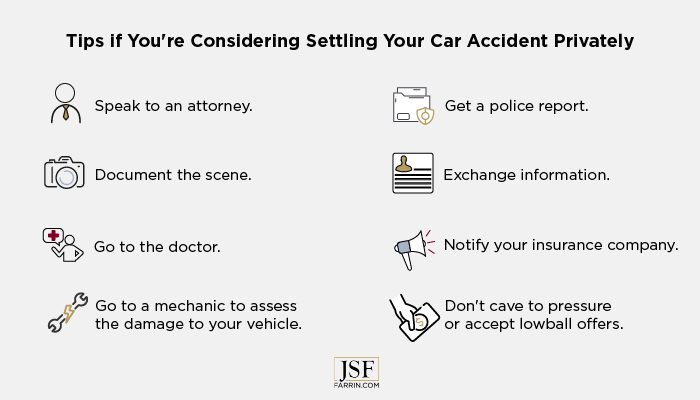
Image Source: b2404211.smushcdn.com
Deciphering Your Options After a Fender Bender
Following a car accident, the immediate aftermath can be confusing. It’s crucial to know your rights and responsibilities. While legal representation is often recommended for complex cases, many situations allow for a private car accident claim resolution. This often involves direct communication with the other driver and/or their insurance company.
Assessing the Accident’s Severity
The first and most critical step in deciding whether to pursue a private settlement is to accurately assess the severity of the accident.
- Minor Accidents: These typically involve low-speed collisions with minimal vehicle damage and no apparent injuries to any party involved. Think of minor fender benders in parking lots or at stop signs.
- Moderate Accidents: These might involve more significant vehicle damage and potentially minor, non-life-threatening injuries that require medical attention but don’t result in long-term disability.
- Severe Accidents: These involve serious vehicle damage, significant injuries, or fatalities. In such cases, legal advice is almost always essential.
For the purposes of private settlement, we are primarily focusing on minor to moderate accidents where injuries are not severe and liability is relatively clear.
Why Consider a Private Settlement?
Several factors make a private car accident settlement an attractive option for many:
- Speed: Private settlements can often be finalized much faster than cases that go through lengthy legal processes.
- Cost Savings: By avoiding legal fees, you can potentially save a significant amount of money. This is especially true if you are negotiating car accident settlement directly with the insurance adjuster.
- Reduced Stress: The formal legal system can be intimidating. A private resolution can feel more manageable and less adversarial.
- Control: You have more direct control over the negotiation process and the final outcome.
When to Seek Professional Legal Advice
Despite the benefits of a private settlement, there are times when it’s wise to consult a lawyer:
- Serious Injuries: If you or anyone else sustained significant injuries, a lawyer can ensure you receive fair compensation for medical bills, lost wages, pain, and suffering. This is crucial for a fair personal injury settlement without lawyer.
- Disputed Liability: If there’s disagreement about who caused the accident, a lawyer can help establish fault.
- Uncooperative Parties: If the other driver or their insurance company is being difficult or unreasonable, legal intervention might be necessary.
- Complex Insurance Policies: Understanding the nuances of insurance coverage can be challenging. A lawyer can help decipher policy details.
Steps to a Successful Private Car Accident Settlement
Successfully settling minor car accident damage privately requires a systematic and organized approach. Here’s a breakdown of the key steps:
Step 1: Ensure Safety and Gather Information at the Scene
Immediately after an accident, prioritize safety.
- Check for Injuries: Your first concern is the well-being of everyone involved. If anyone is injured, call emergency services immediately.
- Move to Safety: If possible and safe to do so, move vehicles out of traffic to prevent further accidents.
- Document the Scene:
- Photos: Take extensive photos of the accident scene from multiple angles. Capture the position of the vehicles, damage to all vehicles, skid marks, road conditions, traffic signals, and any relevant signage.
- Videos: A short video can also provide a good overview of the scene.
- Exchange Information:
- Driver Information: Get the full name, address, phone number, and driver’s license number of the other driver(s).
- Vehicle Information: Record the make, model, year, license plate number, and VIN of the other vehicle(s).
- Insurance Information: Obtain the insurance company name, policy number, and contact information for all other drivers involved.
- Witness Information: If there are any witnesses, ask for their names and contact information. Their statements can be invaluable.
- Do Not Admit Fault: Even if you believe you are partially at fault, avoid making statements that admit guilt at the scene. Let the facts and evidence speak for themselves.
Step 2: Report the Accident
- To the Police: For accidents involving injuries or significant property damage, calling the police is essential. A police report can provide an objective account of the incident, which is vital for a private car accident settlement.
- To Your Insurance Company: You are typically required to report any accident to your own insurance company, regardless of fault. Provide them with all the gathered information.
Step 3: Assess Your Damages
This is a crucial phase in negotiating car accident settlement. You need to accurately quantify all your losses.
Vehicle Damage
- Get Repair Estimates: Obtain at least two or three detailed written estimates from reputable auto repair shops. These estimates should clearly outline the parts needed, labor costs, and any additional charges.
- Total Loss Valuation: If the cost of repairs exceeds a certain percentage of the vehicle’s market value (often 70-80%, depending on the insurer), the car may be declared a total loss. In this case, the insurance company will offer a settlement based on the actual cash value (ACV) of your vehicle prior to the accident.
- Diminished Value: For vehicles that are repaired but have a history of an accident, their resale value may be reduced. This is known as diminished value. You may be able to claim this as part of your settlement, especially if the other party was clearly at fault.
Medical Expenses
If you sustained injuries, meticulous record-keeping is paramount.
- Keep All Medical Bills: This includes bills from emergency rooms, doctors’ visits, specialists, physical therapists, chiropractors, medications, and any medical equipment.
- Track Lost Wages: If you missed work due to your injuries, keep records of your regular pay, the number of days missed, and documentation from your employer confirming this.
- Document Pain and Suffering: While harder to quantify, keep a journal detailing how your injuries have affected your daily life, emotional well-being, and ability to perform activities. This is important for a personal injury settlement without lawyer.
Step 4: Determine Fault and Liability
For a private car accident settlement, establishing who is at fault is key.
- Review the Police Report: The police report often assigns a preliminary fault based on their investigation at the scene.
- Examine Evidence: Photos, witness statements, and the nature of the damage can help determine fault.
- State Laws: Be aware of your state’s traffic laws and comparative negligence rules. Some states reduce compensation based on your percentage of fault, while others bar recovery entirely if you are more than 50% at fault.
Step 5: Contact the At-Fault Party’s Insurance Company
Once you have a clear picture of your damages and have assessed fault, you can initiate contact with the other driver’s insurance company.
- Initial Contact: You can call their claims department. Be prepared to provide basic information about the accident.
- Provide Documentation: Submit copies of your repair estimates, medical bills, and any other supporting documentation. Avoid sending originals.
- Negotiating the Settlement: This is where negotiating car accident settlement skills come into play.
Negotiating Your Car Accident Settlement
- Be Prepared: Know your bottom line. Understand the value of your claim based on your documented damages.
- Be Reasonable: While you want fair compensation, be realistic. Unreasonable demands can stall negotiations.
- Be Polite but Firm: Maintain a professional and respectful tone. Clearly articulate your position and back it up with evidence.
- Don’t Be Afraid to Counteroffer: The initial offer from the insurance company is rarely their final offer. If their offer is too low, explain why and present your counteroffer with supporting documentation.
- Focus on Facts: Base your negotiation on facts and evidence, not emotions.
- Keep Records: Document every communication, including dates, times, names of people you spoke with, and the substance of the conversation.
Step 6: Review the Settlement Offer and Release
If you reach an agreement on a settlement amount, the insurance company will typically send you a car accident settlement agreement and a release form.
- Review Carefully: Read the settlement agreement and release form meticulously. Ensure it accurately reflects the agreed-upon terms and covers all your damages.
- Understand the Release: Signing a release means you are permanently giving up your right to seek further compensation from the at-fault party or their insurer for this accident, even if your injuries worsen later. This is a critical part of a private car accident claim resolution.
- Seek Legal Advice if Unsure: If anything in the document is unclear or if you have any doubts, consult with an attorney before signing. This is where legal advice for private car accident settlement can be invaluable, even if you’ve handled the negotiation yourself.
Step 7: Sign and Receive Payment
Once you are satisfied with the terms and have signed the agreement, the insurance company will process your payment.
- Payment Method: Payments can be by check or direct deposit.
- Timing: The time it takes to receive payment can vary by insurer.
Documenting Your Private Car Accident Settlement
Thorough documentation is the backbone of any successful out-of-court car accident settlement.
Key Documents to Maintain
| Document Type | Description | Importance for Private Settlement |
|---|---|---|
| Accident Report (Police) | Official record of the accident filed by law enforcement. | Provides an objective account of the scene, potentially assigns fault, and can be crucial evidence when dealing with insurance. |
| Photographs/Videos | Visual evidence of the accident scene, vehicle damage, road conditions, and injuries. | Essential for demonstrating liability, the extent of damages, and supporting your claim during negotiations. |
| Witness Statements | Written or recorded accounts from individuals who observed the accident. | Corroborates your version of events and can be vital if fault is disputed. |
| Repair Estimates | Detailed quotes from auto body shops outlining the cost of vehicle repairs. | Forms the basis for your property damage claim. Having multiple estimates strengthens your position. |
| Medical Bills & Records | All invoices and documentation from healthcare providers, including diagnostic tests, treatments, and prescriptions. | Quantifies your medical expenses. Comprehensive records are necessary to prove the extent of your injuries and the associated costs. |
| Lost Wage Statements | Documentation from your employer verifying your income and the time you were unable to work due to injuries. | Supports your claim for lost income, a significant component of many personal injury settlements. |
| Correspondence Log | A record of all communications with the other party and their insurance company (dates, times, names, summaries). | Helps track the progress of negotiations, serves as a reference, and can be useful if disputes arise. |
| Settlement Agreement | The final document outlining the terms of the agreement, the settlement amount, and the release of claims. | The legal document that formalizes the out-of-court car accident settlement. It’s the culmination of your negotiation and must be reviewed thoroughly. |
| Release of Claims Form | A legal document signed by you, agreeing to forfeit further claims in exchange for the settlement payment. | Ensures the insurer closes the case definitively. Crucial to read and understanding its implications before signing. |
The Role of a Release Form
A release form is a critical legal document that accompanies any car accident settlement agreement. It essentially states that by accepting the settlement payment, you are agreeing to forgo any further legal action against the at-fault party for the damages related to that specific accident.
- Finality: It provides finality to the claim.
- Scope: Ensure the release covers only the specific accident and the damages you have claimed. It should not include unrelated future incidents.
- Review: As mentioned, it’s always wise to have a legal professional review the release before you sign it, especially if you’re considering a personal injury settlement without lawyer.
Common Pitfalls to Avoid in a Private Car Accident Settlement
Even when aiming for a straightforward private car accident settlement, there are common mistakes that can derail your efforts or lead to an unfair outcome.
Avoiding these pitfalls is key to a successful do-it-yourself car accident settlement:
- Not Gathering Enough Evidence: Insufficient photos, lack of witness information, or incomplete accident reports can weaken your position.
- Admitting Fault at the Scene: This can be used against you by the other party’s insurance company.
- Speaking to the Other Driver’s Insurance Company Without Preparation: They are trained to minimize payouts. Understand your rights and have your facts straight.
- Accepting the First Offer: Insurance companies often make low initial offers. Negotiation is expected.
- Not Getting Multiple Repair Estimates: Relying on a single estimate might not reflect the true cost of repairs.
- Downplaying Injuries: If you are injured, seek medical attention immediately and document everything. Don’t let minor aches turn into major problems later without proper records.
- Signing a Release Too Soon: Never sign a release before you are confident you have received fair compensation and understand its implications.
- Not Seeking Legal Advice When Necessary: For complex cases, significant injuries, or disputed liability, an attorney’s expertise is invaluable.
Special Considerations for Settling Minor Car Accident Damage
When you are settling minor car accident damage, the process can be somewhat streamlined, but the core principles remain the same.
DIY Approach for Minor Damage
For minor cosmetic damage or small repair bills, a do-it-yourself car accident settlement is often very achievable.
- Focus on Repair Costs: The primary focus will be on getting accurate repair quotes and presenting them to the other driver’s insurance.
- Clear Liability: In minor accidents, liability is often more straightforward (e.g., rear-end collision).
- No Injuries: The absence of injuries simplifies the claim significantly, as there are no medical expenses or pain and suffering to account for.
Direct Communication with Your Insurer
If the other party has insurance, you will likely deal with their adjuster. However, if you are claiming damages under your own policy (e.g., through collision coverage), you will communicate directly with your insurance company’s claims adjuster.
Frequently Asked Questions About Private Car Accident Settlements
Here are some common questions about settling car insurance claim privately:
Q1: Can I settle a car accident without a lawyer?
A1: Yes, in many cases, especially with minor accidents and clear fault, you can settle a car accident without a lawyer. This is often referred to as a private car accident claim resolution or a personal injury settlement without lawyer if injuries are minor. However, for serious injuries or complex liability, legal advice is strongly recommended.
Q2: What if the other driver’s insurance company offers a low settlement?
A2: This is where negotiating car accident settlement skills are crucial. Review their offer against your documented damages. If it’s too low, politely explain why, providing supporting evidence (repair estimates, medical bills) and make a counteroffer. Be prepared to justify your figure.
Q3: How long does it take to settle a car accident privately?
A3: The timeline can vary significantly. Minor accidents with clear liability and no injuries might be settled within a few weeks. Accidents involving injuries or more complex damages can take months. Prompt and organized documentation can speed up the process.
Q4: What is a “release of all claims” form?
A4: A release of all claims form is a legal document you sign when accepting a settlement. It signifies that you agree to forfeit any further legal claims related to the accident in exchange for the settlement payment. It’s vital to read this carefully and ensure it accurately reflects the agreement before signing.
Q5: Should I talk to my insurance company or the other driver’s insurance company first?
A5: You should always report the accident to your own insurance company promptly. Regarding the other driver’s insurer, it’s generally advisable to have a good understanding of your damages and possibly a police report before engaging them extensively, especially if you intend to handle the car accident settlement agreement yourself.
Q6: What if I discover new injuries after I’ve settled?
A6: Once you sign a release and accept a settlement, it’s usually very difficult, if not impossible, to reopen the claim for new injuries discovered later. This is why it’s critical to ensure you have been fully evaluated medically and are confident about your prognosis before agreeing to a settlement. This highlights the importance of careful consideration when settling car insurance claim privately.
Conclusion
Navigating the process of a private car accident settlement can seem daunting, but with careful planning, thorough documentation, and a strategic approach to negotiation, you can achieve a fair resolution. Whether you are settling minor car accident damage or handling a slightly more involved claim, prioritizing safety, gathering evidence, and accurately assessing your damages are the cornerstones of a successful out-of-court car accident settlement. While the allure of a do-it-yourself car accident settlement is strong, always remember that seeking legal advice for private car accident settlement is an option, especially if you encounter complexities or significant injuries. By following these guidelines, you can effectively manage your private car accident claim resolution and secure an equitable car accident settlement agreement.