A self-serve car wash can make anywhere from $50,000 to over $300,000 annually per bay, with overall car wash revenue varying greatly based on location, services offered, and operational efficiency. This blog post will delve into the factors influencing car wash business income and self-service car wash profitability.
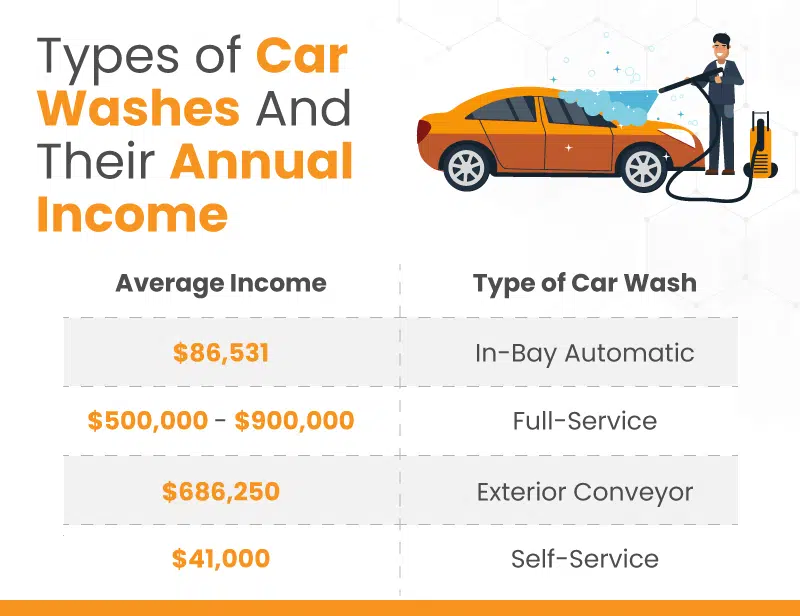
Image Source: koronapos.com
Deciphering Self-Service Car Wash Earnings
Entering the car wash business, particularly with a self-serve model, is a venture that can yield significant returns. But how much exactly does a self-serve car wash make? The answer isn’t a single number; it’s a spectrum influenced by a multitude of elements. We’ll explore these elements to give you a comprehensive picture of self-serve car wash earnings.
The Car Wash Business Model: A Closer Look
The self-service car wash business model is straightforward. Customers pay to use equipment and bays to wash their own vehicles. This contrasts with full-service or automatic washes where staff or machinery handle the entire process. The self-serve model typically offers more basic washing functions, such as high-pressure soap, rinse, and wax. The allure for the customer lies in cost savings and control over the wash process. For the owner, it means lower labor costs and a simpler operational setup.
Factors Impacting Car Wash Revenue
Several key factors directly influence the car wash revenue a self-serve operation can generate:
- Location, Location, Location: This is paramount. A self-serve car wash situated in a high-traffic area, near residential neighborhoods, or on major thoroughfares will naturally attract more customers. Visibility and accessibility are crucial. Consider areas with a high density of car owners and limited competition.
- Number of Bays: More bays mean more potential customers can wash their cars simultaneously. A common setup ranges from 4 to 12 bays, but this can vary. Each bay is a revenue-generating unit.
- Pricing Strategy: Car wash pricing is a delicate balance. You need to be competitive yet profitable. Prices are usually set per minute or per wash cycle. Offering different price points for various levels of service (e.g., basic wash, wax, tire shine) can increase average transaction value.
- Ancillary Services and Vending: Beyond the basic wash, adding services like vacuums, mat cleaners, vending machines selling car care products (air fresheners, cleaning sprays), or even pet wash stations can significantly boost car wash business income. These add-ons often have high-profit margins.
- Operating Hours: Being open during peak times, including evenings and weekends, maximizes customer reach.
- Equipment Quality and Maintenance: Reliable, well-maintained equipment ensures a smooth customer experience and reduces downtime, which directly translates to lost revenue.
- Marketing and Branding: A well-known and trusted brand can draw in customers. Effective local marketing, loyalty programs, and online presence can improve customer acquisition and retention.
- Seasonality and Weather: Car wash demand is often higher during warmer months and can be impacted by rain or snow.
Fathoming Self-Service Car Wash Profitability
Self-service car wash profitability is a function of revenue minus expenses. While revenue is driven by the factors above, profitability hinges on effectively managing car wash operating costs.
Key Operating Costs for a Self-Serve Car Wash
The car wash operating costs can be broken down into several categories:
- Utilities: Water, electricity, and natural gas (if used for heating) are significant ongoing expenses. Water usage can be particularly high.
- Chemicals and Supplies: Soaps, waxes, tire cleaners, drying agents, and cleaning supplies for the bays and equipment are recurring purchases.
- Maintenance and Repairs: Equipment wear and tear are inevitable. Regular maintenance and unexpected repairs can add up.
- Labor: While self-serve models are labor-light, you’ll still need staff for cleaning, maintenance, customer service (if any), and management. Part-time or owner-operator models can minimize this.
- Rent/Property Costs: If you don’t own the land, lease payments are a major expense. Property taxes, insurance, and permits also fall into this category.
- Marketing and Advertising: Costs associated with promoting your business.
- Payment Processing Fees: Fees for credit card transactions.
- Taxes: Business income tax, sales tax, etc.
Estimating Potential Earnings: A Breakdown
Let’s consider a hypothetical self-serve car wash to illustrate potential earnings.
Assumptions:
- Number of Bays: 6 bays
- Average Price per Wash Cycle/Minute: $2.00
- Average Wash Time per Customer: 5 minutes
- Average Revenue per Customer: $10.00 ($2.00/minute * 5 minutes)
- Operating Days per Year: 360 (allowing for some maintenance closure)
- Bay Utilization Rate: This is the most variable factor. We’ll look at a range.
Table 1: Potential Annual Revenue Based on Utilization
| Utilization Rate | Customers per Bay per Day | Total Customers per Day | Total Customers per Year | Annual Revenue |
|---|---|---|---|---|
| 10% | 2.4 | 14.4 | 5,184 | $51,840 |
| 20% | 4.8 | 28.8 | 10,368 | $103,680 |
| 30% | 7.2 | 43.2 | 15,552 | $155,520 |
| 40% | 9.6 | 57.6 | 20,736 | $207,360 |
| 50% | 12 | 72 | 25,920 | $259,200 |
| 60% | 14.4 | 86.4 | 31,104 | $311,040 |
Note: Customers per Bay per Day is calculated as (Hours Open per Day * 60 minutes/hour) / Average Wash Time per Customer * Utilization Rate. For simplicity, assuming 12 operating hours per day.
Hours Open per Day = 12. Minutes in Operating Day = 12 * 60 = 720 minutes.
Customers per Bay per Day = (720 minutes / 5 minutes/customer) * Utilization Rate = 144 customers/bay/day * Utilization Rate.
Total Customers per Day = Customers per Bay per Day * Number of Bays (6).
Total Customers per Year = Total Customers per Day * 360 days.
*Annual Revenue = Total Customers per Year * Average Revenue per Customer.
As you can see, even with a modest utilization rate, the car wash revenue can be substantial. A well-positioned and well-managed car wash could aim for 30-50% utilization on average throughout the year.
Estimating Profitability: The Expense Side
Now, let’s factor in the car wash operating costs. These can vary significantly by region, but we can provide general estimates as a percentage of revenue for a self-serve model.
- Utilities (Water, Electric, Gas): 15-25% of revenue
- Chemicals and Supplies: 10-20% of revenue
- Maintenance and Repairs: 5-15% of revenue
- Labor (if any): 5-10% of revenue (for cleaning, oversight)
- Rent/Property Costs: 10-20% of revenue (highly location-dependent)
- Insurance, Taxes, Licenses: 5-10% of revenue
- Marketing: 2-5% of revenue
- Payment Processing: 1-3% of revenue
Let’s assume a mid-range scenario with 40% utilization, generating $207,360 in annual revenue.
Estimated Annual Expenses:
- Utilities: 20% of $207,360 = $41,472
- Chemicals/Supplies: 15% of $207,360 = $31,104
- Maintenance/Repairs: 10% of $207,360 = $20,736
- Labor: 7% of $207,360 = $14,515
- Rent/Property: 15% of $207,360 = $31,104
- Insurance/Taxes: 7% of $207,360 = $14,515
- Marketing: 3% of $207,360 = $6,221
- Payment Processing: 2% of $207,360 = $4,147
Total Estimated Annual Expenses: $163,714
Estimated Annual Profit (Before Owner’s Salary/Debt Service): $207,360 – $163,714 = $43,646
This demonstrates that self-service car wash profitability is achievable, but careful management of expenses is key. The owner’s salary or return on investment would come from this profit, after accounting for loan repayments if the initial car wash investment was financed.
Analyzing the Car Wash Market and Investment
The car wash market is generally considered stable and can be recession-resistant, as people tend to keep their vehicles clean regardless of economic conditions. The self-serve segment offers a lower entry barrier compared to full-service or express tunnel washes.
Car Wash Startup Costs
The initial car wash investment is a significant consideration. Car wash startup costs can vary widely, but here’s a general breakdown:
- Land Acquisition or Leasehold Improvements: This is often the largest expense. Buying land can cost anywhere from tens of thousands to millions, depending on the location. Leasing requires upfront build-out costs.
- Equipment Purchase and Installation: This includes self-serve bays, pressure washers, vacuum systems, water heaters, pumps, chemical mixing systems, payment terminals, and possibly security systems. This can range from $100,000 to $500,000 or more for a multi-bay operation.
- Building/Site Construction: If building from scratch, construction costs for bay structures, payment areas, and potentially a small office or storage space are involved.
- Permits and Licenses: Costs for local zoning, environmental permits, business licenses, etc.
- Initial Inventory: Chemicals, cleaning supplies, vending machine stock.
- Working Capital: Funds needed to cover initial operating expenses before revenue stabilizes.
A modest 4-bay self-serve car wash could have total car wash startup costs ranging from $300,000 to $800,000 or more. A larger, more feature-rich facility would naturally require a higher car wash investment.
Maximizing Car Wash Business Income
To maximize car wash business income, owners should focus on:
- Optimizing Pricing: Regularly review and adjust pricing based on demand, competition, and operating costs. Consider tiered pricing for different wash packages.
- Enhancing Customer Experience: Ensure bays are clean, equipment is functional, and the overall environment is inviting. Good lighting and clear signage are important.
- Adding Value-Added Services: As mentioned, vacuums, mat cleaners, and vending machines are excellent profit centers. Consider offering tire shine, bug spray, or wheel cleaner as add-ons within the bays.
- Loyalty Programs: Encourage repeat business through punch cards or digital loyalty programs that offer discounts or free washes after a certain number of uses.
- Seasonal Promotions: Run special offers during off-peak seasons or holidays.
- Efficient Operations: Minimize downtime through preventative maintenance and quick repairs. Manage utility usage by optimizing water heating and pressure settings.
The Role of Technology in Self-Serve Car Washes
Modern self-serve car washes are increasingly incorporating technology to enhance operations and customer experience.
- App-Based Payment and Promotions: Mobile apps can allow customers to pay, track loyalty points, and receive special offers directly on their phones.
- Remote Monitoring: Owners can monitor bay usage, revenue, equipment status, and even security cameras remotely.
- Water Reclamation Systems: While an upfront investment, these systems can significantly reduce water costs and appeal to environmentally conscious customers.
- Advanced Payment Terminals: Accepting various forms of payment, including contactless options, makes the process more convenient.
Frequently Asked Questions (FAQ)
Q1: What is the average profit margin for a self-serve car wash?
A1: Profit margins for self-serve car washes can range from 20% to 40% of revenue, depending heavily on efficient management of operating costs, location, and pricing.
Q2: How many cars can a self-serve bay wash per day?
A2: This depends on operating hours and how long each wash cycle takes. If a bay is open 12 hours a day and a wash cycle takes 5 minutes, it could theoretically wash 144 cars (12 hours * 60 minutes / 5 minutes). However, practical utilization is much lower.
Q3: Is a self-serve car wash a good investment?
A3: A self-serve car wash can be a good investment if strategically located, well-managed, and capitalized appropriately. Its profitability depends on achieving consistent customer flow and controlling operating expenses.
Q4: What are the biggest challenges for self-serve car wash owners?
A4: Key challenges include high startup costs, managing utility expenses, equipment maintenance and breakdowns, competition, and attracting and retaining customers in a specific market.
Q5: How long does it take to recoup the car wash investment?
A5: Payback periods can vary significantly, typically ranging from 5 to 10 years, but this is heavily influenced by the initial investment amount, revenue generation, and profitability.
Conclusion
How much does a self-serve car wash make? The financial success of a self-serve car wash hinges on a strategic blend of location, efficient operations, effective pricing, and customer-focused amenities. While the car wash revenue can be substantial, self-service car wash profitability is achieved through diligent control of car wash operating costs and a clear understanding of the car wash market. The initial car wash investment is considerable, but with careful planning and execution, a self-serve car wash business model offers a viable path to consistent car wash business income and a solid return on investment.