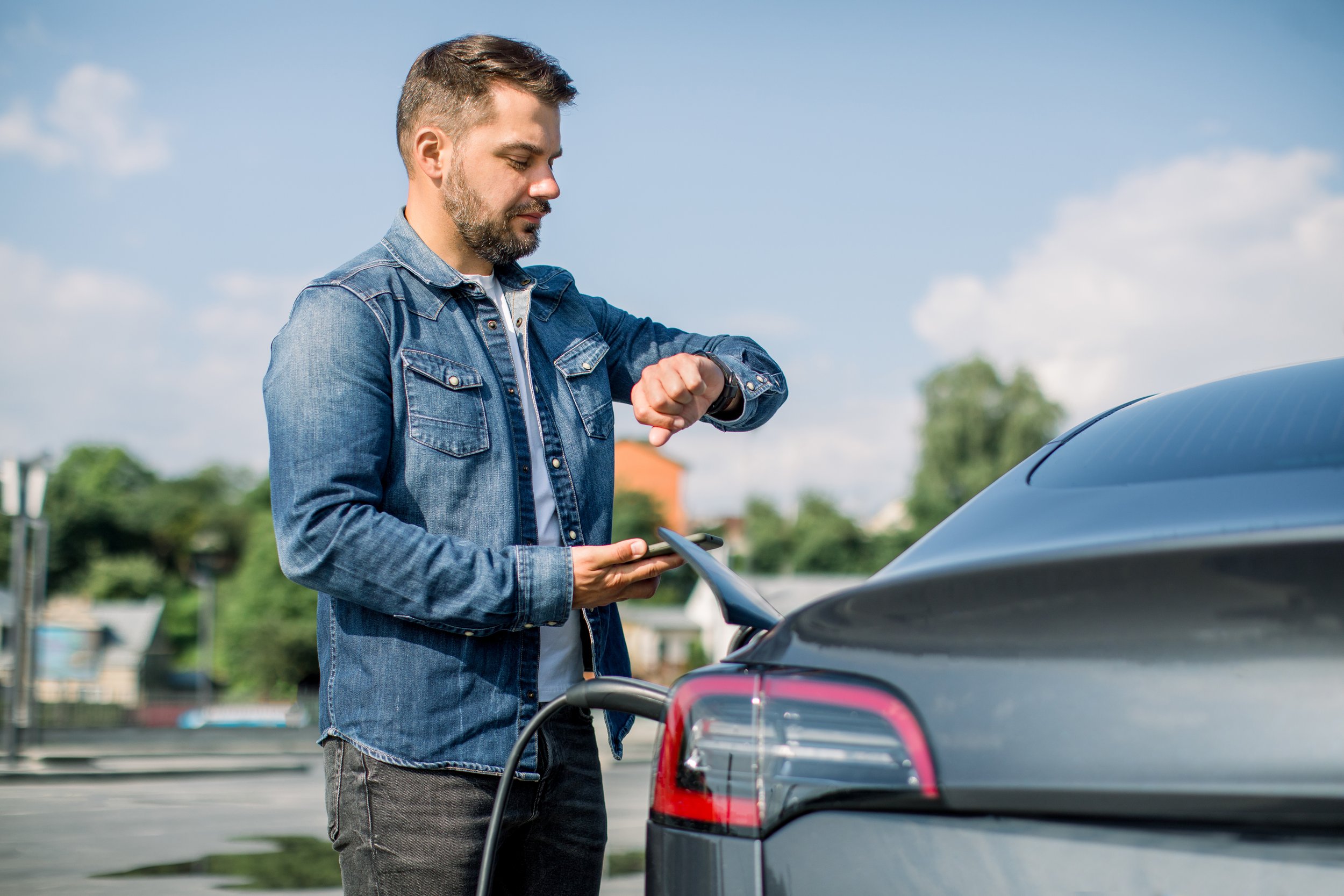
Image Source: images.squarespace-cdn.com
Can You Turn On An Electric Car While Charging?
Yes, you can typically turn on an electric car (EV) while it’s charging. This is a common and generally safe practice for many EV owners.
Charging Your EV: More Than Just Plugging In
The world of electric vehicles (EVs) is constantly evolving, and with it, the ways we interact with these innovative machines. A frequent question that arises among EV enthusiasts and prospective buyers alike is: “Can you turn on an electric car while charging?” The short answer is yes, you can. However, like many things in technology, the specifics and implications are worth exploring in depth. This article delves into the intricacies of using an electric car while plugged in, covering everything from basic operation to more advanced considerations like electric vehicle charging while driving and the overall safety of EV charging safety while in use.
Fathoming the Mechanics: Power Flow During Charging
When you plug in your electric car, its battery begins to receive a charge from an external power source. This process involves a sophisticated management system within the vehicle that controls the flow of electricity. The car’s onboard charger takes the AC power from your home or a public charging station and converts it into DC power to replenish the battery.
While this charging process is underway, the vehicle’s internal systems remain active, albeit in a state of readiness. The sophisticated battery management system (BMS) is always at work, monitoring the battery’s temperature, voltage, and current to ensure optimal and safe charging. It’s this same system that allows you to interact with the vehicle while it’s connected to the power source.
Turning On Your EV While Plugged In: The Basics
Most modern EVs are designed with this functionality in mind. When you “turn on” an EV, you’re essentially waking up its electrical systems, similar to how you might start a conventional car. This includes powering up the dashboard, infotainment system, and climate control.
Here’s what happens when you turn on an EV while it’s charging:
- Power Redistribution: The electricity flowing into the battery is now also accessible to power the car’s active systems. The BMS intelligently manages this power distribution.
- Charging Continues: The charging process itself typically continues uninterrupted. The car prioritizes a safe and efficient charge while also catering to your operational needs.
- Access to Features: You can usually access various features, such as climate control (pre-conditioning), infotainment, and even drive the car (though this is a separate discussion).
This capability allows for a convenient user experience. Imagine being able to warm up or cool down your car’s cabin on a chilly morning or a hot afternoon while it’s still plugged in and charging. This pre-conditioning doesn’t significantly impact charging speed and uses power that would otherwise be part of the charging cycle.
Exploring the Nuances: EV Charging While Vehicle is On
The concept of EV charging while vehicle is on might conjure images of driving and charging simultaneously, which is a different scenario. However, when we refer to “the vehicle being on” in this context, it means the car’s electrical systems are active and the driver is present.
Key aspects of powering an EV during charge:
- Access to Accessories: You can typically use the car’s accessories like the radio, lights, and navigation system without any issues.
- Climate Control: A significant benefit is the ability to use the climate control system. This is especially useful for pre-heating or pre-cooling the cabin, making your journey more comfortable from the moment you start driving.
- Dashboard and Infotainment: The car’s displays and entertainment systems are fully functional, allowing you to check charging status, adjust settings, or enjoy your music.
It’s important to differentiate between the car being “on” (systems active) and the car being in “drive” mode. While you can turn on the car, using certain high-draw functions might slightly influence charging speed, but this impact is usually minimal.
Can I Drive My EV While It’s Charging?
This is a more complex question, and the answer is generally no, you cannot drive your EV while it’s charging from a standard charging station. The charging connection physically prevents the vehicle from being driven. Imagine trying to drive a laptop while its power cord is still plugged into the wall – it’s not designed for that.
However, there are specific technologies that allow for electric vehicle charging while driving:
- Inductive Charging (Wireless Charging): This technology, still in its developmental stages for widespread public use, involves charging pads embedded in roads. Vehicles equipped with the corresponding receiver could theoretically charge as they drive over these pads. This is often referred to as “dynamic charging.”
- Regenerative Braking: While not “charging from an external source while driving,” regenerative braking is a crucial aspect of EV efficiency. When you lift your foot off the accelerator or brake, the electric motor acts as a generator, converting kinetic energy back into electrical energy and sending it to the battery. This is a form of charging an electric car in operation.
For the vast majority of EV owners using home or public charging stations, the car must be stationary and plugged in to charge.
Charging an Electric Car and Running Accessories: Practical Considerations
When you’re using an electric car while plugged in, you’re essentially drawing power from the charging source for both battery replenishment and cabin functions.
Here’s a breakdown of charging an electric car and running accessories:
- Minimal Impact on Charging Speed: For most common accessories like lights, infotainment, and even moderate use of the climate control, the impact on the charging speed is negligible. The charging system is robust enough to handle these demands.
- Significant Accessory Use: If you were to run extremely high-demand accessories for an extended period, it’s conceivable that it could slightly slow down the charging process, as the available power from the charging source is being shared. However, for typical usage, this is not a significant concern.
- Battery Health: The EV’s battery management system is designed to handle these scenarios. It ensures that neither the charging process nor the accessory usage compromises the long-term health of the battery.
Think of it like charging your smartphone while using it. You can still use your phone for calls, browsing, or games, and it will charge, albeit perhaps at a slightly slower rate than if it were idle. EVs operate on a similar, albeit much more complex, principle.
EV Charging Safety While In Use: What You Need to Know
Safety is paramount in any electrical system, and EVs are no exception. Fortunately, manufacturers invest heavily in robust safety protocols. EV charging safety while in use is a well-addressed aspect of EV technology.
Key safety features and considerations:
- Interlock Systems: Charging cables and ports have interlock mechanisms that prevent the car from being driven while plugged in. Similarly, the charging process will not start if the connection isn’t secure.
- Grounding: Proper grounding of charging equipment is essential to prevent electrical shock. Home charging installations should always be performed by qualified electricians.
- Temperature Monitoring: The car’s BMS constantly monitors battery and charging component temperatures. If any component overheats, the charging process will be safely interrupted or slowed down.
- Water Resistance: Charging ports and cables are designed to be weather-resistant, but it’s always advisable to avoid charging in extremely adverse conditions where the integrity of the connection might be compromised.
- Software Safeguards: The car’s software plays a crucial role in managing power flow and ensuring safe operation during charging.
Electric Car Battery Charging and Operation: A Delicate Balance
The relationship between electric car battery charging and operation is a finely tuned dance orchestrated by the vehicle’s sophisticated electronics. The battery management system (BMS) is the conductor of this symphony, ensuring everything runs smoothly and safely.
How the BMS manages charging and operation:
- Power Allocation: When the car is turned on and charging, the BMS decides how much of the incoming electrical power goes to charging the battery and how much is directed to powering the car’s active systems.
- Preventing Overload: The BMS prevents the battery from being overcharged or from being depleted by accessories to a level that could damage it.
- Thermal Management: The BMS is critical for thermal management. It ensures that both the battery and the charging components operate within safe temperature ranges, even when the car is on and accessories are being used.
This intelligent management means that, under normal circumstances, you don’t need to worry about turning on your EV while it’s plugged in. The car is designed to handle it.
EV Charging Considerations While the Car is On
When you’re using an electric car while plugged in, there are a few EV charging considerations while the car is on that are worth keeping in mind:
- Charging Speed Variations: While usually minor, as mentioned, extremely heavy use of accessories could theoretically lead to a slight decrease in charging speed.
- Phantom Drain: All electronic devices have a small amount of “phantom drain” – power consumed by systems that are in standby mode. In an EV, this includes the BMS, climate control systems waiting for commands, and infotainment systems. When the car is on, these systems are more active, so the phantom drain will be slightly higher than when the car is completely off.
- Software Updates: Some vehicles may pause or slow down charging to perform essential software updates, especially if the car is on and connected.
Advanced Scenarios: Charging an Electric Car in Operation
We’ve touched upon charging an electric car in operation primarily through regenerative braking. However, let’s explore other less common, yet interesting, aspects.
- Vehicle-to-Grid (V2G) and Vehicle-to-Load (V2L): These are emerging technologies where the EV’s battery can not only be charged but also discharge power.
- V2L: Allows the EV to power external devices or even your home during a power outage, similar to a portable generator. When using V2L, the car is essentially in an “on” state, powering accessories (the external load).
- V2G: Enables the EV to send power back to the electrical grid, potentially stabilizing it and earning the owner revenue. This also requires the car to be actively managing power flow while connected.
These advanced functionalities demonstrate the growing sophistication of EV power management and highlight the potential for EVs to be more than just transportation.
Charging an Electric Car While Driving: The Future of Mobility
The concept of electric vehicle charging while driving is the holy grail for many in the EV community. While not widely available today, significant research and development are underway:
- Dynamic Wireless Charging: As mentioned earlier, roads embedded with charging coils could allow EVs to charge wirelessly while in motion. This would eliminate range anxiety entirely for those who can access such infrastructure.
- Ultra-Fast Charging Infrastructure: While not charging while driving, the development of ultra-fast charging stations that can add significant range in minutes aims to make long-distance EV travel as convenient as refueling a gasoline car.
Frequently Asked Questions (FAQs)
Q1: Will charging my EV while the car is on use more electricity?
While running accessories like the climate control or infotainment system will draw power, the overall electricity consumed from the charger will be slightly higher than if the car were completely off. However, this is usually a minor increase and is part of the system’s design.
Q2: Can I charge my EV at a public charging station and use the car’s amenities?
Yes, you can typically turn on your EV, use the climate control, radio, and other features while it’s charging at a public station. The charging station and the car’s systems are designed to work together safely.
Q3: Does using accessories while charging affect the battery’s lifespan?
The electric car’s battery management system (BMS) is designed to protect the battery. It will regulate power distribution to ensure that neither the charging process nor the use of accessories negatively impacts the long-term health of the battery.
Q4: Is it safe to leave my EV plugged in and turned on overnight?
Yes, it is generally safe to leave your EV plugged in and turned on overnight. The charging system is designed to automatically manage the charging process, stopping when the battery is full and maintaining a safe charge level. Many owners use this time to pre-condition the cabin.
Q5: What’s the difference between turning on an EV and putting it in “drive” while charging?
Turning on an EV activates its electrical systems and displays. Putting it in “drive” engages the powertrain, making the car ready to move. Most EVs prevent engagement of the drive system when plugged in for safety reasons.
Conclusion
In conclusion, the answer to whether you can turn on an electric car while charging is a resounding yes. Modern EVs are engineered with sophisticated battery management systems that allow for simultaneous charging and operation of essential vehicle functions. From pre-conditioning the cabin for comfort to enjoying your favorite music, your EV remains accessible and functional while it replenishes its energy. While driving and charging from a standard station isn’t possible, the future holds exciting advancements like dynamic wireless charging. For now, you can confidently engage with your electric vehicle while it’s plugged in, enjoying the convenience and smart technology that define electric mobility.