Yes, a car accident can cause spinal stenosis. A strong jolt or impact to your body in a car crash can hurt your spine in ways that lead to this condition, either right away or over time. Spinal stenosis happens when the spaces inside your spine become smaller. This puts pressure on the nerves and the spinal cord that run through these spaces.
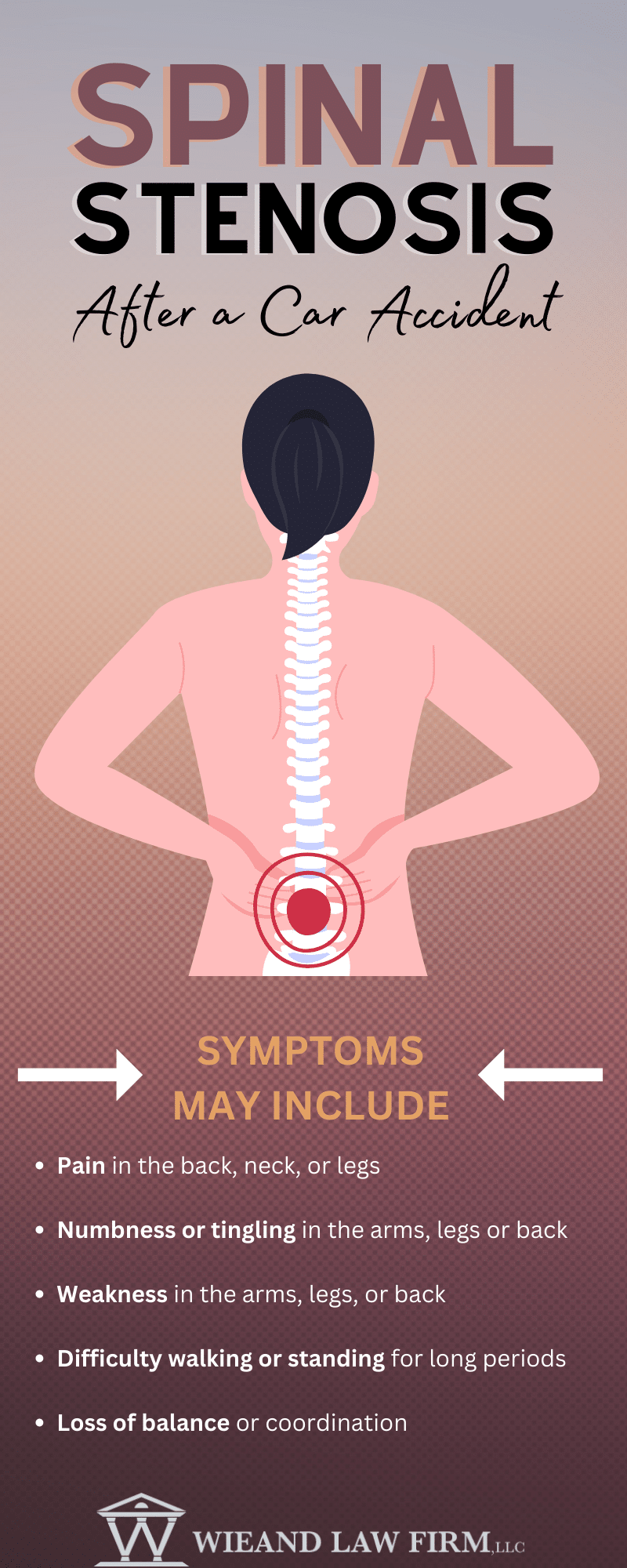
Image Source: www.wieandlaw.com
Grasping Spinal Stenosis
Let’s talk about what spinal stenosis is. Think of your spine as a stack of bones, like building blocks. These bones are called vertebrae. Between the bones are soft discs that act like cushions. Holes and tubes run through the middle of these bones. Your spinal cord and nerves travel through these spaces. They send messages from your brain to your body.
Spinal stenosis means these spaces get narrow. This squeezing can happen in the center canal where the spinal cord goes. It can also happen in the smaller holes on the sides where nerve roots exit the spine. When the space gets smaller, it can pinch the nerves or the spinal cord. This can cause pain and other problems.
It often happens as people get older. The discs wear down. Bone spurs might grow. Ligaments can get thick. But a car accident can speed this up or cause it directly.
How a Car Accident Hurts Your Spine
A car crash is a sudden, strong force. Your body is thrown around inside the car. Even with seatbelts and airbags, your spine can be twisted, bent, or compressed in unnatural ways. This sudden, violent movement can injure the bones, discs, ligaments, and muscles in your back or neck.
Whiplash is a common injury from car accidents. It happens when your head snaps forward and then backward very fast. This can seriously hurt the neck, which is the top part of the spine (cervical spine). A crash can also hurt your lower back (lumbar spine) or middle back (thoracic spine).
Different parts of the spine can get injured:
- Bones: Vertebrae can break or crack.
- Discs: The soft cushions can bulge or rupture. This is called a herniated disc.
- Ligaments: The tough bands holding bones together can stretch or tear.
- Muscles: Muscles can be strained or torn.
These injuries can start a chain reaction that leads to spinal stenosis.
How Car Accidents Lead to Spinal Stenosis
A car accident can cause spinal stenosis in a couple of main ways:
- Direct Injury: The crash causes direct damage that makes the spinal space smaller right away or very soon after.
- Speeding Up Problems: The crash damages your spine in a way that causes it to wear out faster than normal. This wearing out is called degeneration.
Let’s look at these closer.
Direct Damage Leading to Post-Traumatic Spinal Stenosis
Sometimes, the injury from a car accident directly reduces the space in the spinal canal or nerve root openings.
- Bone Fractures: A broken piece of a vertebra can push into the spinal canal or nerve pathway. This takes up space and squeezes the nerves or spinal cord.
- Herniated Disc Car Accident: A sudden impact can cause a disc to tear and the soft inner part to push out. This herniated disc material can press directly on nearby nerves or the spinal cord. If the herniation is large or happens in a spot where the canal is already a bit narrow, it can cause stenosis symptoms.
- Ligament Thickening: Severe sprains or tears of the ligaments around the spine can cause them to heal thicker than before. Thickened ligaments can take up space inside the spinal canal, leading to spinal stenosis.
- Bleeding or Swelling: Right after a bad accident, there might be bleeding and swelling around the spinal cord or nerves. This swelling takes up space in the narrow canal and can cause temporary or longer-lasting pressure, looking like stenosis.
These types of direct injuries are a key cause of post-traumatic spinal stenosis. This means the stenosis is directly linked to a past injury, like a car crash.
Speeding Up Degeneration: Degenerative Disc Disease After Trauma
Even if the accident doesn’t cause stenosis right away, it can seriously damage the discs and joints in your spine. This damage can make them wear out much faster than they normally would. This speeds up the natural aging process of the spine, called degeneration.
- Disc Damage: A crash can injure a disc without a full herniation. The disc might just be bruised or slightly torn. This damage can make the disc lose water and flatten faster. As discs flatten, the vertebrae above and below get closer together. This can make the nerve openings smaller.
- Joint Injury: The small joints connecting the vertebrae (called facet joints) can be injured in a crash. Injury to these joints can lead to arthritis in the spine. Arthritis causes swelling and bone spurs to grow. Bone spurs are small, smooth growths of bone. They can grow into the spinal canal or nerve openings, causing stenosis.
- Accelerated Wear and Tear: Any damage to the spine changes how it moves and handles stress. Areas around the injury might have to work harder. This extra stress causes faster wear and tear, leading to earlier or more severe degenerative changes like disc problems, bone spurs, and thickened ligaments.
So, a car accident can trigger or worsen degenerative disc disease after trauma. This means the spine starts to break down faster because of the injury from the crash. This faster breakdown often leads to stenosis as the worn-out parts take up space.
Types of Spinal Stenosis After an Accident
Spinal stenosis can happen in different parts of the spine after a car accident. The location depends on where the spine was most hurt during the crash.
Cervical Stenosis Whiplash
The neck area (cervical spine) is very often hurt in car accidents, especially from whiplash. Cervical stenosis whiplash happens when the spinal canal in the neck gets narrow after a whiplash spinal injury.
Whiplash can cause:
- Damage to neck discs (herniation or injury)
- Stretching or tearing of neck ligaments
- Injury to the facet joints in the neck
These injuries can cause swelling, herniated discs, bone spurs (over time), and thickened ligaments. All these things can make the spinal canal or nerve openings in the neck smaller. This can put pressure on the spinal cord or the nerves going to your arms.
Lumbar Stenosis Car Crash
The lower back (lumbar spine) also takes a lot of stress in a car accident. The impact can compress or twist the lower spine. This can lead to lumbar stenosis car crash. This means the spinal canal or nerve openings in the lower back get narrow after the accident.
Injuries in the lower back from a crash can include:
- Herniated discs in the lumbar spine
- Fractures of the lumbar vertebrae
- Injury to the facet joints in the lower back
- Severe muscle and ligament strains
Like in the neck, these injuries can cause things to take up space in the spinal canal. A herniated disc car accident is a very common cause of pressure on nerves in the lower back. Over time, the damage can lead to more bone spurs and thickened ligaments, making the stenosis worse.
Recognizing Spinal Stenosis Symptoms Post-Accident
The signs of spinal stenosis can show up right after the accident or develop slowly over months or years as the spine degenerates. The type of symptoms you feel often depends on where the stenosis is located (neck or lower back) and which nerves or the spinal cord are being squeezed.
Here are common spinal stenosis symptoms post-accident:
If the stenosis is in the neck (Cervical Stenosis):
- Pain in the neck
- Stiffness in the neck
- Pain that shoots down into the shoulder, arm, or hand
- Numbness or tingling in the arms or hands
- Weakness in the arms or hands
- Problems with balance or walking (in severe cases where the spinal cord is compressed)
- Loss of control over bladder or bowels (rare, but serious sign of spinal cord compression)
If the stenosis is in the lower back (Lumbar Stenosis):
- Pain in the lower back (Chronic back pain after accident is a very common sign that something is wrong long-term).
- Pain that shoots down into the buttocks, legs, or feet. This is often called sciatica if it follows the path of the sciatic nerve.
- Numbness or tingling in the legs or feet.
- Weakness in the legs or feet.
- Cramping or pain in the legs when walking or standing for a while. This pain often gets better when you sit down or lean forward (like over a shopping cart). This is called neurogenic claudication.
- Problems with balance or walking.
- Loss of control over bladder or bowels (rare, but serious sign).
It’s important to know that these symptoms can also come from other injuries from a car accident. That’s why seeing a doctor is key to finding out exactly what is causing your pain and problems.
Getting a Diagnosis After a Car Accident
If you have back or neck pain, numbness, or weakness after a car accident, you should see a doctor. They will ask you about the accident and your symptoms. They will also do a physical exam. They will check your movement, strength, reflexes, and how you feel touch.
To see what is happening inside your spine, your doctor will likely order imaging tests. These tests are very important for seeing things like herniated discs, bone fractures, and narrowed spinal canals.
- X-rays: Show the bones clearly. Can show fractures, bone spurs, and changes in the alignment of the spine. They don’t show soft tissues well.
- MRI (Magnetic Resonance Imaging): This is one of the best tests for looking at the spine after an injury. An MRI uses magnetic fields and radio waves to create detailed pictures of your bones, discs, spinal cord, and nerves. MRI findings spinal injury can clearly show if you have a herniated disc, thickened ligaments, fluid or swelling, or if the spinal canal is narrowed, putting pressure on the spinal cord or nerves. This test is often crucial for diagnosing spinal stenosis after an accident.
- CT Scan (Computed Tomography): Uses X-rays from different angles to create cross-sectional images. Good for seeing bone detail and can show herniated discs, though often not as clearly as MRI. Useful if MRI is not possible.
- CT Myelogram: This test involves injecting a special dye into the fluid around the spinal cord. Then, a CT scan is done. The dye helps show the outlines of the spinal cord and nerve roots more clearly. This can help pinpoint exactly where there is pressure.
Based on your symptoms, the physical exam, and the imaging test results (like the MRI findings spinal injury), your doctor can diagnose if you have spinal stenosis and if it was likely caused or made worse by the car accident. This process helps identify if you have post-traumatic spinal stenosis or accelerated degeneration leading to it.
Treating Spinal Stenosis After an Accident
Treatment for spinal stenosis after a car accident aims to reduce pain, improve function, and stop the condition from getting worse. The treatment depends on how severe your symptoms are and what is causing the stenosis.
Most people start with treatments that don’t involve surgery.
Non-Surgical Treatments
- Rest: Resting the injured area right after the accident can help reduce swelling and pain.
- Pain Medications: Over-the-counter medicines like ibuprofen or naproxen can reduce pain and swelling. Your doctor might prescribe stronger pain relievers or muscle relaxers.
- Physical Therapy: A physical therapist can teach you exercises to strengthen the muscles that support your spine. They can also help improve your flexibility and posture. This can help create more space for the nerves and reduce pressure.
- Spinal Injections: A doctor can inject steroid medication into the space around the spinal cord or nerves (epidural injection). This can help reduce swelling and relieve pain, but the effects are often temporary.
- Bracing: Wearing a neck brace or back brace for a short time might help limit movement and reduce pain, especially right after an injury.
- Lifestyle Changes: Losing weight if you are overweight and quitting smoking can help improve spinal health over time.
Surgical Treatments
If non-surgical treatments don’t work, or if you have severe symptoms like significant weakness, trouble walking, or problems with bladder/bowel control (which can be a sign of spinal cord compression accident), surgery might be needed.
The goal of surgery for spinal stenosis is to make more space for the spinal cord and nerves.
- Laminectomy/Laminotomy: This is the most common surgery for spinal stenosis. The surgeon removes part or all of the bony arch (lamina) of the vertebra. This opens up the spinal canal and gives more space to the nerves and spinal cord.
- Foraminotomy: This surgery widens the opening on the side of the vertebra where the nerve roots exit the spinal canal. This helps relieve pressure on specific nerves, often caused by a herniated disc or bone spur.
- Discectomy: If a herniated disc is the main cause of the stenosis, the surgeon might remove the part of the disc that is pressing on the nerves.
- Spinal Fusion: In some cases, after removing bone or disc, the surgeon might need to join two or more vertebrae together to make the spine stable. This is called fusion. It stops movement between those bones.
Surgery has risks and recovery takes time. Your doctor will discuss the best option for you based on your specific condition and the MRI findings spinal injury.
Living with Chronic Back Pain After Accident
Sadly, a car accident can sometimes lead to long-lasting issues like chronic back pain after accident. Even with treatment for spinal stenosis or other injuries, some people continue to have pain or discomfort.
Living with chronic pain can be tough. It can affect your work, hobbies, and daily life. Managing chronic back pain after accident often involves a mix of things:
- Continuing with physical therapy or exercises.
- Pain management techniques, which might include medication, injections, or other therapies.
- Making changes to how you do things in your daily life to protect your back.
- Finding ways to cope with the emotional side of living with chronic pain, like counseling or support groups.
If spinal stenosis is contributing to your chronic pain, managing the stenosis is key to improving your quality of life. Regular check-ups with your doctor are important to keep an eye on your condition.
Connecting the Dots: Car Accident and Long-Term Spinal Health
In summary, a car accident can absolutely be the start of spinal problems that lead to stenosis. Whether it’s immediate post-traumatic spinal stenosis from a fracture or a herniated disc, or the acceleration of degenerative disc disease after trauma, the crash can change your spine’s future health.
A whiplash spinal injury can cause cervical stenosis whiplash, leading to neck pain and arm issues. A lumbar stenosis car crash can result from forces on the lower back, causing leg pain and difficulty walking.
Getting prompt medical attention after a car accident is vital. Proper diagnosis using tools like MRI (looking at MRI findings spinal injury) helps understand the extent of the damage. This allows for the right treatment plan to be put in place early.
Ignoring symptoms like spinal stenosis symptoms post-accident can lead to the condition getting worse and potentially causing more serious issues, including spinal cord compression accident in severe cases. While some people face chronic back pain after accident, managing the underlying cause, like stenosis, offers the best chance for reducing pain and improving function over time.
It’s a complex process, but the link between a car accident and the later development of spinal stenosis is well-known in medicine. Protecting your spine after a crash and seeking expert care are crucial steps for your long-term health.
Frequently Asked Questions About Spinal Stenosis After a Car Accident
Here are some common questions people ask about this topic.
h4: Can spinal stenosis symptoms show up years after an accident?
Yes, absolutely. While some symptoms like pain from a herniated disc might be felt right away, spinal stenosis caused by the acceleration of degeneration can take years to develop. The accident damages the discs and joints, causing them to wear out faster. As this wear and tear progresses, the spinal canal or nerve openings get narrower over time, and symptoms may only appear years later. This is often seen with degenerative disc disease after trauma.
h4: Is a herniated disc the same thing as spinal stenosis?
No, they are not the same, but they are related. A herniated disc is when the inner part of a disc pushes out. This herniation can press on a nerve or the spinal cord. If the herniation takes up enough space and narrows the spinal canal or nerve opening, it can cause spinal stenosis or contribute to it. So, a herniated disc car accident can be a cause of stenosis symptoms. Spinal stenosis is the narrowing of the space, which can be caused by a herniated disc, but also by bone spurs, thickened ligaments, or fractures.
h4: If my MRI after the accident didn’t show stenosis, could I develop it later?
Yes, that is possible. An MRI taken right after the accident would show acute injuries like fractures, large herniations, or bleeding. However, it might not show significant narrowing if the stenosis is due to accelerated degeneration that hasn’t fully developed yet. The damage from the accident (like injured discs or joints) might speed up the process of bone spurs and ligament thickening. These changes, which cause stenosis, happen over time. So, future MRI findings spinal injury might show stenosis that wasn’t there right after the crash.
h4: Can whiplash cause permanent spinal problems?
Yes, whiplash is a whiplash spinal injury that can lead to chronic problems. While many people recover fully, severe whiplash can cause lasting damage to the discs, ligaments, and joints in the neck. This damage can contribute to cervical stenosis whiplash and degenerative disc disease after trauma in the neck, leading to long-term pain and other symptoms.
h4: What should I do if I have chronic back pain after a car accident?
If you have chronic back pain after accident, you should see a doctor who specializes in spine problems. They can do a thorough exam and order imaging tests like an MRI to find out the cause of your pain. It could be related to spinal stenosis, a herniated disc, facet joint arthritis, or other issues stemming from the crash. Once the cause is found, you can work with your doctor to create a plan to manage the pain and improve your function.
h4: Is surgery always needed for spinal stenosis after a crash?
No, surgery is not always needed. Many cases of spinal stenosis, especially less severe ones or those caught early, can be managed with non-surgical treatments like physical therapy, pain medication, and injections. Surgery is usually considered when symptoms are severe, non-surgical methods haven’t helped, or there are signs of serious nerve or spinal cord pressure like major weakness or loss of bowel/bladder control (spinal cord compression accident).
h4: Can I prevent spinal stenosis after a car accident?
While you can’t change the injury that happened in the crash, you can take steps to help your spine health afterward. Following your doctor’s advice, doing physical therapy exercises, maintaining a healthy weight, avoiding smoking, and practicing good posture can all help slow down the natural aging process of the spine and potentially lessen the impact of the accident-related damage. Early and proper treatment of injuries from the crash is the best prevention strategy against future complications like accelerated stenosis.