Does your car make a loud noise that sounds like a lawnmower? This noise usually means there is a problem with your car’s exhaust system or sometimes the engine. It is not normal and should be checked out. This sound often points to issues like a hole in the exhaust pipe, a broken muffler, or a problem with the engine making a rough sound.
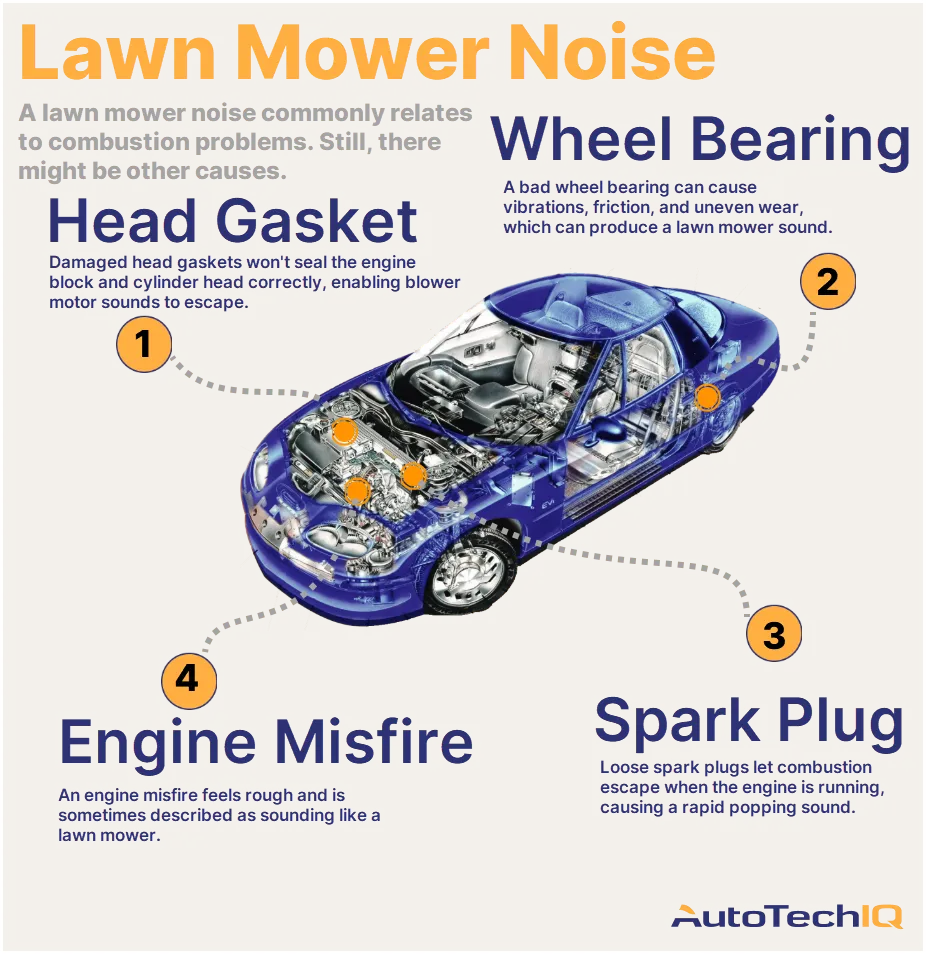
Image Source: www.autotechiq.com
Deciphering the Lawnmower Sound
When your car sounds like a lawnmower, it is telling you something is wrong. Cars are built to run quietly. They have parts that lower engine noise and clean the air that comes out. If you hear a loud buzzing, rattling, or roaring sound, especially when you speed up, it is a sign.
Where Noise Comes From
Most car noise comes from the engine working. The exhaust system is designed to take the noise the engine makes and make it much quieter. It also takes the dirty gases from the engine and cleans them before letting them out into the air.
Why It Sounds Like a Lawnmower
A lawnmower engine is small and loud. It does not have a complex exhaust system like a car. When a car’s exhaust system is broken, it cannot quiet the engine noise anymore. The loud, raw sound of the engine’s exhaust escaping sounds a bit like that small, loud lawnmower engine running.
Your Car’s Exhaust System: The Big Suspect
The most common reason your car sounds like a lawnmower is a problem with the exhaust system. This system runs from the engine all the way to the back of your car. It is like a series of pipes, boxes, and filters.
What the Exhaust System Does
The exhaust system does three main things:
- Moves Hot Gas: It takes hot gas from the engine away from the car and people.
- Cleans Gas: It uses special parts to make the gas less harmful to the air.
- Quiets Noise: It has parts, like the muffler, to make the loud engine noise quiet.
If any part of this system breaks, the noise can get very loud.
Grasping Exhaust Leak Problems
One of the most common problems is an exhaust leak. This is a hole or crack somewhere in the exhaust system pipes or parts.
What is an Exhaust Leak?
An exhaust leak happens when hot exhaust gas finds a way to escape the exhaust system before it reaches the tailpipe at the very back of the car. This escape route is usually a hole, crack, or a loose connection.
Think of it like a leaky garden hose. Water is supposed to come out the end. If there is a hole in the middle of the hose, water sprays out there too. Hot exhaust gas is like the water, and the hole is the exhaust leak.
Why Leaks Make Loud Noise (loud exhaust noise)
Exhaust gas leaves the engine in quick, loud pulses. The exhaust system is built to smooth out these pulses and make them quiet. If there is a leak, these loud pulses escape directly into the air instead of going through the quiet parts. This makes the car sound much louder. It often sounds like a loud puffing or rumbling noise. It can be a main reason for loud exhaust noise.
The noise is often loudest when the engine is working hardest, like when you speed up or drive uphill. At idle, the noise might be less noticeable or just a quiet puffing.
Common Spots for Leaks
An exhaust leak can happen almost anywhere in the system. Some common spots include:
- The exhaust manifold: This is the part right at the engine where the exhaust pipes start. Heat and age can cause cracks here. Gaskets can also fail.
- Pipes: The metal pipes can rust through over time. Rocks or bumps can also hit them and make holes.
- Connectors and clamps: These are places where pipes join together. They can rust or come loose, letting gas escape.
- Flex pipe: Some systems have a flexible section. This can crack or break.
- Muffler: The muffler is a box designed to quiet sound. It can rust through or get damaged. (More on this later).
- Catalytic Converter: This part cleans the gas. It can also develop leaks or internal problems. (More on this later).
How to Find a Leak
Finding an exhaust leak can be tricky because the exhaust system is under the car and gets very hot. Signs of a leak include:
- Loud Noise: The most obvious sign, especially when accelerating.
- Smell: You might smell exhaust fumes inside the car, especially when stopped. Exhaust fumes are dangerous.
- Seeing Soot: Black soot or dark marks might be seen on the pipes or parts around the leak area.
- Feeling Air: A mechanic might carefully feel for escaping air (when the system is cool or slightly warm, never hot) or use a smoke machine to make the leak visible.
Fixing Exhaust Leak
Fixing exhaust leak problems depends on where the leak is and how bad it is.
- Small Holes: Sometimes a small hole in a pipe can be patched or welded. This is a quick fix.
- Cracked Manifold: A cracked exhaust manifold often needs to be replaced. This can be a bigger job.
- Rusty Pipes: If a section of pipe is rusted, that section needs to be cut out and a new piece welded in.
- Loose Connections: Tightening clamps or replacing gaskets at connections can fix leaks there.
- Damaged Parts: If the leak is in the muffler or catalytic converter, that part usually needs to be replaced.
Fixing exhaust leak issues is important not just for noise but also because exhaust fumes are dangerous if they get into the car’s cabin.
Issues with the Muffler
The muffler is a key part of the exhaust system that specifically deals with noise. If it is broken, your car will be very loud.
The Muffler’s Quiet Job
The muffler is a metal box, usually at the back of the car. Inside, it has a complex set of chambers, tubes, and baffles. As the hot exhaust gas goes through this maze, the sound waves bounce around and cancel each other out. This process makes the loud engine noise much quieter before the gas exits the tailpipe. It is like a soundproof box for the exhaust.
Signs of a Damaged Muffler
A damaged muffler is a very common source of the lawnmower sound. Signs include:
- Loud Roaring Noise: The car sounds much louder than usual, especially at the back.
- Holes: You might see rust holes on the outside of the muffler box.
- Rattling Inside: Sometimes, parts inside the muffler break loose. This can cause a
car rattling soundinside the muffler, as well as a loud exhaust noise. - Visible Damage: The muffler might be bent or crushed if you hit something under the car.
Why a Broken Muffler is Loud
If the muffler box has a hole in it, the exhaust gas and noise can escape before going through the quiet chambers inside. This is essentially a large exhaust leak right at the muffler. The sound is no longer silenced, leading to loud exhaust noise. If the internal parts of the muffler are broken, the gas might flow straight through without the sound-canceling effect, also making it loud.
Thinking About Muffler Repair or Replacement
When a muffler is damaged, it usually needs to be replaced. Muffler repair is sometimes possible for very small holes, like with a patch or special putty. However, because mufflers rust from the inside out due to condensation, a hole on the outside often means the inside is also rusted and the metal is thin. Replacing the whole muffler is usually the most effective and lasting fix.
A new muffler helps bring the car’s sound level back to normal. It is a standard exhaust system repair.
Catalytic Converter Problems
The catalytic converter is another important part of the exhaust system, but its main job is not noise reduction. It cleans the exhaust gas. However, problems with it can sometimes cause strange noises.
What the Cat- alytic Con-verter Does
The cat-a-lyt-ic con-vert-er (or “cat” for short) sits in the exhaust system, usually under the middle of the car. Inside, it has a honeycomb structure coated with special metals. As hot exhaust gas passes over these metals, a chemical reaction happens. This reaction changes harmful gases like carbon monoxide into less harmful gases like carbon dioxide and water vapor.
How it Can Go Wrong
The catalytic converter can have problems for several reasons:
- Clogging: If the engine burns oil or coolant, or has misfires, unburned fuel can reach the converter. This can melt the honeycomb inside and clog it. A clogged converter makes it hard for exhaust gas to pass through.
- Damage: It can be damaged by hitting road debris.
- Age: Over time, the catalyst inside becomes less effective.
- Internal Breakdown: The honeycomb structure inside can break apart.
Noises from the Cat- alytic Con-verter (car rattling sound)
A common noise from a failing catalytic converter is a car rattling sound. This often happens when the honeycomb material inside breaks apart. The broken pieces can rattle around inside the metal case, especially when the engine is running or you tap on the converter (when it is cool!).
A badly clogged catalytic converter might not cause a lawnmower sound directly. Instead, it restricts exhaust flow. This can make the engine run poorly, lose power, and sometimes cause strange engine noises or even backfiring. But the rattling inside is a direct noise it can make.
Exhaust System Repair Involves the Cat
If the catalytic converter is clogged or damaged, it needs to be replaced. This is part of a larger exhaust system repair. Catalytic converters are expensive parts because of the precious metals inside. Replacing one is a necessary repair if it is faulty, as it affects engine performance and emissions. Fixing exhaust leak issues around the converter also falls under exhaust system repair.
The Whole Exhaust System Repair
When your car sounds like a lawnmower, it usually means you need exhaust system repair. This can involve fixing a simple leak or replacing whole parts like pipes, the muffler, or the catalytic converter.
What Repair Involves (fixing exhaust leak)
Exhaust system repair starts with finding where the noise is coming from. A mechanic will lift the car and inspect the entire system from the engine to the tailpipe. They look for:
- Holes or cracks in pipes.
- Loose or rusted clamps and hangers.
- Damage to the muffler.
- Damage to the catalytic converter.
- Leaks at the exhaust manifold gasket.
Depending on what they find, the exhaust system repair could be simple, like welding a small hole (fixing exhaust leak), or involve cutting out and replacing a section of pipe, replacing a muffler, or replacing a catalytic converter. Gaskets and clamps are often replaced during this work.
Why Repair is Important
Repairing the exhaust system repair is important for several reasons:
- Noise: It stops the annoying
loud exhaust noise. - Safety: It prevents dangerous exhaust fumes (containing carbon monoxide) from leaking into the car’s cabin.
- Engine Performance: A badly leaking or clogged exhaust system can make the engine run poorly, reduce power, and decrease fuel economy.
- Emissions: The exhaust system helps clean the air. A damaged system, especially the catalytic converter, means the car pollutes more.
- Passing Inspection: Many places require cars to pass an emissions and safety test. A broken exhaust system will likely fail.
Ignoring exhaust system repair is not a good idea.
Engine Troubles Making Noise
While exhaust problems are the most common cause of a lawnmower sound, sometimes the noise comes directly from the engine not running smoothly.
Engine Misfire: A Rough Sound
An engine misfire happens when one or more cylinders in the engine does not fire correctly. The engine needs fuel, air, and a spark at the right time to work well. If any of these are missing or wrong, that cylinder misfires.
What is an Engine Misfire?
An engine misfire means that in one of the engine’s cylinders, the fuel-air mix does not burn fully or at all when the spark plug fires. The engine relies on all cylinders working together smoothly. When one cylinder misfires, it interrupts this smooth operation.
How a Misfire Sounds (Can include car backfire noise)
An engine misfire can cause various sounds. It might sound like the engine is stumbling, shaking, or running rough. It can create a pop or bang noise, especially from the exhaust, known as car backfire noise. This backfire happens when unburned fuel from the misfiring cylinder reaches the hot exhaust system and ignites there.
The overall sound of an engine with a misfire can be uneven and rough, sometimes described as a “popping” or “coughing” sound coming from the exhaust. This rough, loud sound can sometimes be mistaken for a lawnmower-like noise, especially if combined with an exhaust leak.
Causes of a Misfire
An engine misfire can happen for many reasons:
- Spark Plug Problems: A bad, old, or dirty spark plug.
- Ignition Coils/Wires: Faulty parts that deliver the spark to the plug.
- Fuel Injector Problems: The part that sprays fuel into the cylinder is dirty or broken.
- Air Intake Problems: Not enough air getting into the cylinder.
- Internal Engine Issues: Low compression in a cylinder (a more serious problem).
- Computer Problems: The car’s computer not telling things to happen at the right time.
What Happens During a Misfire
When a cylinder misfires, it does not add power to the engine’s rotation like it should. This makes the engine run unevenly. You might feel a shaking or vibration. The Check Engine light will often come on when the computer detects a misfire. Car backfire noise is a direct result of unburned fuel igniting in the exhaust.
While not always causing the exact lawnmower sound, a misfire is a serious engine issue that can lead to other loud noises and problems, including damage to the catalytic converter over time from unburned fuel.
Other Engine Sounds
Other engine problems can cause noise, but they typically do not sound like a lawnmower. They might be knocking, ticking, or whining sounds. If the sound is clearly coming from under the hood and sounds mechanical rather than like escaping gas, it might be an engine issue different from a misfire. A mechanic can help figure out exactly what kind of engine noise you are hearing.
Other Noises Your Car Might Make (car rattling sound)
Sometimes, the loud noise is not exactly a constant lawnmower sound but more of a car rattling sound that happens at certain speeds or over bumps.
A car rattling sound from underneath could be related to the exhaust system. This could be:
- Loose exhaust hangers allowing the pipe to hit the car’s body.
- A broken heat shield on the exhaust pipe or catalytic converter that is vibrating.
- Those broken pieces inside a failing catalytic converter mentioned earlier.
A car rattling sound needs to be checked because if the exhaust system is rattling against something important, it can cause more damage over time, possibly leading to an exhaust leak.
Don’t Ignore the Noise
Hearing your car sound like a lawnmower is a clear sign that something is wrong. It is important not to ignore this noise.
Why Fixing it Matters
Ignoring the noise can lead to bigger problems and costs down the road.
- Safety Risk:
Exhaust leakcan let dangerous carbon monoxide into your car. - More Damage: A small leak or damaged part can get worse, causing more expensive problems. For example, a misfire can damage the catalytic converter. A rattling pipe can eventually break.
- Engine Problems: A bad exhaust or misfire hurts how your engine runs.
- Environmental Impact: A damaged system pollutes more.
- Legal Issues: Your car might not pass required inspections.
Getting the loud exhaust noise checked early can save you money and keep you safe.
Getting Your Car Looked At
If your car sounds like a lawnmower, the best step is to take it to a trusted mechanic. They have the right tools and knowledge to find the exact cause.
What a Mechanic Checks For
A mechanic will typically:
- Listen to the noise to try and figure out where it comes from (engine or exhaust).
- Lift the car safely.
- Check the entire exhaust system for holes, cracks, rust, loose parts, or damage. This is where they look for
exhaust leakissues and inspect the muffler, pipes, and catalytic converter. - Check exhaust hangers and heat shields for looseness or damage that could cause a
car rattling sound. - If they suspect an engine issue, they might check for engine codes (which the Check Engine light signals), test spark plugs, fuel injectors, or check engine compression to look for a misfire.
Common Fixes
Based on what the mechanic finds, common fixes for the lawnmower sound include:
- Welding or patching an
exhaust leak. - Replacing a section of rusted pipe.
- Replacing a
damaged muffler(muffler repairis rare, replacement is common). - Replacing a failing catalytic converter (
catalytic converter problems). - Tightening or replacing exhaust clamps and hangers.
- Replacing spark plugs, ignition coils, or fuel injectors to fix an
engine misfire. Exhaust system repaircovers many of these jobs together.
How to Avoid These Sounds
While you cannot prevent all car problems, you can do things to make these issues less likely.
Simple Checks You Can Do
- Listen: Pay attention to new or louder noises from your car.
- Look: If you can safely do so, sometimes you can see visible damage or rust under the car (when it is cool!).
- Smell: Be aware of strange smells, especially like exhaust fumes inside the car.
Getting Regular Care
The best way to avoid problems is to get regular maintenance for your car.
- Oil Changes: Following the schedule helps keep the engine healthy, which can prevent misfires.
- Tune-ups: Replacing spark plugs and checking other ignition parts helps prevent misfires.
- Exhaust Checks: During routine service, ask the mechanic to quickly check the exhaust system for signs of rust or damage.
Regular checks can spot small problems like a little exhaust leak or rust before they become big, loud problems requiring major exhaust system repair.
Cost of Fixing the Noise
The cost to fix your car’s lawnmower sound can vary a lot. It depends on what part is broken and how difficult the job is.
Different Costs for Different Fixes
Here is a simple idea of cost ranges (these are rough estimates and can change a lot based on your car model, where you live, and the repair shop):
| Problem Area | Likely Cause | Repair Type | Estimated Cost Range |
|---|---|---|---|
| Exhaust Pipe | Exhaust leak (hole/rust) |
Patch/Weld/Replace Section | $100 – $500+ |
| Muffler | Damaged muffler |
Replacement (muffler repair is rare) |
$150 – $600+ |
| Catalytic Converter | Clogged/Broken Internal | Replacement (catalytic converter problems) |
$500 – $2500+ |
| Exhaust Manifold | Leak/Crack | Gasket Replacement/Manifold Replacement | $200 – $1000+ |
| Engine (Misfire Related) | Spark Plugs/Coils/Injectors | Replacement | $100 – $800+ |
| Hangers/Heat Shields | Loose/Broken | Tighten/Replace | $50 – $200+ |
Exhaust system repair that involves multiple parts will cost more. Fixing exhaust leak on a simple pipe is cheap. Replacing a catalytic converter is often the most expensive exhaust system repair. An engine misfire fix can be cheap or expensive depending on the cause.
Getting a clear quote from your mechanic after they check the car is always the best idea.
Questions People Ask (FAQ)
Q: Can I drive my car if it sounds like a lawnmower?
A: You can drive it, but it is not safe to drive it for long or ignore it. A loud exhaust noise often means an exhaust leak. This can let dangerous fumes, like carbon monoxide, into the car. It can also hurt your engine or catalytic converter over time. Get it checked as soon as you can.
Q: Is a loud exhaust noise illegal?
A: In many places, yes. There are laws about how loud a car’s exhaust can be. A broken system is often much louder than allowed.
Q: Will fixing the noise make my car run better?
A: Yes, possibly. If the noise is caused by a serious exhaust leak or a clogged catalytic converter (catalytic converter problems), or an engine misfire, exhaust system repair or engine repair will likely make your car run more smoothly, regain lost power, and maybe get better gas mileage.
Q: Can I use a patch or tape to fix a loud exhaust?
A: You can try temporary fixes like patches or special tape for a small exhaust leak. However, these usually do not last long because the exhaust system gets very hot and shakes. They are not a good long-term solution. Real muffler repair or pipe repair often needs welding or replacement parts.
Q: How long does an exhaust system last?
A: An exhaust system can last many years, often 5-10 years or more, especially in areas without a lot of road salt which causes rust. Rust is the most common reason for exhaust parts like mufflers and pipes to fail and cause exhaust leak or damaged muffler.
Q: What does a car backfire noise mean?
A: Car backfire noise is a pop or bang from the exhaust. It usually means unburned fuel is getting into the hot exhaust system and exploding. This is often caused by an engine misfire or sometimes problems with the fuel or ignition system.
Q: Can a car rattling sound be part of the lawnmower noise?
A: Yes. A car rattling sound can come from loose heat shields or broken parts inside the catalytic converter or muffler. This rattling noise can happen along with the loud exhaust sound from a leak or damage.
Conclusion
Hearing your car sound like a lawnmower is a clear sign of a problem. Most often, the loud noise comes from a hole or damage in the exhaust system, like an exhaust leak, a damaged muffler, or issues with the catalytic converter (catalytic converter problems). Sometimes, engine problems like a engine misfire can also cause loud or rough sounds, including car backfire noise. Do not wait to get it checked. Getting exhaust system repair or fixing an engine issue quickly is safer, smarter, and will get rid of that annoying loud exhaust noise. Find a mechanic to look at your car soon.